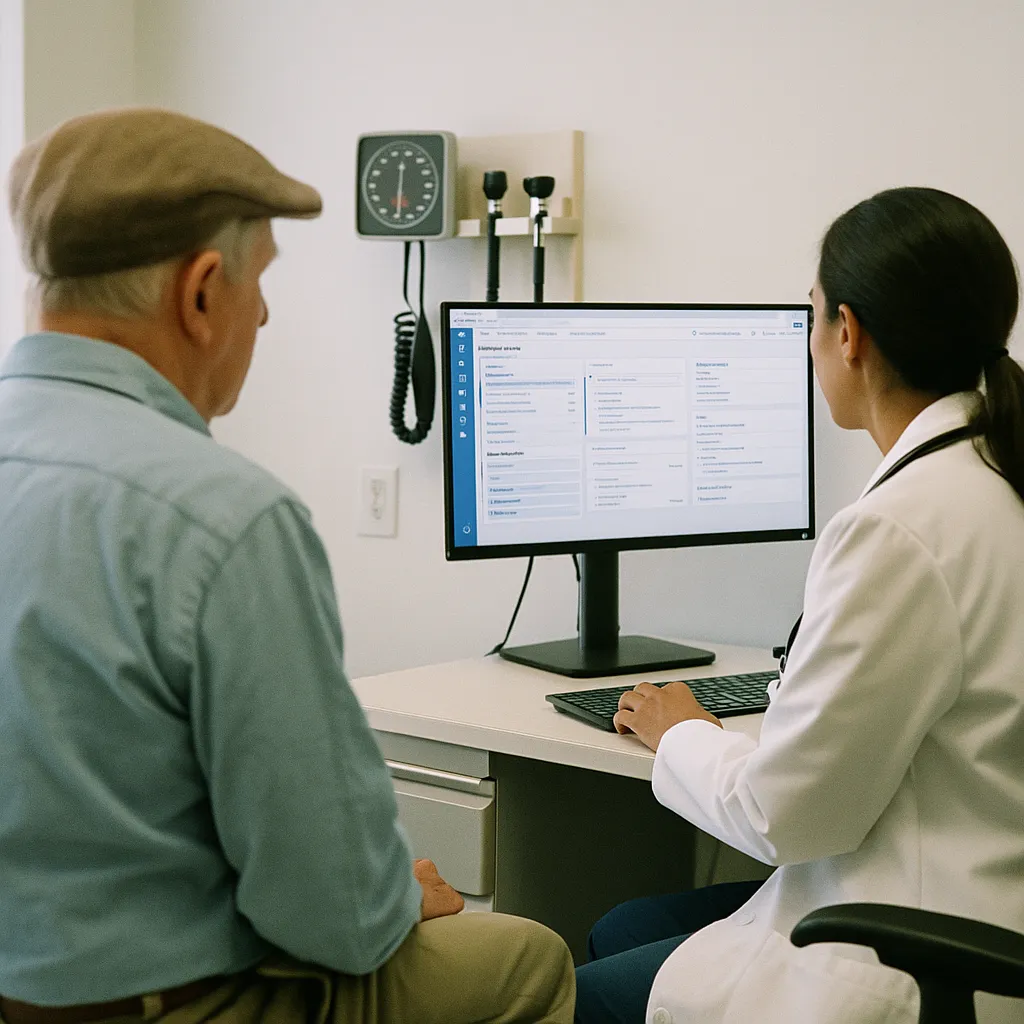
Tempus AI's $1.5 billion acquisition of Personalis combines AI-powered cancer diagnosis with molecular residual disease testing to create an integrated surveillance platform for post-treatment recurrence monitoring.
Tempus AI Acquires Personalis for $1.5 Billion to Expand Into Cancer Recurrence Monitoring
By Hector Herrera | September 22, 2026
Tempus AI announced the $1.5 billion acquisition of Personalis, a molecular diagnostics company specializing in detecting cancer recurrence from blood samples. According to Crescendo AI's healthcare news coverage, the deal extends Tempus's AI-powered oncology platform from initial cancer diagnosis into post-treatment surveillance — combining clinical AI infrastructure with molecular residual disease (MRD) testing to create an integrated platform for the full cancer care continuum.
Context
Cancer treatment does not end at remission. The period after initial treatment is defined by a persistent clinical problem: has the cancer returned, and if so, where and how aggressively? Traditional imaging-based surveillance cannot detect recurrence until tumor burden reaches a size visible on scans — often months after cancer cells have re-established.
Molecular residual disease testing solves this by detecting circulating tumor DNA (ctDNA) in the bloodstream before imaging or clinical symptoms catch it. The approach requires a patient-specific assay — designed from each tumor's individual mutation profile — that can recognize that specific tumor's genetic signature in a blood sample taken months or years later.
Personalis built its platform, NeXT Personal, around this approach: sequence the original tumor, design a personalized MRD assay, monitor the patient's blood over the surveillance period.
What the combination creates
Tempus brings AI infrastructure already integrated with clinical oncology workflows at hundreds of cancer centers — patient data platforms, genomic analysis pipelines, and physician decision-support tools. Personalis brings the molecular assay technology that enables recurrence detection in blood.
Get this in your inbox.
Daily AI intelligence. Free. No spam.
Combined, the platform can deliver:
- Tumor sequencing at initial diagnosis (Tempus capability)
- Patient-specific MRD assay design from that tumor's mutation profile (Personalis capability)
- Longitudinal blood monitoring across years of post-treatment surveillance
- AI-guided oncologist alerts when a recurrence signal exceeds threshold
This closes a loop that today requires coordination across multiple vendors and manual handoffs between systems. A single integrated platform from diagnosis through surveillance is significantly simpler operationally for cancer centers and potentially produces better data continuity for the AI models monitoring recurrence risk.
Market context
The cancer surveillance market is currently fragmented. Major competitors include Foundation Medicine (owned by Roche), Guardant Health, and Exact Sciences — each approaching the surveillance problem from different angles and with different assay architectures. Tempus's acquisition creates a vertically integrated competitor controlling the AI layer, the genomic sequencing, and the MRD assay in one platform.
The scale of opportunity is significant: approximately 19 million new cancer cases are diagnosed globally each year, and a meaningful share of those patients will enter multi-year surveillance programs. If AI-driven MRD monitoring becomes standard of care, the platform integrating diagnosis-to-surveillance wins a durable, recurring revenue stream from each patient.
The obstacles to scale
The acquisition faces two validation tests that will determine how quickly the combined platform deploys broadly.
First, regulatory: MRD assays require FDA clearance to qualify for broad reimbursement. Without coverage from Medicare and private insurers, MRD testing remains a premium out-of-pocket service accessible to a small fraction of cancer patients. Tempus will need to navigate the FDA clearance pathway for the combined platform's assays.
Second, clinical: the oncology community requires peer-reviewed evidence that AI-guided MRD monitoring improves patient outcomes — not just detection sensitivity — before large cancer centers commit to platform-level integration. Generating that evidence requires clinical trials measuring recurrence rates, time-to-intervention, and ultimately survival outcomes.
What to watch
Watch for Tempus to announce clinical trial partnerships in 2027 generating the outcomes evidence needed for broad reimbursement approval. Watch also for Guardant Health and Foundation Medicine to respond — the acquisition puts competitive pressure on both companies to accelerate their own AI integration strategies. If Tempus can demonstrate integrated platform advantages in outcomes data within 18 months, it establishes a durable competitive position that will be difficult for fragmented competitors to replicate.
Did this help you understand AI better?
Your feedback helps us write more useful content.
Get tomorrow's AI briefing
Join readers who start their day with NexChron. Free, daily, no spam.