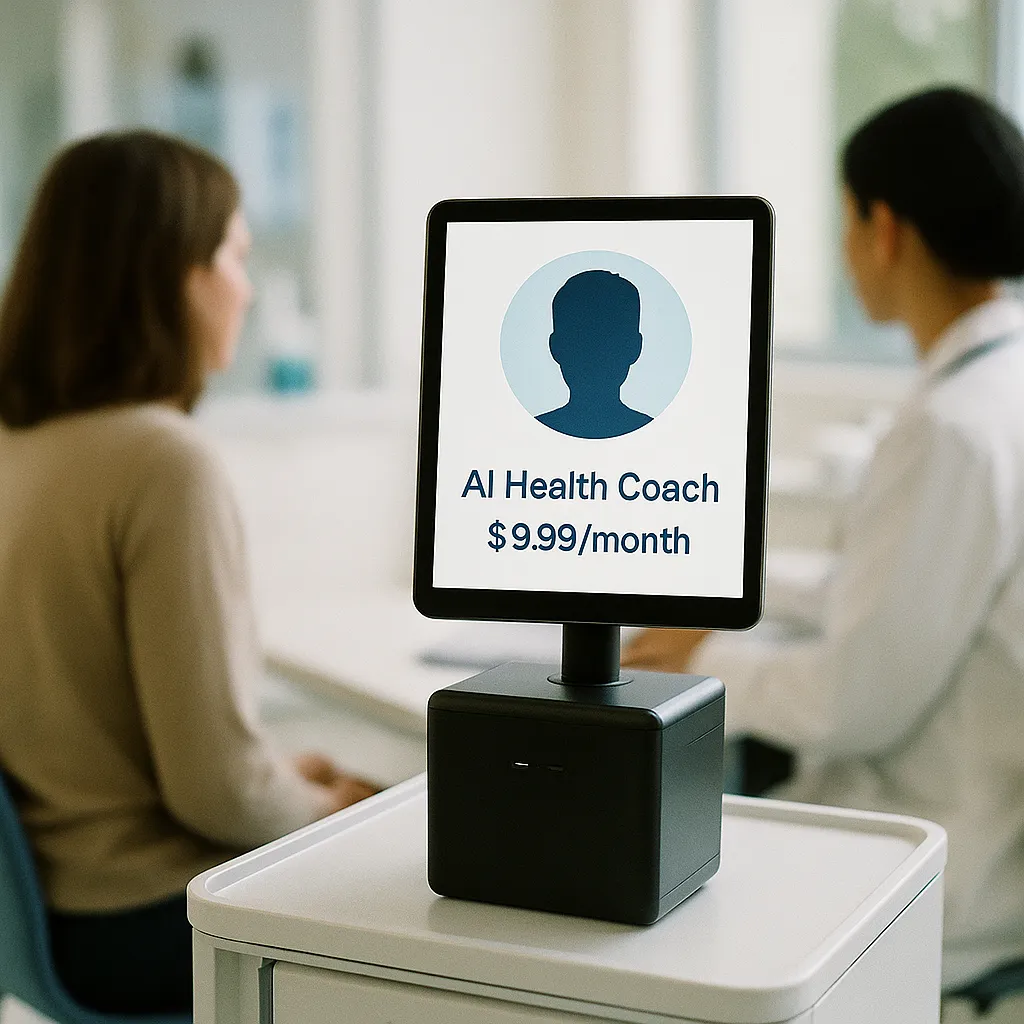
Google launched its Gemini-powered AI Health Coach globally today, bundling fitness, sleep, nutrition, and U.S. medical records into a $9.99/month subscription — the first major AI company to tie conversational health coaching directly to a consumer wearable platform.
By Hector Herrera | May 19, 2026 | Health
Google launched its Gemini-powered AI Health Coach globally today — the first major AI company to bundle a conversational health assistant directly into a consumer wearable subscription. At $9.99 per month, the service brings personalized wellness guidance, backed by a user's full health data stack, to anyone with a compatible device.
Why it matters: Google is converting the health data flywheel it has built through Fitbit, Google Health, and medical records integration into a direct-to-consumer AI coaching product. That's a meaningful shift from data collection to active health intervention at scale — and it resets the price floor for anyone in the digital health space.
Background
Google spent years assembling a health data infrastructure: the $2.1 billion Fitbit acquisition in 2021, Android health records integration, and the Google Health platform. The Gemini AI Health Coach is the first product that pulls those threads together in a single subscription.
Today's launch also formalizes the rebranding of Fitbit Premium to Google Health, ending the Fitbit brand's consumer-facing identity after three years under Google ownership.
Get this in your inbox.
Daily AI intelligence. Free. No spam.
What Launched Today
According to Google's official announcement, the Gemini AI Health Coach is available globally starting May 19, 2026, as part of the Google Health Premium subscription:
- Price: $9.99/month or $99/year
- Data inputs: Fitness activity, sleep tracking, nutrition logs, and — for U.S. users — medical records connected through Google Health
- Access: 24/7 conversational coaching through the Google Health app
- New hardware: The Fitbit Air, a $100 screenless wearable, debuted alongside the service — prioritizing sensor accuracy and battery life over a display
The coach uses Google's Gemini model to synthesize data across health domains and generate personalized recommendations. U.S. users with connected medical records get guidance that accounts for clinical history, a capability standalone wellness apps can't replicate without a clinical backend.
What This Means
For consumers, $9.99/month is competitive pricing for a product that no direct equivalent matches on data depth. Most wellness apps operate in a single domain — sleep, fitness, or nutrition. Google's coach pulls all three together; for U.S. users, medical records context adds a layer that changes what the product actually is.
For the health tech industry, this sets a new baseline. Any fitness or wellness app that doesn't integrate across health domains now competes against Google's full data stack at ten dollars a month.
The Fitbit Air's screenless design is a deliberate signal: Google is betting on sensor precision and battery life over the smartwatch experience. That's a different value proposition from Apple Watch and Samsung Galaxy Watch — health data collection without the lifestyle device premium.
What to Watch
Regulatory scrutiny is the open question. Combining medical records with AI coaching in a consumer product will draw attention from the FTC and potentially HHS over how health data is used commercially. Watch for how Google defines the boundary between wellness coaching and medical advice — that distinction matters for both regulators and liability exposure.
The broader competitive response will also come quickly. Apple, Samsung, and subscription health players like Noom and Weight Watchers now face a well-capitalized, data-rich competitor at a price point that's hard to undercut on value.
Did this help you understand AI better?
Your feedback helps us write more useful content.
Get tomorrow's AI briefing
Join readers who start their day with NexChron. Free, daily, no spam.