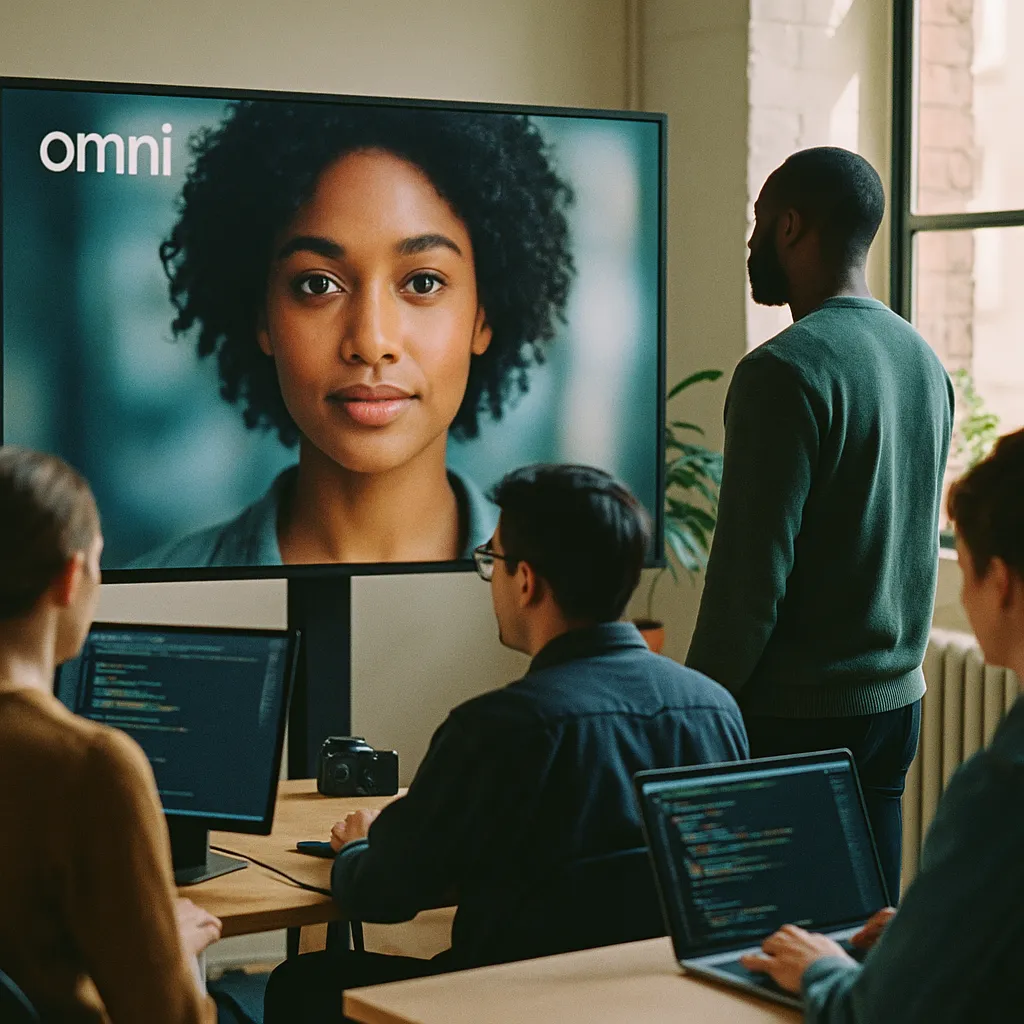
Google unveiled Gemini Omni at I/O 2026, a universal creative model generating lifelike video that draws on Google's full knowledge stack — a direct challenge to OpenAI's Sora and Runway.
Google's Gemini Omni Can Generate Lifelike Video — and It's Aimed Squarely at Sora
By Hector Herrera | May 19, 2026 | Creative
Google unveiled Gemini Omni at its I/O 2026 keynote, a new model designed as a universal creative tool capable of generating lifelike video from text and multimodal inputs. Omni pulls from Google's full knowledge and reasoning stack — meaning it can apply factual grounding to creative output, not just pattern-match on training data. It is Google's most direct challenge yet to OpenAI's Sora and the growing field of AI video generators.
The creative AI market just got its most credible new entrant. Google has the distribution, the compute infrastructure, and now — at least on paper — the model. Whether Omni closes the quality gap with Sora and Runway in real creative workflows is the question every filmmaker, video editor, and content studio will be asking this week.
What Gemini Omni Is
According to 9to5Google's I/O live blog, Gemini Omni is positioned as a "create anything" model — a single system capable of producing video, images, text, code, and audio in a unified output. Key features described at the keynote include:
- Lifelike video generation — the headline capability, though Google has not yet published detailed benchmark comparisons to Sora or Runway
- Google knowledge integration — Omni can draw on Google's search index and knowledge graph during generation, allowing factual context to inform creative output (for example, generating a video about a real-world location with accurate visual detail)
- Unified multimodal reasoning — rather than stitching together separate models for text, image, and video, Omni handles all modalities in one system
Google also announced that Gemini 3.5 Pro, a model focused on agentic coding and long-horizon tasks, is slated for release in June 2026. Pro is distinct from Omni — it targets developers and technical users rather than creative workflows.
Why Google Is Entering the AI Video Race Now
OpenAI launched Sora in early 2024. Runway has been iterating on generative video for two years. Adobe Firefly added video generation in 2025. Google has been conspicuously absent from the consumer-facing AI video market despite having deep research in the space.
Get this in your inbox.
Daily AI intelligence. Free. No spam.
The delay appears deliberate. Google's AI video research — including Lumiere (2024) and VideoPoet — demonstrated strong technical capabilities but were never widely released. I/O 2026 marks the decision to ship.
What changed: The market has matured enough that Google can position Omni as a professional-grade tool rather than a novelty. Sora's limitations in physics accuracy and long-form coherence have been well-documented. Runway ML has found a real user base among video editors and indie filmmakers. There is now a proven market — and Google is entering it with a model that claims broader capability than any current competitor.
What This Means for the Creative Industry
AI video generation is already reshaping production economics at the lower end of the market. Marketing teams, social content creators, and indie game developers have adopted Sora, Runway, and similar tools to produce short-form video at a fraction of traditional production costs.
Gemini Omni's arrival — backed by Google's distribution through YouTube, Search, and Workspace — could accelerate that adoption significantly. A model integrated into tools that 3 billion people already use is a different proposition from a standalone app requiring a separate subscription.
For professional creatives, the more pressing question is quality and control. Generative video tools remain difficult to direct with precision — getting a specific camera angle, maintaining visual consistency across scenes, or matching a brand's aesthetic requires significant iteration. Omni's knowledge integration could help with factual scenes, but artistic control remains the unsolved problem in AI video.
For studios and agencies, Omni adds another negotiating chip when licensing creative work. The more capable AI video becomes, the more studios will pressure talent unions and freelancers on rates for short-form, promotional, and training content. That dynamic is already playing out in Hollywood; Google's entry strengthens the industry's hand, not labor's.
What to Watch
Gemini 3.5 Pro's June release will tell us whether Google's coding-focused AI can compete with Anthropic's Claude for developer workflows — a market OpenAI and Anthropic currently dominate. For Omni specifically, watch for independent benchmark comparisons to Sora and Runway from creators who publish their workflows; keynote demos are controlled environments, and real-world quality will determine whether Omni earns a place in professional pipelines.
Sources: 9to5Google, CNBC
Did this help you understand AI better?
Your feedback helps us write more useful content.
Get tomorrow's AI briefing
Join readers who start their day with NexChron. Free, daily, no spam.