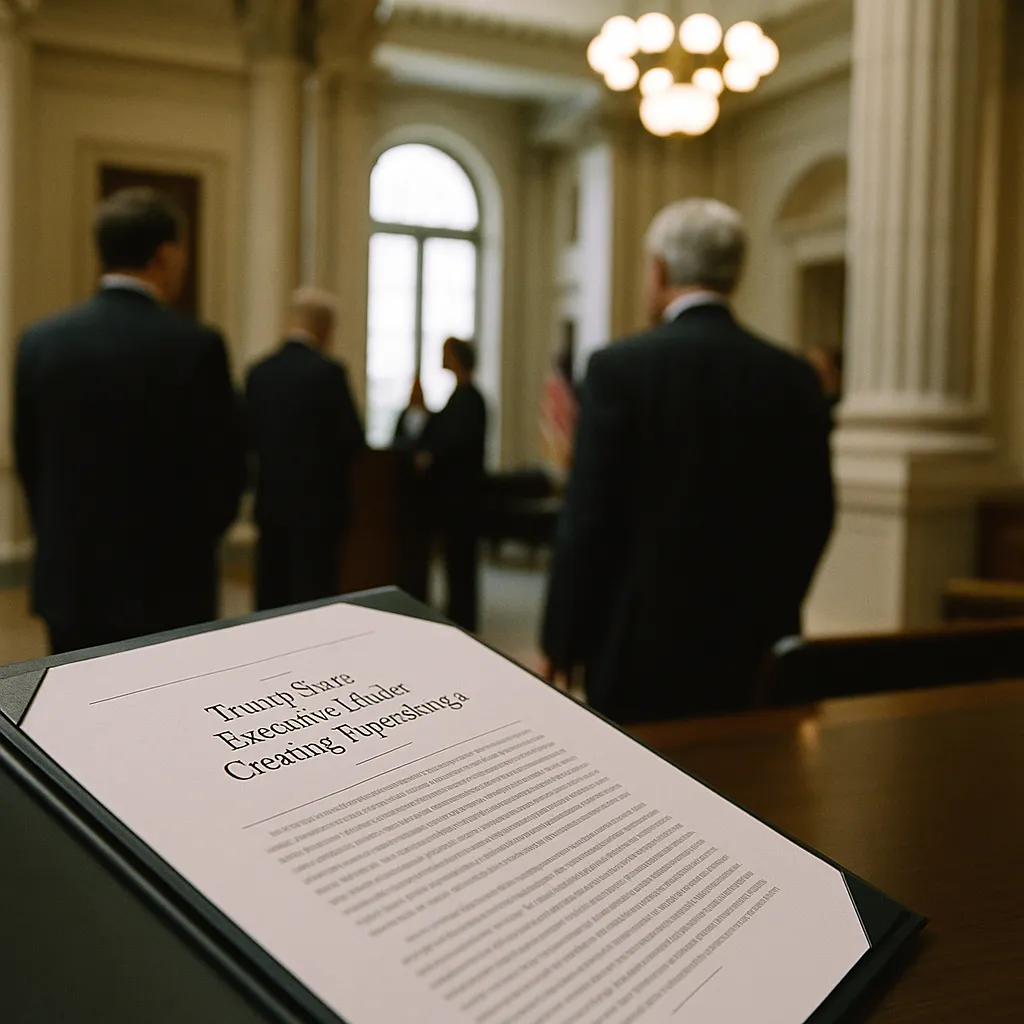
President Trump signed an executive order Sunday creating the 'Super Intelligence Force' and directing all federal agencies to replace the term 'artificial intelligence' with 'Super Intelligence' — a rebranding framed as countering public skepticism of the technology.
President Trump signed an executive order Sunday creating the "Super Intelligence Force," a new federal task force tasked with preparing the U.S. government for the era of superintelligent AI — and simultaneously ordered every federal agency to stop using the term "artificial intelligence" altogether, replacing it with "Super Intelligence" across all government communications.
The rebranding is not cosmetic. It signals a deliberate White House strategy to reshape public perception of AI at a moment when surveys show growing skepticism toward the technology among American voters.
What the Order Does
The executive order establishes the Super Intelligence Force (SIF) with a mandate to coordinate the federal government's approach to advanced AI systems. Key provisions include:
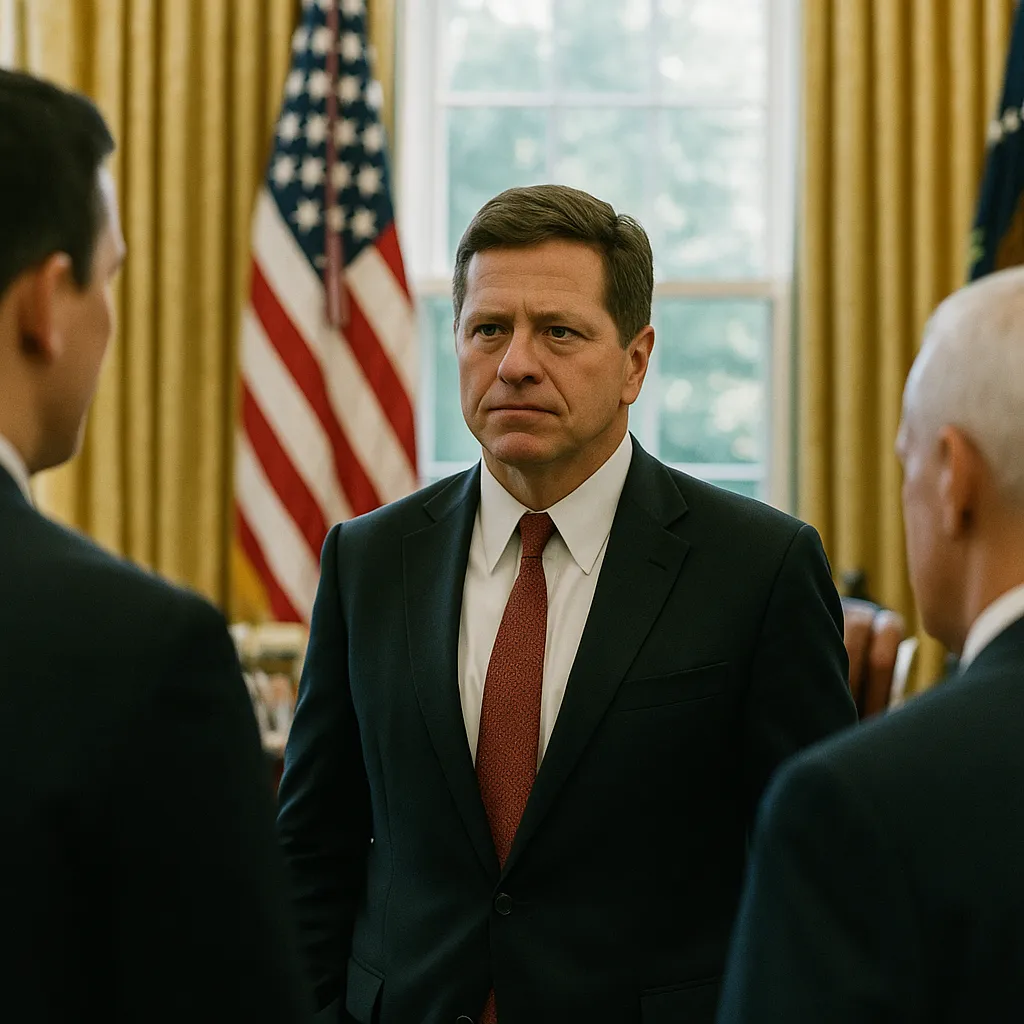
- SIF leadership: Chaired by Director of National Intelligence Jay Clayton, with Federal Trade Commission Chair Andrew Ferguson and Pentagon research and development chief Emil Michael as co-leads
- 120-day report: All three officials must deliver a risk-and-opportunity assessment on superintelligence — defined loosely as AI systems that surpass human-level performance across cognitive tasks — within four months
- Terminology mandate: Effective immediately, federal agencies must use "Super Intelligence" in place of "artificial intelligence" in official documents, communications, and policy
The order does not create new funding, new regulatory authority, or new statutory frameworks. It operates entirely within existing executive branch powers.
Why "Super Intelligence"?
The White House framing ties directly to public opinion trends. According to the TechCrunch report, the renaming is explicitly intended to counter growing public skepticism of AI — a calculation that "Super Intelligence" carries fewer negative associations than the increasingly contested phrase "artificial intelligence."
Whether that calculation is correct is debatable. Critics will note that branding exercises don't change underlying technology or its risks. Supporters will argue that language shapes policy and public engagement in ways that matter.
Get this in your inbox.
Daily AI intelligence. Free. No spam.
The move also positions the Trump administration as taking AI seriously at a moment when rivals including China are accelerating their own national AI programs.
Who's Running It
Jay Clayton is best known as a former SEC chair under Trump's first term, confirmed as DNI in early 2026. His inclusion signals that the administration views superintelligence as a national security and intelligence matter, not just a technology or economic one.
Andrew Ferguson at the FTC brings a competition and consumer protection lens. His presence suggests the SIF will have authority to examine AI market dynamics — though the FTC's current posture under the administration has been considerably more deferential to industry than under his predecessor.
Emil Michael, the Pentagon's R&D chief, grounds the task force in defense applications. Military AI development — autonomous systems, logistics, intelligence analysis — is where superintelligence-class capabilities would have the most immediate national security implications.
What This Means
For federal agencies, the immediate operational impact is administrative: update terminology in policies, procurement documents, and public communications. That compliance burden is real but manageable.
For the AI industry, the creation of SIF is worth watching for a different reason: it consolidates superintelligence policy under a small group of officials who have shown willingness to move fast and act by executive action. The 120-day report will be the first signal of what the administration actually wants to do — regulate, accelerate, or simply brand.
For the public, the rebranding effort reflects a broader political reality: AI has become a contested term, caught between enthusiasm for its economic potential and anxiety about job displacement, misinformation, and autonomous systems. The Trump administration is betting that "Super Intelligence" sidesteps that baggage.
What to Watch
The 120-day report — due in early February 2027 — will reveal whether the SIF produces substantive policy or remains a communications exercise. Watch whether the task force recommends new executive authorities, engages Congress on legislation, or issues procurement rules that change how federal agencies buy and deploy AI systems.
Source: TechCrunch, October 4, 2026
Did this help you understand AI better?
Your feedback helps us write more useful content.
Get tomorrow's AI briefing
Join readers who start their day with NexChron. Free, daily, no spam.