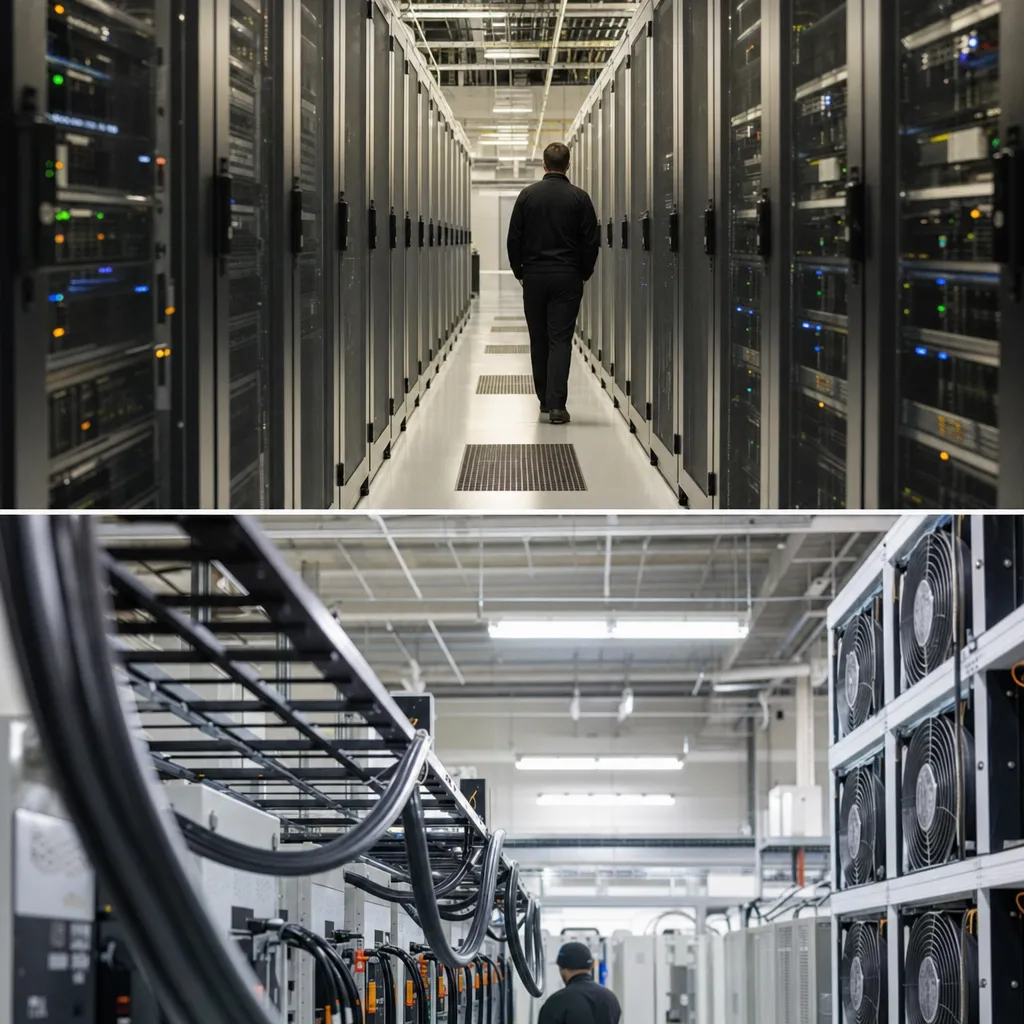
President Trump threatened to impose a heavy tax on American tech companies that build AI data centers outside the U.S., sending Alphabet and Amazon shares down 3-4%. No specific rate or mechanism was provided.
President Trump threatened on Friday to impose a "tremendous tax" on American tech companies that build AI data centers outside the United States, sending Alphabet and Amazon shares down 3–4% before the close.
The statement has no policy details behind it yet — but it signals that the administration is prepared to use tax policy as a lever to keep AI infrastructure investment domestic.
What Trump Said
According to 24/7 Wall St., Trump made the announcement Friday without providing:
- A specific tax rate
- An enforcement mechanism
- A formal legislative or executive action timeline
- Any indication he had briefed staff on the proposal
The vagueness is not unusual for Trump's first-stage policy announcements — which often begin as declared intentions before formal proposals follow, if they do at all. What matters immediately is market interpretation: investors sold Alphabet and Amazon on the news, pricing in some probability the threat becomes real.
Why This Threat Has Teeth
The U.S. AI infrastructure buildout is global. Major cloud providers and AI labs have announced or begun construction on data centers in:
- Europe — Ireland, Germany, the Netherlands, Sweden, Spain
- Asia — Japan, Singapore, Malaysia, India, South Korea
- Middle East — UAE, Saudi Arabia, Qatar
The drivers are real: power availability (many U.S. regions face grid constraints), lower land costs, favorable permitting, and proximity to international customers. AI training and inference workloads are geographically portable in ways that manufacturing is not.
Get this in your inbox.
Daily AI intelligence. Free. No spam.
A tax specifically targeting overseas data center investment would hit the largest U.S. tech companies hardest — companies that are also among the largest contributors to U.S. AI competitiveness.
The Political Context
The threat comes against a specific backdrop: roughly three-quarters of U.S. voters oppose new data centers in their communities, according to recent polling. Data centers require large amounts of land, draw enormous power loads, produce significant heat and noise, and generate relatively few local jobs for their physical footprint.
That opposition creates a bind: communities don't want data centers built nearby, but the federal government wants them built in the U.S. rather than abroad. Without resolving the local permitting, power, and community opposition issues, a tax on overseas construction may simply slow global expansion without redirecting investment domestically.
What It Means for the Industry
For hyperscalers (Amazon AWS, Google Cloud, Microsoft Azure): Any tax on overseas data center capital expenditure hits their global expansion plans directly. These companies spend tens of billions annually on infrastructure. Even a modest tax rate on international CapEx would be material.
For AI labs: OpenAI, Anthropic, xAI, and others rely on cloud provider infrastructure or build their own. Forcing domestic-only construction limits their ability to optimize for power cost and availability — which directly affects the economics of training large models.
For U.S. AI competitiveness: The argument for the tax is that keeping AI infrastructure domestic keeps jobs, intellectual property, and strategic assets inside U.S. jurisdiction. The argument against it is that it makes U.S.-headquartered AI companies less cost-competitive against Chinese, European, and other international peers who face no such constraint.
For international allies: European and Asian governments that have been courting U.S. tech investment in their countries — often as part of AI sovereignty and digital infrastructure strategies — are watching this threat carefully.
What to Watch
The first indicator of seriousness will be whether the administration produces a formal proposal — either through Treasury, as a tax code amendment, or as an executive order. Watch also for lobbying response: the tech industry's Washington operations will move quickly if this gains policy traction. The timeline matters most: a tax threat that doesn't become legislation before the next budget cycle has diminished impact on multi-year CapEx decisions already in motion.
Source: 24/7 Wall St., November 21, 2026
Did this help you understand AI better?
Your feedback helps us write more useful content.
Get tomorrow's AI briefing
Join readers who start their day with NexChron. Free, daily, no spam.