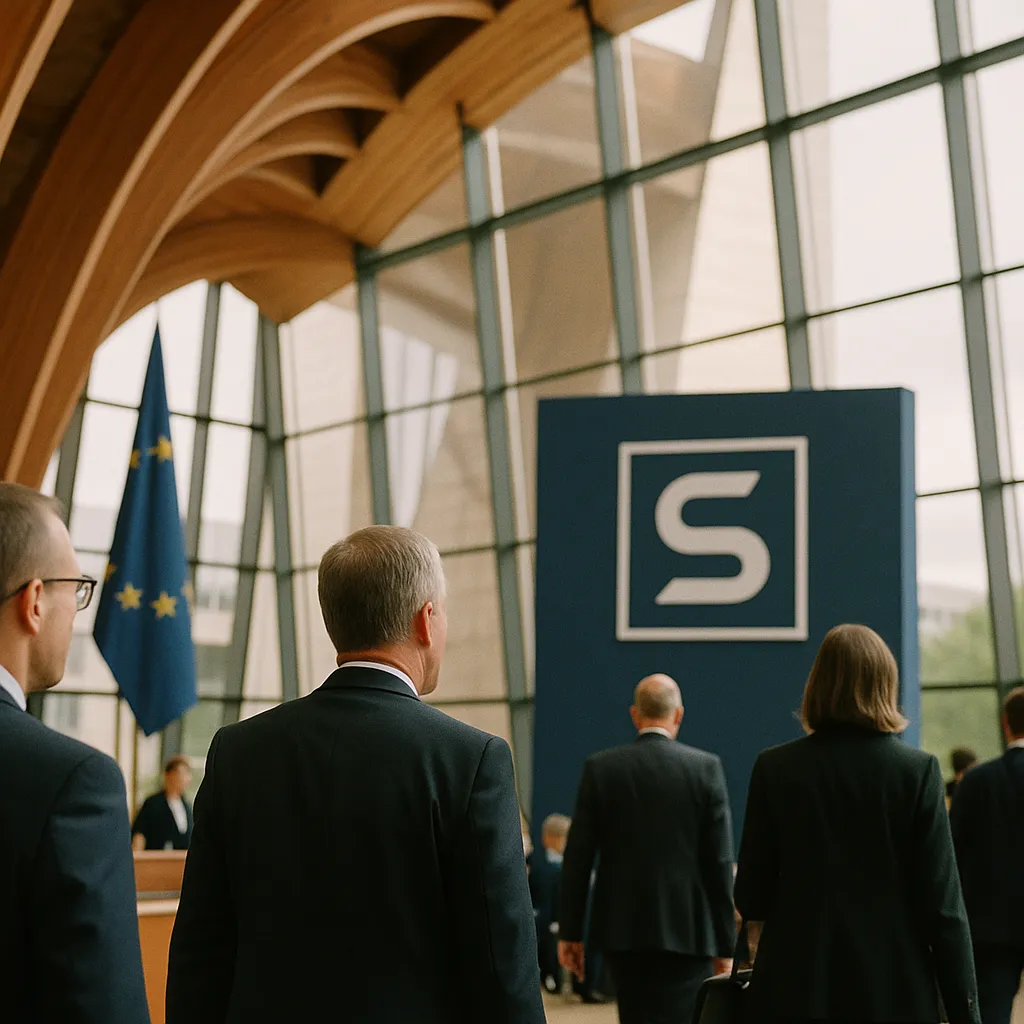
The Council of Europe and Microsoft signed a memorandum of understanding in Strasbourg committing to joint AI standards work on human rights, democracy, and the rule of law.
Council of Europe and Microsoft Sign AI Cooperation Agreement, Anchoring Corporate AI to Human Rights Law
By Hector Herrera | October 7, 2026
The Council of Europe and Microsoft signed a formal cooperation agreement in Strasbourg this week, committing both parties to joint work on AI standards that protect human rights, democracy, and the rule of law. It is a notable institutional signal: a major AI developer voluntarily binding itself to the framework of the first international AI treaty.
The Council of Europe is the continent's primary human rights body — distinct from the European Union — and is the author of the Framework Convention on Artificial Intelligence, the world's first binding international AI treaty, which opened for signature in 2024. Microsoft's formal alignment with that body carries weight beyond symbolic gesture.
What Was Signed
According to AI News, the memorandum of understanding was signed in Strasbourg by Council of Europe Secretary General Alain Berset and Microsoft President Brad Smith. The agreement covers:
- Joint work on AI policy standards aligned with the Council of Europe's human rights framework
- Dialogue through Microsoft's Open Innovation Centre in Strasbourg, which serves as the operational hub for the collaboration
- Support for linguistic and cultural diversity — a pointed acknowledgment that current AI systems overwhelmingly favor English and a handful of high-resource languages
- Extension of existing collaboration, including Microsoft's AI for Good Lab work using satellite imagery to assess war damage in Ukraine
The agreement does not have legally binding enforcement mechanisms in the traditional treaty sense — it is a memorandum of understanding. But it creates a documented commitment and an institutional channel for accountability.
Get this in your inbox.
Daily AI intelligence. Free. No spam.
Why This Matters
The Council of Europe's Framework Convention is the only legally binding international AI treaty currently in force. It has been signed by the EU, the United States, the United Kingdom, and others. By formalizing cooperation with the Council, Microsoft is positioning itself inside that governance architecture rather than outside it.
That positioning matters for a few reasons:
- Regulatory predictability. Companies that help shape standards are better positioned when those standards become law.
- Market access. European markets increasingly require evidence of rights-respecting AI practices. Demonstrable cooperation with the continent's top human rights body is a competitive asset.
- Reputational credibility. As scrutiny of Big Tech's AI deployments intensifies, institutional anchoring in established human rights frameworks provides a defensible record.
The Ukraine satellite imagery work is worth noting separately. Using AI to document war damage — for accountability, reconstruction planning, and legal proceedings — is one of the cleaner humanitarian AI use cases and gives the partnership a concrete, verifiable track record.
The Bigger Picture
This agreement is part of a broader pattern in 2026 in which major AI companies have sought formal relationships with governance institutions, rather than lobbying against them. Whether that reflects genuine strategic alignment with human rights principles or prudent regulatory positioning is a judgment call. The measurable outcome will be in what standards get developed and whether they have teeth.
What to Watch
The first test will be what emerges from the Open Innovation Centre dialogue. Concrete outputs — published standards, audit frameworks, or policy recommendations — will indicate whether the agreement produces substance. Watch also for whether other major AI developers seek similar arrangements with the Council of Europe, which would signal the model is gaining traction as an industry norm.
Hector Herrera covers AI's intersection with business, government, and society for NexChron.
Did this help you understand AI better?
Your feedback helps us write more useful content.
Get tomorrow's AI briefing
Join readers who start their day with NexChron. Free, daily, no spam.