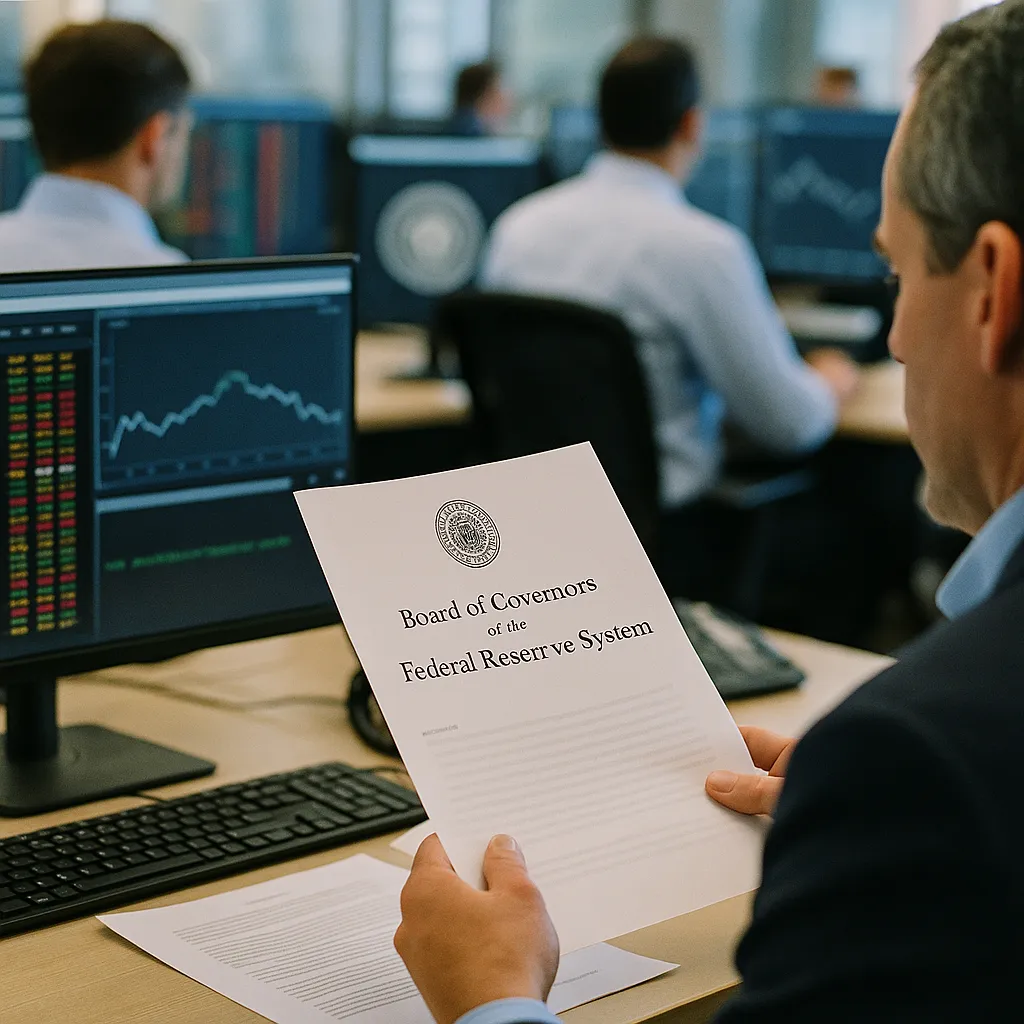
Fed Vice Chair Michelle Bowman acknowledged banks are deploying AI for fraud detection and credit underwriting faster than regulators can update frameworks to govern it.
Federal Reserve Vice Chair Warns AI Is Outpacing Bank Regulators' Ability to Keep Up
By Hector Herrera | May 4, 2026 | Finance
The Federal Reserve's top banking supervisor said publicly on May 1 what bank examiners have been saying privately for months: AI adoption inside major financial institutions is moving faster than regulators can track, let alone govern. The admission matters because the Fed is not a passive observer — it sets the model risk management rules that determine how banks are required to validate, monitor, and document every AI system they use in credit, fraud, and compliance decisions.
Background
Banks have been using AI for years, mostly in narrow, well-understood applications: fraud scoring, transaction monitoring, credit underwriting models. Those systems were covered by SR 11-7, the Federal Reserve's long-standing model risk management guidance, which requires banks to validate models before deployment and document their performance over time. The guidance worked well for statistical models with clear inputs, outputs, and performance metrics.
Generative AI (large language models capable of producing text, analysis, and decisions) and agentic AI (systems that take sequences of autonomous actions) don't fit cleanly into that framework. The Fed acknowledged this problem directly in recent months by amending SR 11-7 to explicitly exclude generative and agentic AI from its scope — a temporary carve-out that signals the agency is still working out how to handle these systems, not that they don't need oversight.
What Bowman Said
In a May 1 speech, Federal Reserve Vice Chair for Supervision Michelle Bowman laid out the tension plainly: banks are deploying AI for fraud detection, anti-money laundering (AML), and credit underwriting at a pace that current regulatory frameworks cannot match. She called for a new regulatory approach that is flexible enough to accommodate AI's rate of change without creating so much compliance uncertainty that banks freeze innovation or, worse, deploy systems without adequate safeguards because the rules are unclear.
Key points from Bowman's remarks:
Get this in your inbox.
Daily AI intelligence. Free. No spam.
- Regulators are behind. The speed of AI deployment inside banks exceeds regulators' current ability to evaluate it systematically
- The model risk gap is real. By carving generative and agentic AI out of SR 11-7, the Fed has created a period of explicit regulatory ambiguity
- Innovation vs. protection is a false choice. Bowman argued that good regulatory design can accommodate both, but the current framework wasn't designed for AI's speed or complexity
- Collaboration is the near-term answer. The Fed is signaling it wants to work with banks to build appropriate frameworks rather than impose rules designed for a different era of technology
The Governance Gap in Practice
When a bank's AI agent autonomously flags suspicious transactions, denies a loan application, or generates a compliance report, who is responsible for ensuring that decision was correct, fair, and documented? Under current U.S. law and Fed guidance, the bank is responsible — but the specific mechanisms for satisfying that responsibility are undefined for agentic systems.
This creates a practical problem: banks that want to deploy agentic AI responsibly don't have a clear regulatory checklist to follow. Banks that want to deploy aggressively can point to the absence of specific rules as cover. The carve-out intended to provide breathing room may inadvertently create a permissive environment for under-governed AI deployment in systemically important institutions.
Three specific risks regulators are watching:
- Credit decision AI and fair lending. If an AI system denies credit at higher rates to protected classes without an explainable, documented reason, the bank faces ECOA and fair lending liability — regardless of whether the AI was covered by model risk rules
- AML/fraud AI and false negatives. An AI fraud system that misses a class of transactions could contribute to significant financial crime losses and regulatory enforcement action
- Autonomous agents in treasury and trading. If an AI agent makes autonomous trading decisions, the existing market conduct and position reporting rules weren't designed for machine-speed, autonomous action
What This Means for Banks
For chief risk officers and compliance teams at mid-to-large institutions, Bowman's speech is both a warning and a roadmap signal. The Fed is not about to issue emergency rules. What it is doing is publicly acknowledging the gap, which increases the likelihood of enforcement attention focused on banks that can't document their AI governance, even in the absence of specific AI rules.
The practical implication: banks that build internal governance structures for generative and agentic AI now — documentation standards, human oversight protocols, performance monitoring — will be better positioned when the Fed eventually formalizes those requirements. Banks that wait for a rule before building structure are taking regulatory risk.
Community banks and credit unions face a different version of this problem: they lack the compliance infrastructure to build AI governance from scratch, but they're also under competitive pressure to adopt AI tools that larger competitors are already using.
What to Watch
The Fed is expected to issue updated model risk management guidance covering generative and agentic AI within the next 12–18 months, based on signals from Bowman and other regulators. Watch for joint guidance from the OCC, FDIC, and Fed — the three primary bank regulators — which would signal a coordinated approach. Banks that have engaged the Fed in supervisory conversations about AI governance are likely to shape what those rules look like.
Source: Federal Reserve Vice Chair Bowman Speech, May 1, 2026
Did this help you understand AI better?
Your feedback helps us write more useful content.
Get tomorrow's AI briefing
Join readers who start their day with NexChron. Free, daily, no spam.