A new American Chemical Society study finds 67% of college students—and 81% in the U.S.—believe AI tools discourage deep learning. Faculty remain divided as universities race to design AI integration policy.
Two-Thirds of STEM Students Say AI Tools Make Learning Too Shallow, ACS Study Finds
Two-thirds of college students believe AI tools are making their learning too shallow and undermining critical thinking, according to a study published by the American Chemical Society in October 2026. For universities still writing their AI integration policies, the finding adds empirical weight to a debate that has mostly run on faculty instinct.
The ACS study, covered in Chemical & Engineering News, found 67% of surveyed college students globally believe AI tools discourage the depth of engagement that builds real understanding. Among students in the U.S. and Canada, that number climbs to 81% — placing American and Canadian STEM students among the most concerned about AI's learning effects anywhere in the study.
Why STEM Is Particularly Exposed
STEM education is built on productive struggle. The student who works through a thermodynamics problem incorrectly three times before arriving at the right answer learns something that can't be transferred by reading a solution. In chemistry, getting a limiting reagent calculation wrong and figuring out why builds numerical intuition that textbooks can't convey. In computer science, debugging code for two hours develops pattern recognition that studying corrected code does not.
What the ACS data suggests is that students themselves recognize AI is short-circuiting this process. This isn't a technophobe complaint — many students who raised concerns about AI's learning effects still use AI tools regularly. The issue isn't AI per se. It's what gets lost when AI handles the parts of learning that were meant to be effortful.
Prior research on calculator dependency in mathematics offers a comparable data point: students who relied heavily on calculators for arithmetic performed worse when novel problems required numerical estimation. The ACS data suggests AI may be creating an analogous pattern at a higher cognitive level — one that STEM disciplines are especially sensitive to because professional competency in chemistry, engineering, and computer science depends on internalized intuition, not just access to tools.
How Faculty Are Responding
The study found faculty approaches to AI in STEM instruction cluster into three identifiable camps:
Integration proponents see AI as a way to focus classroom time on higher-order thinking. If AI handles the algebra, students can spend more energy interpreting results and asking better questions. The premise: professional STEM work uses tools to handle computation, so learning should mirror professional practice.
Get this in your inbox.
Daily AI intelligence. Free. No spam.
Structured skeptics allow AI for research and writing but ban it for foundational problem sets where competency must be built manually. The premise: you need to do the algebra before you can meaningfully critique someone else's version of it.
Status quo holders haven't changed their curricula and are leaving students to navigate AI use on their own — course by course, semester by semester, with no shared rationale.
None of these positions is obviously wrong. But the ACS data suggests students are experiencing inconsistency across their degree programs — AI-assisted problem sets in one course, AI-banned in the next — and that inconsistency itself contributes to the perception that learning is becoming shallower. There's no framework for students to understand what the boundaries are meant to protect.
The Policy Gap Universities Haven't Closed
Despite widespread AI deployment across higher education, no national standard governs how AI tools should be integrated into STEM curricula. The contrast with K–12 is notable:
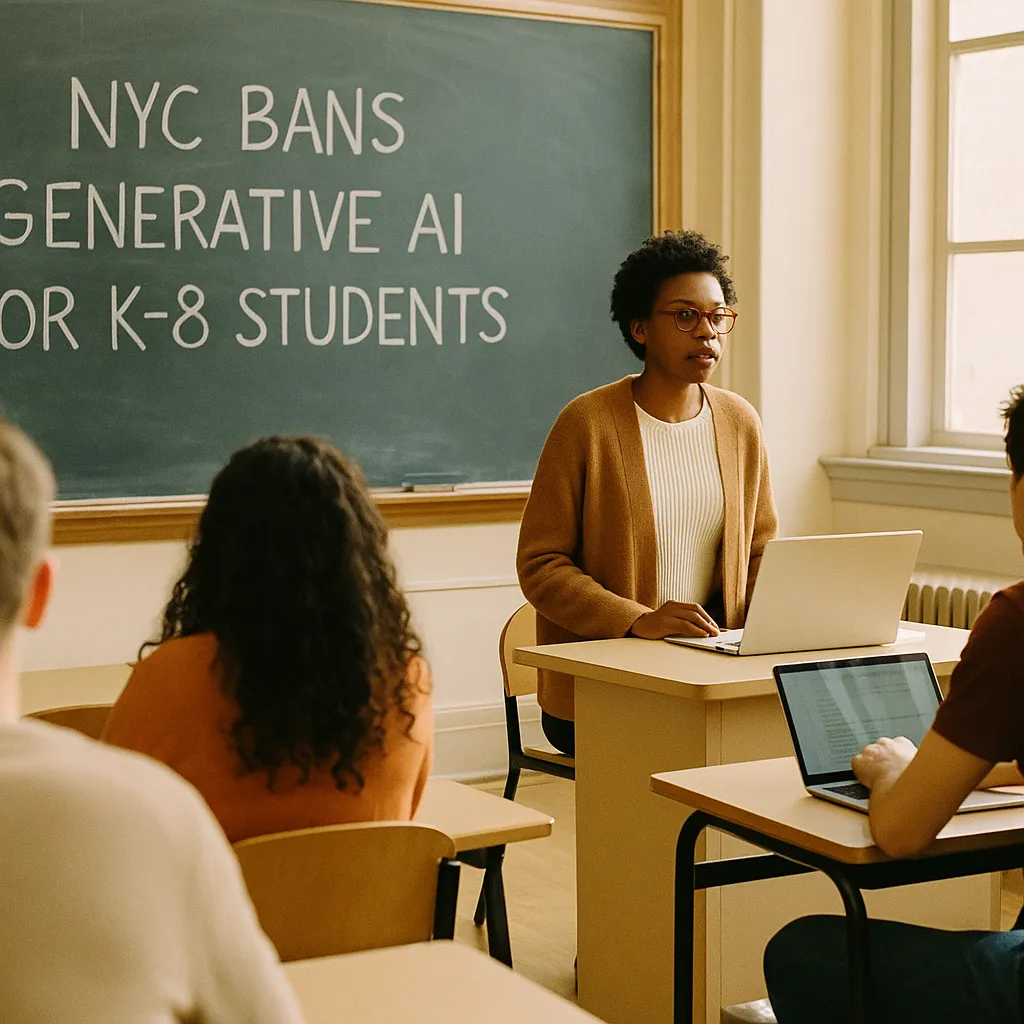
- Katy ISD in Texas implemented tiered AI access, banning tools for grades K–6 while allowing structured use in upper grades
- Boston Public Schools made AI literacy a graduation requirement with formal curriculum development
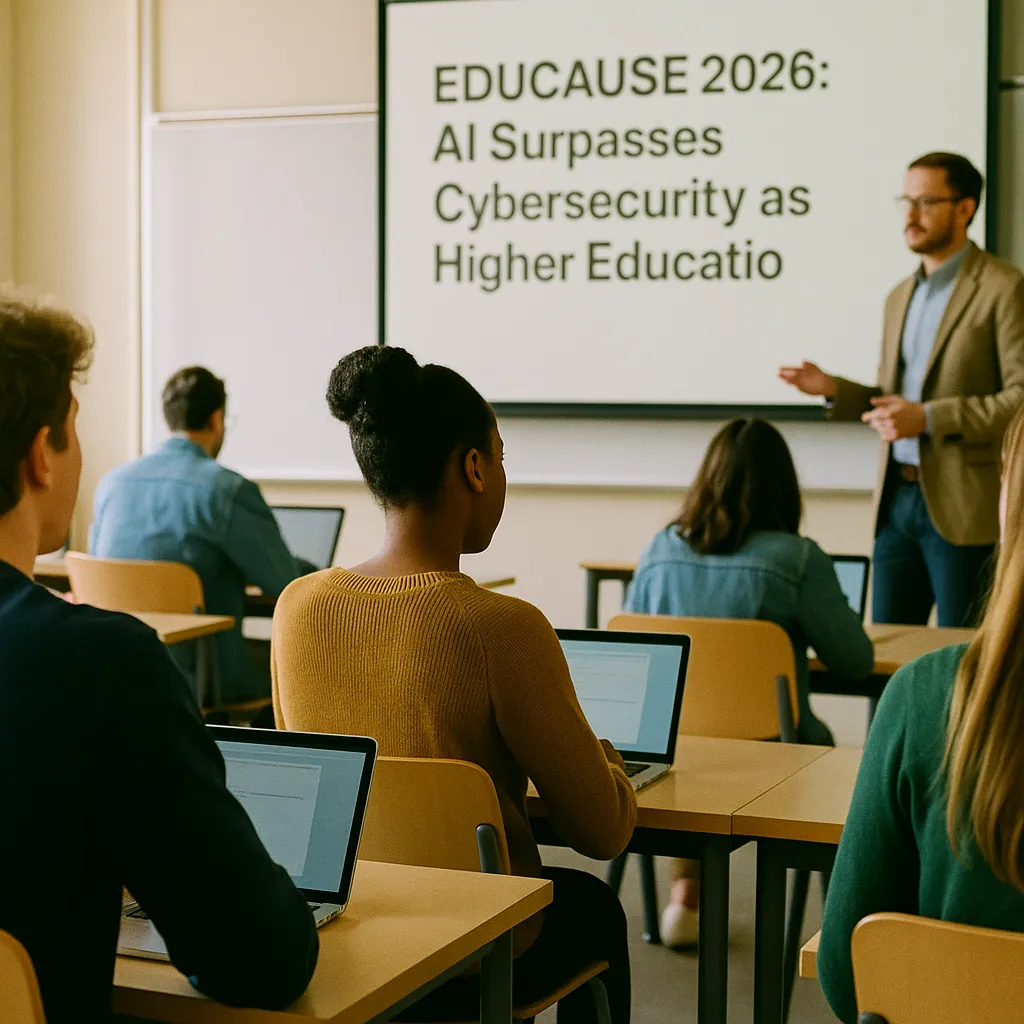
- EDUCAUSE's 2026 higher education survey named AI as the top institutional technology priority — but priority doesn't mean policy
At the university level, governance remains ad hoc — course by course, department by department. ABET, which accredits U.S. engineering and computing programs, has issued guidance but stopped short of curricular standards. The American Chemical Society's Committee on Professional Training sets standards for undergraduate chemistry programs; it has not yet addressed AI tool use as a competency issue.
That gap leaves institutions designing AI policies without shared frameworks and students experiencing wildly inconsistent approaches within the same degree program.
What to Watch
The ACS study is likely to surface in upcoming ABET review cycles and in discussions at the ACS Committee on Professional Training. If accreditors begin requiring institutions to demonstrate that AI integration preserves foundational competency development — not just instructional efficiency — the ad hoc era of university AI policy will be ending.
For faculty designing courses for the 2026–2027 academic year, the practical implication is specific: the question isn't whether to allow AI, but at which stage of learning. AI that supports synthesis and interpretation after a student has demonstrated foundational competency looks different — in pedagogy and likely in outcomes — than AI that replaces the process of building that competency in the first place.
The ACS finding is a signal, not a verdict. But it's coming from students themselves, at a statistical weight that curriculum designers and accreditors can no longer treat as anecdote.
Did this help you understand AI better?
Your feedback helps us write more useful content.
Get tomorrow's AI briefing
Join readers who start their day with NexChron. Free, daily, no spam.