Odyssey ML closed a $310 million Series B led by Amazon at a $1.45 billion valuation, betting that the next AI frontier is machines that reason about the physical world — not just language.
Amazon Backs World-Model Startup Odyssey ML With $310M at $1.45B Valuation
By Hector Herrera | June 17, 2026
Odyssey ML has closed a $310 million Series B led by Amazon, valuing the startup at $1.45 billion post-money — and signaling that the next frontier of AI investment isn't more language models, it's machines that understand physics. The round puts Odyssey in direct competition with established world-model efforts at DeepMind, Meta, and a handful of well-funded startups racing to build AI that reasons about the physical world, not just text.
What Odyssey Builds
World models are AI systems trained to understand how objects behave in physical space — gravity, collision, causality, spatial relationships — rather than predicting the next word in a sentence. Think of them as the internal simulation layer that lets a robot know a ball will fall if you drop it, or that a car turning left will cross oncoming traffic. This is distinct from large language models (LLMs), which process text, and even from vision models, which classify images without understanding the physics behind them.
Odyssey's approach focuses on physics-grounded reasoning: training on object relationships and spatial dynamics so its models can simulate environments, not just describe them.
The Deal Details
The $310M Series B drew a notable investor lineup:
- Amazon led the round and will serve as Odyssey's preferred cloud provider
- Nvidia participated, extending its practice of backing startups that could drive GPU compute demand
- AMD's investment arm joined, a sign that the chip competition for AI infrastructure is playing out at the venture level too
- In-Q-Tel (IQT), the CIA's affiliated investment fund, took a position — consistent with growing U.S. government interest in physical AI for defense and logistics applications
- Jeff Dean, Google's chief scientist, invested in a personal capacity
As part of the deal, Odyssey will deploy Amazon's Trainium chips — AWS's custom AI accelerator — for training workloads. That's a meaningful win for Amazon's chip ambitions: Trainium has struggled to gain traction against Nvidia's H100 and H200 GPUs, and a high-profile world-model startup using them at scale is exactly the kind of reference customer AWS needs.
Get this in your inbox.
Daily AI intelligence. Free. No spam.
Why It Matters
The concentration of investors here is unusual. Amazon, Nvidia, AMD, and IQT don't often appear on the same cap table. The overlap suggests multiple parties see world models as strategically critical — not just a research curiosity.
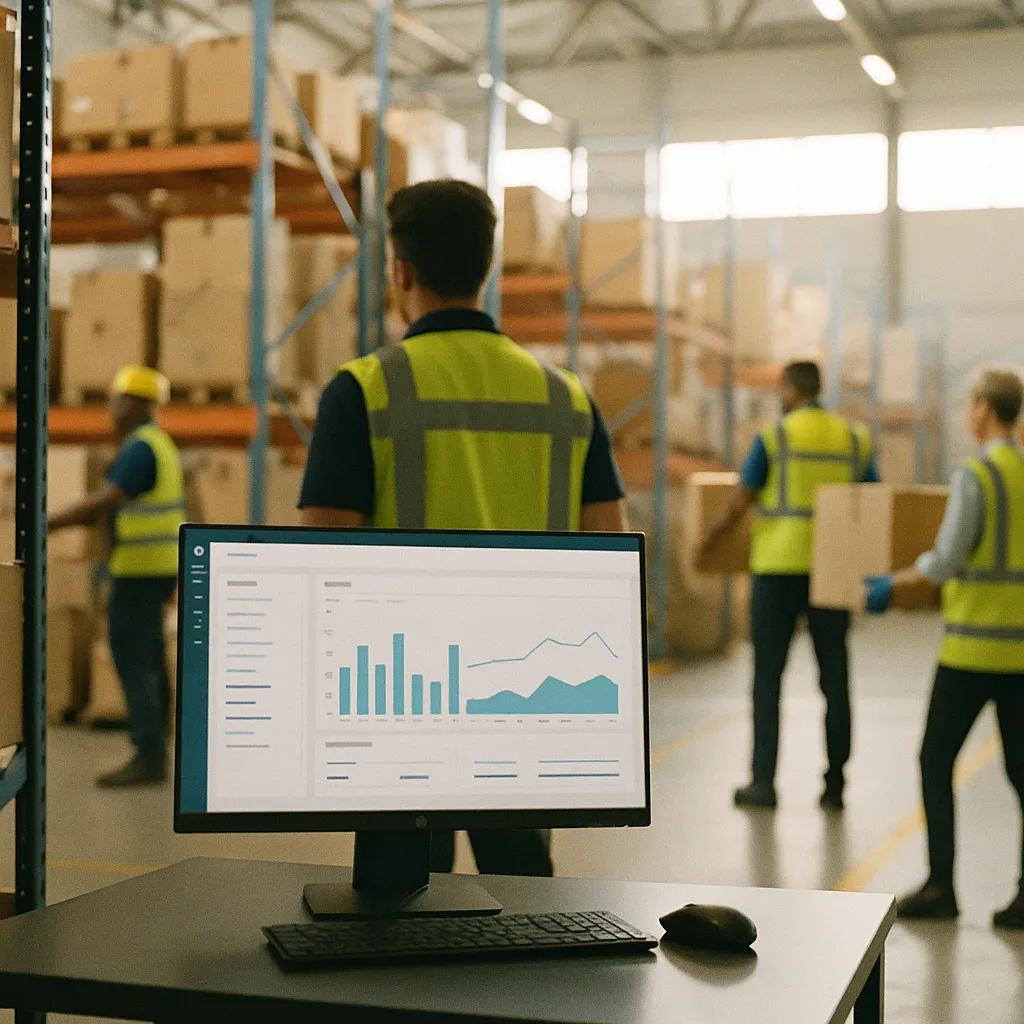
For Amazon, world models are a natural fit. Fulfillment robots, autonomous delivery, warehouse navigation — all of these require machines to reason about physical environments in real time. Locking in Odyssey as an AWS customer while backing the company's growth protects Amazon's position as the cloud infrastructure layer for physical AI.
For Nvidia and AMD, the bet is simpler: whoever wins the world-model race will need enormous amounts of compute. Being early investors puts both chipmakers in a favorable position when Odyssey scales training runs.
For IQT and the defense sector, physics-capable AI has direct applications in autonomous vehicles, logistics under contested conditions, and battlefield simulation — areas where the U.S. government has signaled sustained investment.
The Competitive Landscape
Odyssey enters a crowded but not yet settled field:
- DeepMind's Genie 2 demonstrated interactive world generation from a single image in late 2024
- Meta's V-JEPA and subsequent work focuses on video-based world representation
- OpenAI's Sora, while primarily a video generation tool, has world-model characteristics the company has discussed for robotics applications
- Startups like World Labs (founded by Fei-Fei Li) and Physical Intelligence (π) are pursuing adjacent goals in spatial AI and robot learning
What differentiates Odyssey isn't yet fully public — the company has been relatively quiet about its architecture. The investor roster, however, suggests the technology is sufficiently differentiated to justify a $1.45 billion bet at Series B.
What to Watch
The Trainium chip commitment is the most concrete near-term signal to track. If Odyssey publishes results showing competitive training performance on Trainium versus Nvidia silicon, it would be significant for AWS's enterprise chip strategy — and a data point every AI infrastructure buyer will notice. Watch also for Odyssey's first disclosed deployment: physical AI startups live or die by whether their models work outside the lab.
Hector Herrera covers AI infrastructure and investment for NexChron. Sources: The Next Web, Financial Times.
Did this help you understand AI better?
Your feedback helps us write more useful content.
Get tomorrow's AI briefing
Join readers who start their day with NexChron. Free, daily, no spam.