Your daily AI intelligence for October 09, 2026.
Good morning. Here's your AI intelligence for Friday, October 09, 2026.
Twelve stories worth your attention today — covering AI infrastructure inside the nation's largest city, inside factory floors, inside insurance balance sheets, and inside the courtroom where AI training just got a lot more expensive.
AI in the Courtroom and the Regulatory Stack
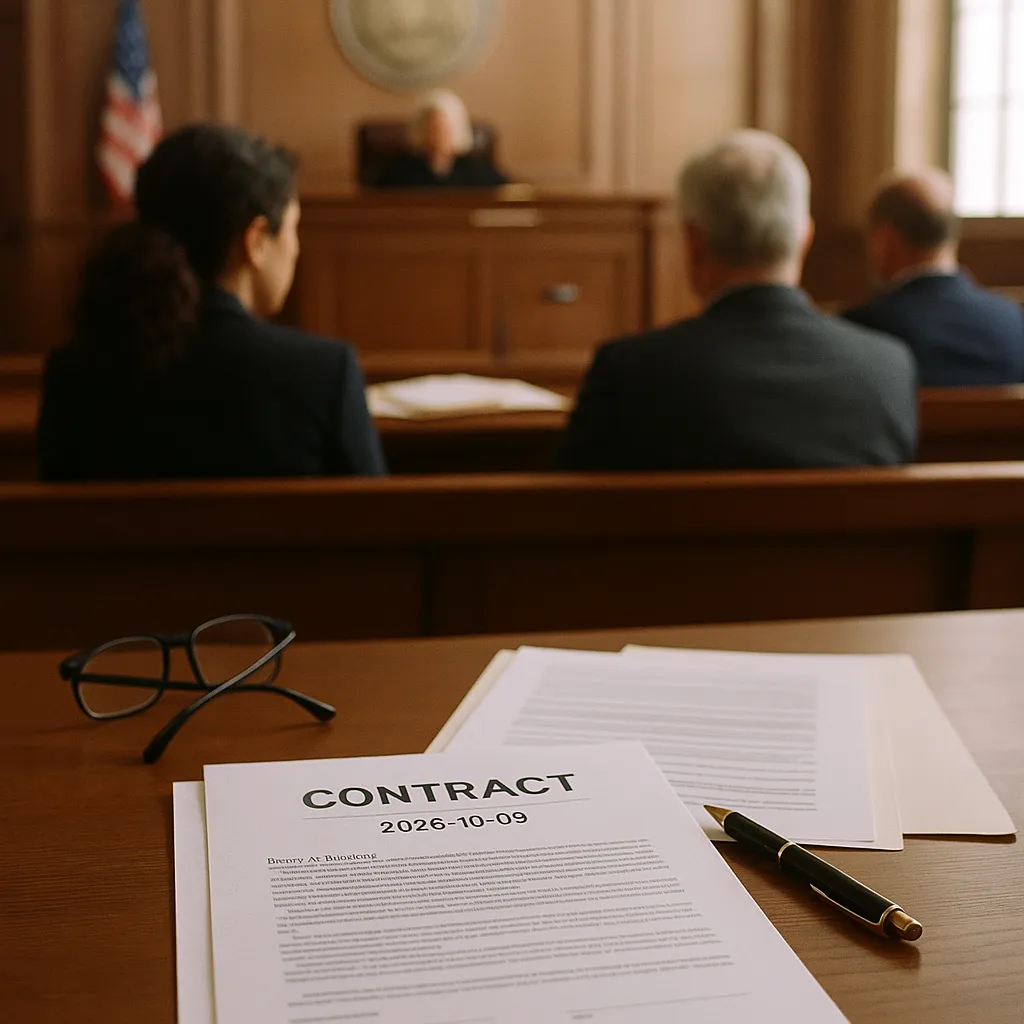
A US appeals court ruled this week that training an AI model on copyrighted material is not fair use. Ross Intelligence — which built a legal research AI on Westlaw content — lost its appeal, and the decision creates binding precedent in that circuit. This is not a theoretical threat to OpenAI, Google, or Anthropic; it is the most authoritative court ruling to date on the question every major AI lab has been quietly dreading. Licensing negotiations and training data audits are about to get a lot more serious.
New York City Council introduced Introduction 2602, a bill that would ban unvalidated AI systems from city deployment — requiring third-party validation before any AI tool enters city government. New York City government touches millions of people and hundreds of procurement contracts. If this bill passes, it could become the de facto template for municipal AI governance across the United States.
Healthcare AI Gets a Serious Infrastructure Upgrade
The UK government accepted all 44 recommendations from its AI healthcare commission and activated Phase 3 of its AI Airlock program — a pre-market sandbox where AI medical devices are tested before they reach patients. No other major economy has a live equivalent. This is the UK moving from policy discussion to operational infrastructure, and it sets a standard that other governments will be measured against.
The Economics of AI Infrastructure
Anthropic cut Claude Haiku 5.5 pricing by 75%, bringing it to $0.10 input / $0.50 output per million tokens. This is a deliberate move down-market — targeting developers who need to run millions of calls cheaply. At this price point, AI inference moves from a premium capability to a commodity component in consumer apps. Expect competitors to respond.
AI referrals to retail websites surged 302% through 2025 and another 128% in the first half of 2026, according to eMarketer data — while every other traffic channel combined grew 0.8%. That gap is not a trend; it is a structural redistribution of consumer intent. Retailers who haven't built for AI-referred traffic are already losing ground.
Get this in your inbox.
Daily AI intelligence. Free. No spam.
Deutsche Telekom cut 5G core energy consumption 65%. KDDI reduced network optimization work time 95%. SoftBank improved spectral efficiency 10%. Three carriers, three independent validations of AI-native network management as a commercial reality — not a pilot, not a proof of concept. The energy efficiency number alone has significant implications for the economics of running 5G infrastructure at scale.
Renewable energy sellers without AI forecasting and storage scheduling are losing supply contracts to competitors who have it. The buyers — AI data centers and industrial facilities — need predictable clean power, and they are paying a premium to whoever can guarantee it. This is AI creating a competitive divide within the clean energy industry itself.
AI, robotics, sensors, and cloud platforms are converging into factory operating environments that adjust production dynamically without fixed rules or human review. Global industrial robot installations hit 655,000 in 2026. The shift is not automation replacing workers on a single line — it is the factory itself becoming a decision-making system. The management implications of that transition are still being worked out.
Freight, Finance, and Film
Kodiak AI and Charger USA are running commercial autonomous freight on the 435-mile Dallas–Laredo corridor. Laredo is the busiest commercial land port in the United States. This is not a test route — it is a commercial service on a high-stakes supply chain artery where reliability is non-negotiable.
A Forbes analysis found that insurers are absorbing AI-linked debt they cannot fully quantify while simultaneously writing AI risk out of the liability policies they sell. Regulators have no framework to track the exposure. This is the classic conditions for a systemic blind spot: risk is being transferred, not eliminated, and no one has a complete ledger.
OpenAI's GPT-6 Intelligent UI replaces plain-text chat responses with interactive buttons, inline calculators, and editable graphs. This is a structural change in how AI communicates — moving from a text output model toward an interface layer that sits between users and their workflows. The implications for every SaaS product that embeds AI are immediate.
India's IICT and YouTube unveiled four AI-enabled short films produced under their Create with AI programme — the first end-to-end validation that an AI-assisted production pipeline works for emerging Indian storytellers. The films themselves matter less than what they prove: the pipeline is real, it is replicable, and it is accessible to creators who previously couldn't afford a full production stack.
What to Watch Today
The Ross Intelligence ruling lands in contract talks. Expect AI labs and their legal teams to begin reassessing training data licensing exposure within days. Watch for public statements from OpenAI, Google, and Anthropic on their training data practices — and watch for the first licensing demand letter from a major publisher.
NYC Introduction 2602 moves to committee. The bill's committee assignment and initial sponsor count will signal whether this has real traction or stalls as a messaging exercise. Procurement officers in every major US city should be reading the bill language today.
Anthropic's Haiku 5.5 pricing resets the baseline. Watch for responses from Google (Gemini Flash) and Meta (Llama API pricing) within the next two weeks. When one lab cuts inference pricing 75%, the others have to respond or lose developer volume.
Did this help you understand AI better?
Your feedback helps us write more useful content.
Get tomorrow's AI briefing
Join readers who start their day with NexChron. Free, daily, no spam.