UNICEF Innocenti research finds women hold 86% of jobs most exposed to AI-driven displacement — concentrated in administrative, clerical, and customer-service roles that prior automation waves left untouched.
Women Represent 86% of Workers Most Vulnerable to AI Automation, UNICEF Research Finds
By Hector Herrera | May 5, 2026 | Work
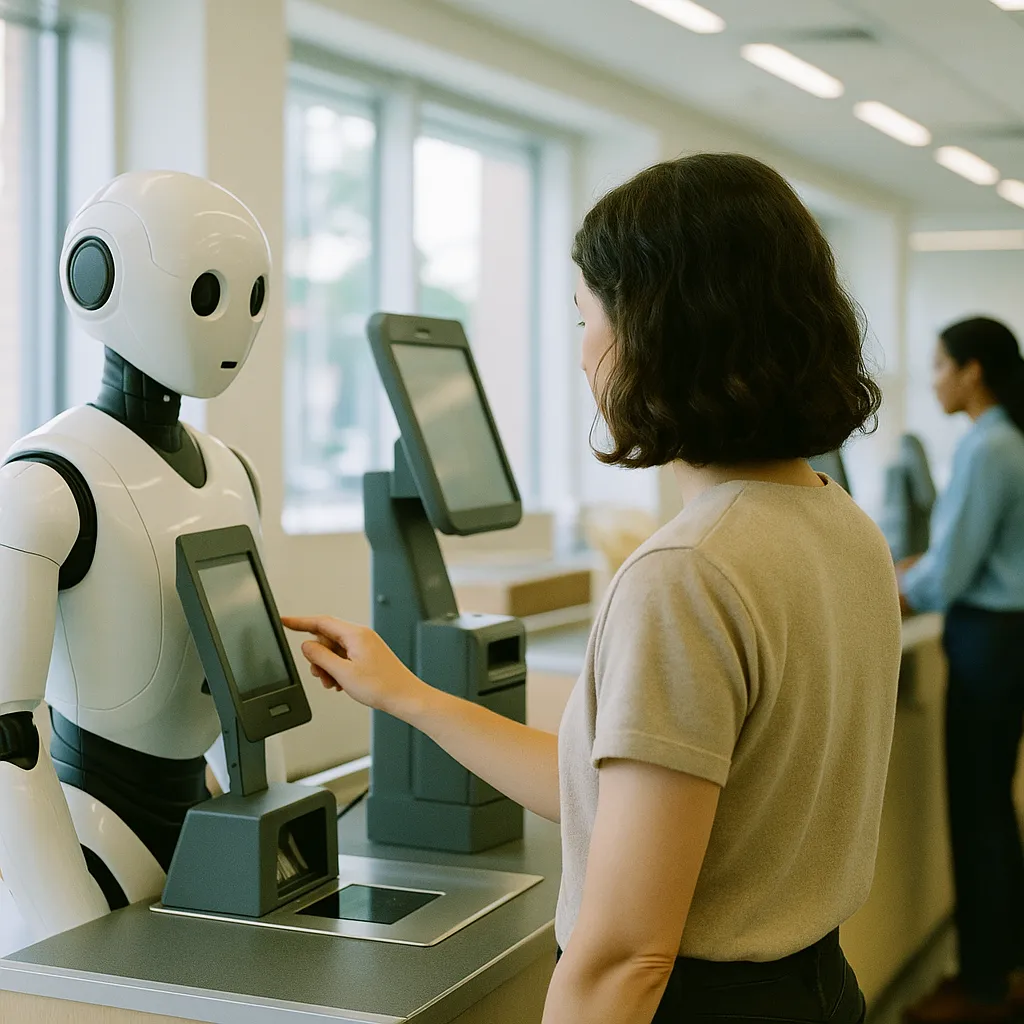
Women hold 86% of the jobs most exposed to AI-driven displacement worldwide, according to new UNICEF Innocenti research — a finding that puts gender equity at the center of AI workforce policy in a way previous automation waves never did. The difference this time: AI is targeting white-collar administrative and service work, not manufacturing floors.
Prior automation cycles hit male-dominated sectors first. Industrial robots replaced assembly-line workers. Self-checkout terminals reduced retail cashiers. The economic literature on those disruptions focused heavily on displaced male workers in rust-belt economies. AI's current trajectory runs in the opposite direction — straight into the occupational categories where women are concentrated: administrative roles, clerical work, customer service, and data entry. UNICEF Innocenti's 2026 Global Outlook report maps this exposure globally and the numbers are stark.
What the Research Found
The UNICEF Innocenti report analyzed labor market data across developing and developed economies to identify which job categories face the highest AI substitution risk. Key findings:
- 86% of the highest-risk jobs are held by women globally
- Administrative and clerical roles show the highest exposure scores — tasks like scheduling, document processing, and customer correspondence are already being automated at scale
- Customer-service positions face AI replacement pressure from both chatbot deployment and voice AI systems, sectors where women represent a disproportionate share of the workforce
- The concentration of risk is sharpest in lower-income countries, where administrative work represents a larger share of formal female employment and alternative pathways are fewer
The report distinguishes between jobs at risk and jobs that will disappear — many roles will be restructured rather than eliminated — but acknowledges that restructuring still displaces workers who lack reskilling resources.
Why This Automation Wave Is Different
The 1970s through 2010s automation literature consistently found that routine physical tasks faced the highest substitution risk. That pattern protected most white-collar workers while exposing manual labor. Large language models (LLMs) — AI systems trained on text — inverted the equation. LLMs are mediocre at physical manipulation tasks (you still need a human or robot to move boxes) but highly capable at text processing, communication, and information management.
Get this in your inbox.
Daily AI intelligence. Free. No spam.
That capability profile lands squarely on the job categories where women are overrepresented. A paralegal reviewing contracts, a medical biller processing claims, a customer service rep handling complaints, a data-entry clerk processing forms — all of these roles involve exactly the kind of text-based, rule-following information work that current AI handles with increasing competency.
The gender gap in STEM training compounds the risk. Women remain underrepresented in the technical roles that AI is creating — machine learning engineering, AI systems development, prompt engineering — which means the jobs AI is generating are not naturally positioned to absorb the workers AI is displacing.
The Policy Gap
What makes the UNICEF findings particularly pointed is the mismatch between who faces AI disruption and who is designing the policy response. Workforce reskilling programs announced by the U.S. Department of Labor, the European Commission, and major economies have tended to focus on manufacturing transition — retraining factory workers for technical roles. That framing misses the gender dimension of the current displacement wave.
Effective policy responses would need to:
- Redirect reskilling funding toward administrative and clerical workers, not just manufacturing workers
- Address access barriers — women workers in customer service and clerical roles often lack the schedule flexibility, geographic proximity to training, and employer support that factory workers receive through union-negotiated transition programs
- Close the STEM pipeline gap at the secondary and community college level, specifically targeting girls in administrative training tracks with exposure to AI management and technical literacy
Without those adjustments, the UNICEF research suggests the AI productivity dividend will accrue primarily to capital and technically skilled workers — a demographic that skews male — while the costs of transition fall on a workforce that skews female.
What It Means for Employers
For businesses, the report creates immediate obligations beyond goodwill. In jurisdictions with gender pay equity reporting requirements — which now cover most of the EU and several U.S. states — companies that automate roles disproportionately held by women without corresponding reskilling programs face regulatory scrutiny.
Legal teams at major employers are already flagging the intersection of AI deployment decisions and disparate impact liability under equal employment law. An automation program that eliminates 500 clerical roles where 80% of workers are women, without documented transition support, is not a neutral workforce decision — it is a gender impact event that HR legal and DEI frameworks need to treat as such.
What to Watch
The UNICEF report lands as the International Labour Organization is finalizing its own 2026 AI and work assessment, expected in Q3. If ILO findings align with UNICEF's gender exposure data — which most labor economists expect they will — the combination will trigger formal policy debates in the UN system and pressure major AI-deploying corporations to publish gender-disaggregated workforce impact reports. Watch for that ILO release and for whether any G7 economy announces a gender-specific AI reskilling program before year-end.
Source: UNICEF Innocenti — 2026 Global Outlook: Reshaping Work in an AI-Driven Labour Market
Did this help you understand AI better?
Your feedback helps us write more useful content.
Get tomorrow's AI briefing
Join readers who start their day with NexChron. Free, daily, no spam.