A February 2026 Gallup survey of 23,717 employees confirms AI has crossed the 50% adoption threshold in the U.S. workplace — and finds that workers closest to AI are the most anxious about it.
Half of All U.S. Workers Now Use AI on the Job, Gallup Finds
By Hector Herrera | May 7, 2026 | Vertical: Work | Type: Vertical Article
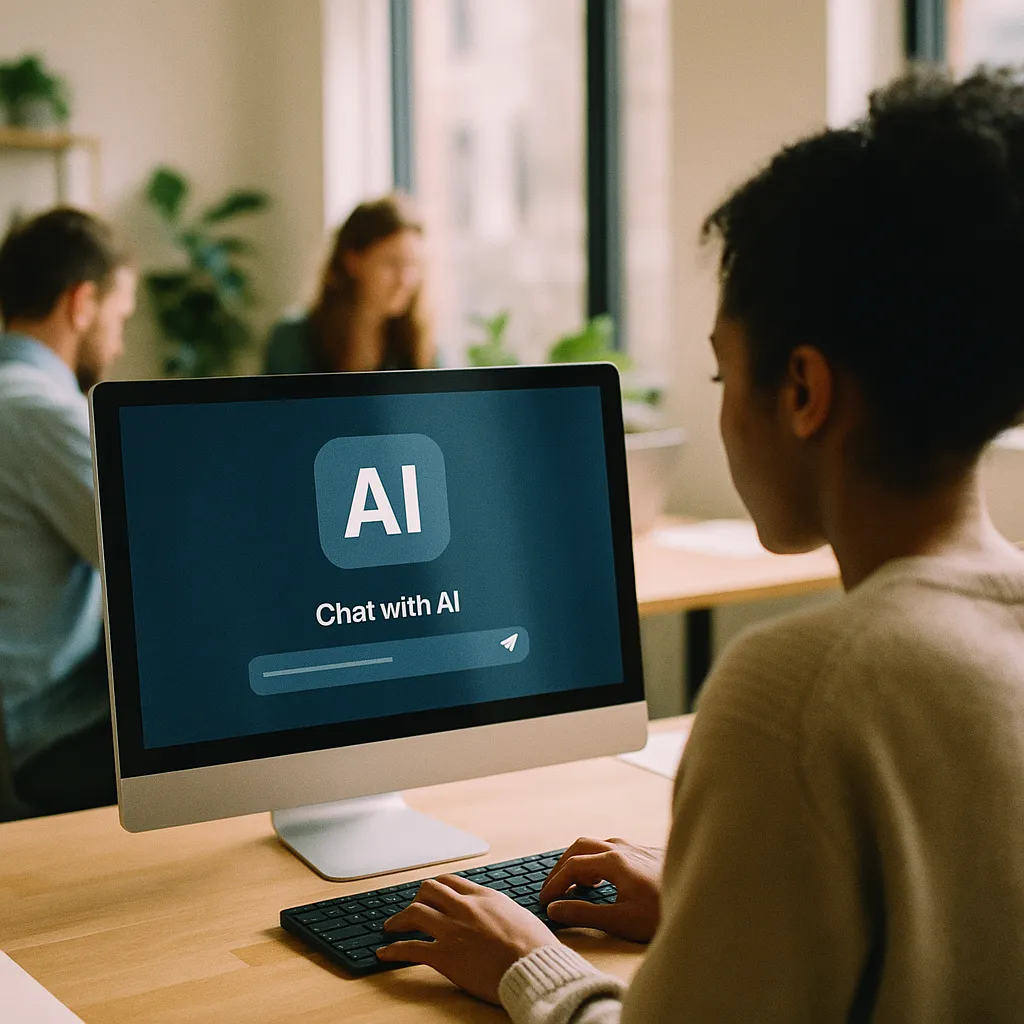
For the first time, more than half of all U.S. employees report using AI at work — a threshold that marks AI as a mainstream workplace tool, not an early-adopter experiment. The finding comes from a February 2026 Gallup survey of 23,717 U.S. employees, and the speed of the shift is striking: adoption stood at 21% in mid-2023, meaning the U.S. workforce crossed from minority to majority use in under three years.
The numbers matter because they reframe the AI-at-work conversation. This is no longer about whether AI will enter the workplace — it already has, at scale.
The Numbers Behind the Milestone
Gallup's survey captures more than just headline adoption:
- 50%+ of U.S. employees reported using AI on the job in February 2026
- 28% use AI daily or frequently — an all-time high as of Q1 2026, up from negligible levels in early 2024
- 65% of workers in AI-adopting organizations say AI has improved their productivity
- 27% report their workplace has changed in disruptive ways since AI arrived
- 23% of workers in AI-adopting organizations fear job elimination — compared to 18% overall
That last gap is the one to sit with. Workers who are actively using AI are more likely to fear for their jobs, not less. Familiarity appears to breed concern, not comfort.
Why Adoption Accelerated So Quickly
Three forces compressed the timeline. First, the tools got dramatically easier to use. The ChatGPT interface lowered the technical barrier to zero — no training required, no IT ticket needed. Second, managers who saw productivity gains in one department pushed adoption into adjacent teams. Third, enterprise licensing deals from Microsoft, Google, and Salesforce embedded AI into tools workers already used daily, making AI adoption a default rather than a choice.
The shift from opt-in to ambient is significant. When AI is built into your email client, your spreadsheet, and your customer CRM, using it isn't a decision — it's the path of least resistance. That dynamic accelerates adoption numbers in ways that voluntary adoption surveys wouldn't predict.
Get this in your inbox.
Daily AI intelligence. Free. No spam.
What "Productive" Actually Means Here
Sixty-five percent reporting productivity gains is a compelling number, but it requires context. Gallup's research measures self-reported improvement — workers saying their work got faster or easier, not measured output increases verified by employers. Self-reported productivity data skews optimistic.
What the number does capture reliably is perception — and perception shapes behavior. Workers who believe AI is making them more productive are more likely to use it more, advocate for broader adoption, and integrate it into new workflows. That feedback loop is real, regardless of whether the underlying productivity measurement is precise.
The 27% reporting disruptive change is the counterweight. For more than a quarter of workers in AI-adopting organizations, something meaningful shifted — in what their job looks like, what skills are valued, or what their colleagues do around them.
The Anxiety and Adoption Paradox
The data reveals a paradox that organizations need to reckon with honestly: the workers closest to AI are the most anxious about it.
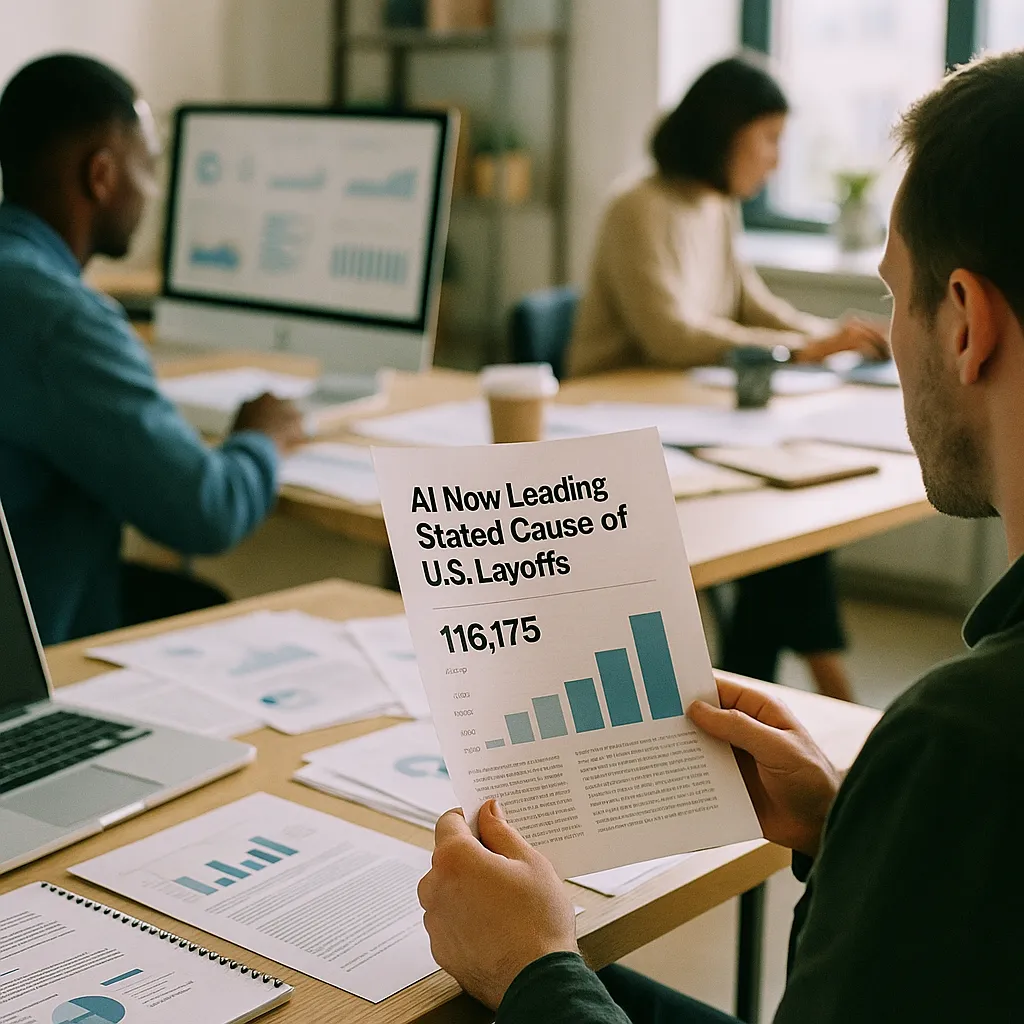
23% of workers in AI-adopting organizations fear job elimination. 18% of workers overall share that fear. The gap isn't large, but the direction is telling. Seeing AI up close — watching it draft the email, summarize the call, generate the report — makes the threat feel more concrete, not less.
This has direct implications for how organizations manage AI rollouts. Framing adoption purely as a productivity story while ignoring the job security question doesn't make the anxiety disappear; it just ensures workers feel unheard. Organizations with the best outcomes are likely the ones that address both sides of that conversation directly.
What This Means for Workers and Employers
For workers:
- AI skill fluency is becoming a baseline expectation, not a differentiator. Being the person who doesn't use AI is increasingly the notable position.
- The anxiety is rational, not irrational. Some jobs will change substantially. Acknowledging that honestly is more useful than reassurance.
- Productivity gains accrue unevenly. Workers with strong underlying skills in their domain tend to see larger gains from AI augmentation than workers whose work was already highly routine.
For employers:
- The adoption curve is largely done. The question is no longer how to get workers to try AI — it's how to manage AI use quality, consistency, and risk.
- Job security conversations can't be deferred. Workers in AI-heavy environments are already having them informally. Employers who lead those conversations proactively will have more trust and less attrition.
What to Watch
The next Gallup survey will tell us whether the 50% milestone represents a new floor or a temporary plateau. Watch also for whether the 23% job-elimination concern figure rises or falls as AI capabilities expand — and whether organizations with proactive change management strategies show meaningfully lower anxiety scores than those without.
Did this help you understand AI better?
Your feedback helps us write more useful content.
Get tomorrow's AI briefing
Join readers who start their day with NexChron. Free, daily, no spam.