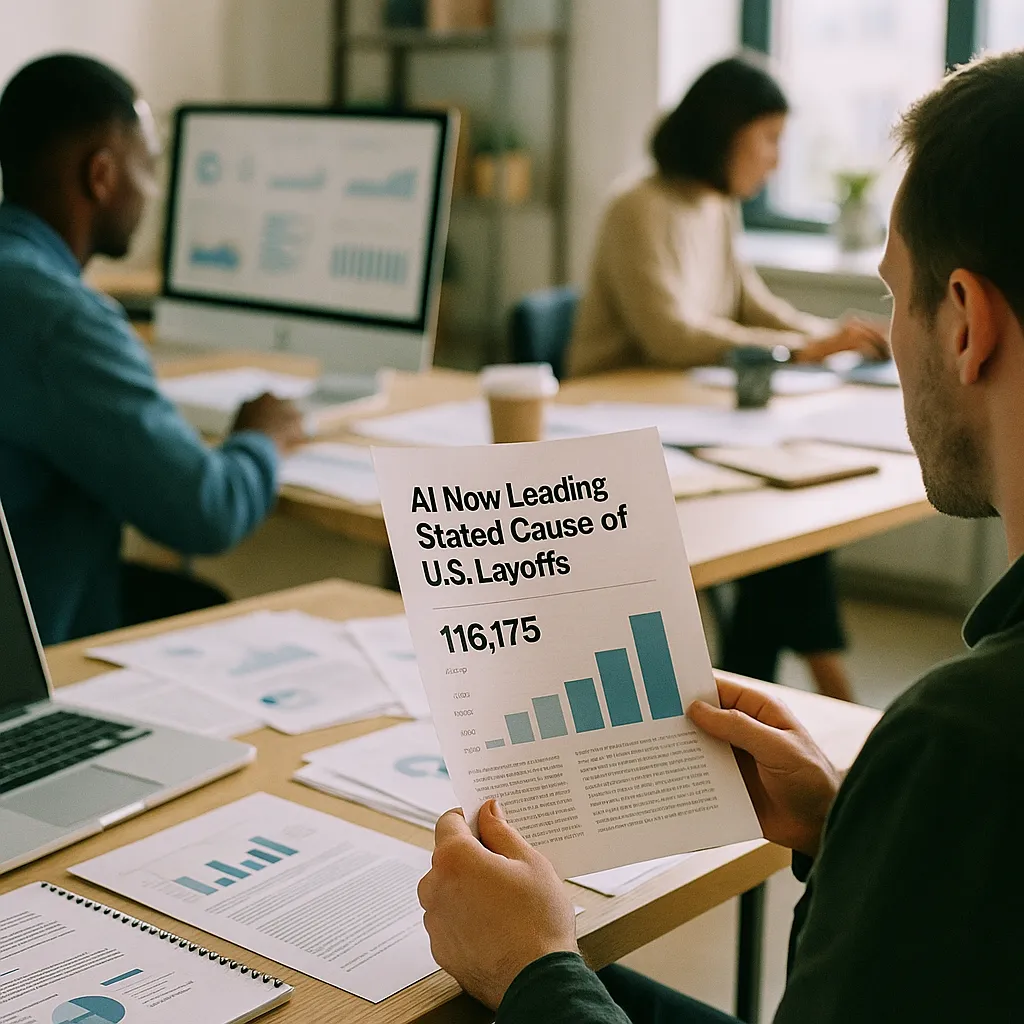
Companies have linked nearly 50,000 layoffs to AI in 2026, but economists warn the bigger story is a collapse in entry-level hiring that isn't showing up in standard layoff data.
AI Job Cuts Reach 50,000 in 2026 as Entry-Level Hiring Collapses
By Hector Herrera | June 3, 2026 | Work
Companies have announced nearly 50,000 job cuts explicitly linked to AI in 2026 — roughly 17% of all layoffs tracked this year — with Intuit, Meta, and LinkedIn among the most visible examples. But economists monitoring the labor market say the headline number understates what is actually happening: the more pervasive and harder-to-reverse effect is a collapse in entry-level hiring across knowledge work, hitting workers in their 20s and 30s the hardest and showing up nowhere in standard layoff data.
The Two Faces of AI Displacement
Layoffs are visible. Entry-level hiring collapse is not.
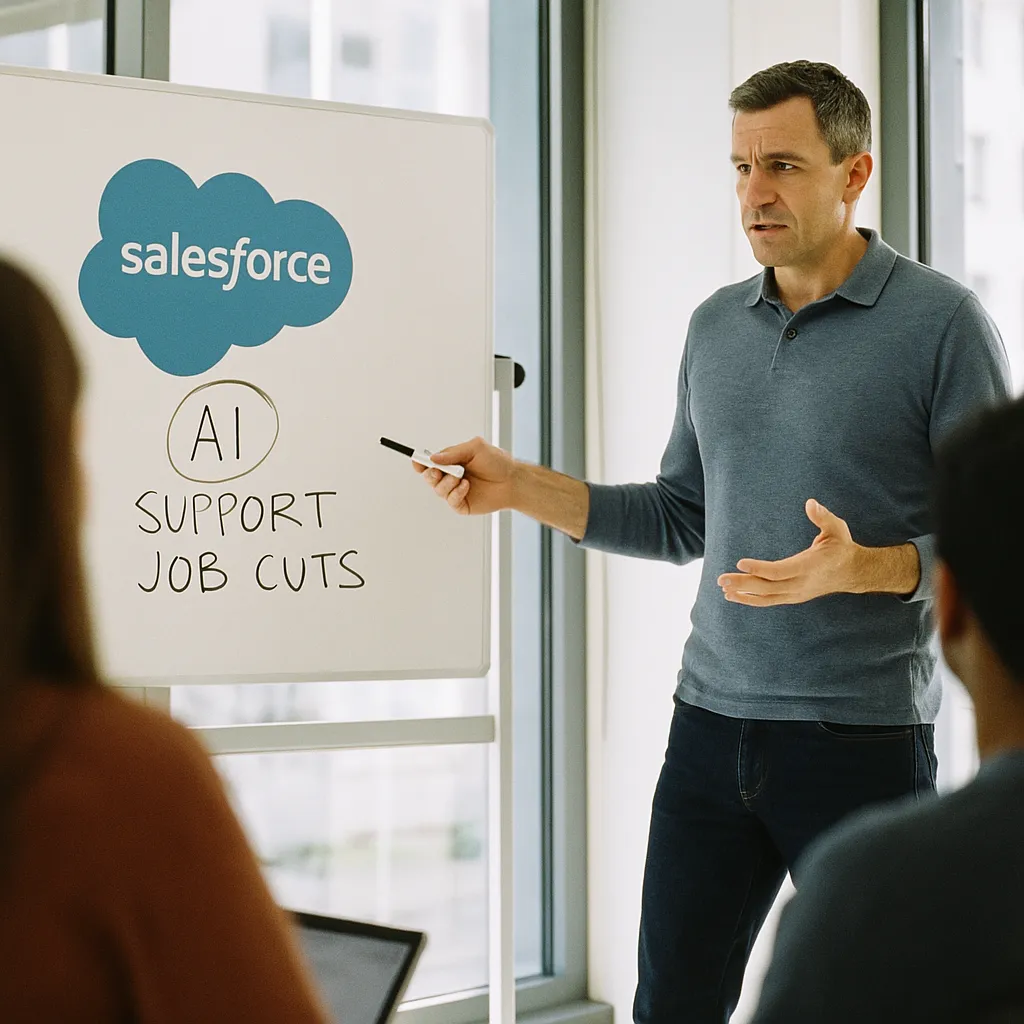
When Intuit cuts 1,800 positions and cites AI productivity, it generates a news cycle. When a mid-size accounting firm quietly stops posting junior analyst roles because a Claude or Copilot subscription handles the same work, that decision appears nowhere in layoff tracker data. According to CBS News, economists warn that the 50,000 announced cuts are the measurable tip of a structural shift occurring across thousands of individual hiring decisions made without announcement, press release, or regulatory disclosure.
The workers most exposed are those entering the job market expecting to learn through repetitive, structured tasks: drafting, summarizing, coding boilerplate, processing documents, handling tier-one customer inquiries, entering data. These are the tasks that AI handles best — and they are exactly the tasks that entry-level positions have historically been built around.
Who Has Cut and Why
The publicly announced AI-linked cuts follow a recognizable pattern:
Get this in your inbox.
Daily AI intelligence. Free. No spam.
- Intuit eliminated approximately 1,800 positions, stating that AI tools were handling work previously performed by those employees
- Meta cut roles across content moderation and operations teams, citing automation of review workflows
- LinkedIn announced layoffs in product and engineering, noting that AI development tools had changed the ratio of output to headcount
Each company framed its cuts as a reallocation toward AI development and deployment rather than a net reduction in workforce investment. The framing is not dishonest — all three companies are investing heavily in AI infrastructure. But it elides a structural reality: the roles being eliminated are not being replaced by equivalent roles at a different skill level. They are being replaced by software subscriptions.
The Entry-Level Problem Is a Career Pipeline Problem
The concern among labor economists is not only about this year's job seekers. Entry-level positions are the pipeline through which workers develop the skills, relationships, and judgment needed to advance into mid-career and senior roles. If that pipeline constricts, the effects compound over a decade.
A junior accountant who spends three years manually reviewing financial statements develops pattern recognition that shapes their work as a senior analyst. A junior software developer who spends two years writing code under supervision develops debugging instincts that cannot be acquired by watching AI generate code. If those three-to-five years of structured, supervised learning are replaced by AI-assisted shortcuts, the professional pipeline may be producing workers who can instruct AI to do tasks they have never fully learned themselves.
This is a hypothesis, not a proven outcome. But it is the hypothesis driving conversations in Washington, in HR departments, and in professional training programs that are beginning to redesign associate-level roles.
What Sectors Are Hardest Hit
The most significant exposure, based on available hiring and layoff data:
- Financial services: Junior analyst, underwriting assistant, compliance review, and loan processing roles
- Legal: Associate-level document review, contract drafting support, paralegal research
- Technology: QA testing, junior developer, technical support, and data labeling
- Marketing and media: Content creation, copywriting, SEO writing, social media management
- Healthcare administration: Medical coding, prior authorization processing, claims review
In each sector, AI has not eliminated the function — it has changed the human-to-output ratio required to perform it. A team of five now does what a team of twelve did two years ago. The five who remain are not the most senior. They are the most senior people the company can afford to retain after the productivity math changes.
What This Means for Companies and Workers
For companies, the near-term productivity gain from AI-driven workforce reduction is real and measurable. The longer-term risk is a talent pipeline that produces fewer workers with the practical judgment to manage, audit, and course-correct AI systems — a problem that may not become visible until 2028 or 2030, when the current entry-level cohort would have been reaching mid-career positions.
For workers entering the job market in 2026, the practical reality is uncomfortable: the skills that create durable employment are those requiring judgment, context, and client relationships — not task execution. The workers who thrive alongside AI will be those who can recognize when the AI is wrong, explain results to stakeholders, and make decisions in situations the AI was not trained to handle.
What to Watch
Watch monthly JOLTS (Job Openings and Labor Turnover Survey) data for continued evidence of entry-level posting declines in professional services. Watch whether major professional associations — in accounting, law, and healthcare — update licensure requirements to address AI competency. And watch whether any large employer publicly commits to maintaining structured entry-level hiring pipelines as a deliberate talent development strategy, accepting the near-term cost in exchange for long-term workforce quality. So far, none have.
Did this help you understand AI better?
Your feedback helps us write more useful content.
Get tomorrow's AI briefing
Join readers who start their day with NexChron. Free, daily, no spam.