Telecom & Connectivity | 4 min read

T-Mobile to Reveal World's First AI-RAN Live Network Test Before Year-End

T-Mobile will demonstrate the world's first AI-native radio access network on a live commercial 5G network before year-end, following measured results showing 50% better beamforming and 16% better downlink throughput.

Hector Herrera
Hector Herrera
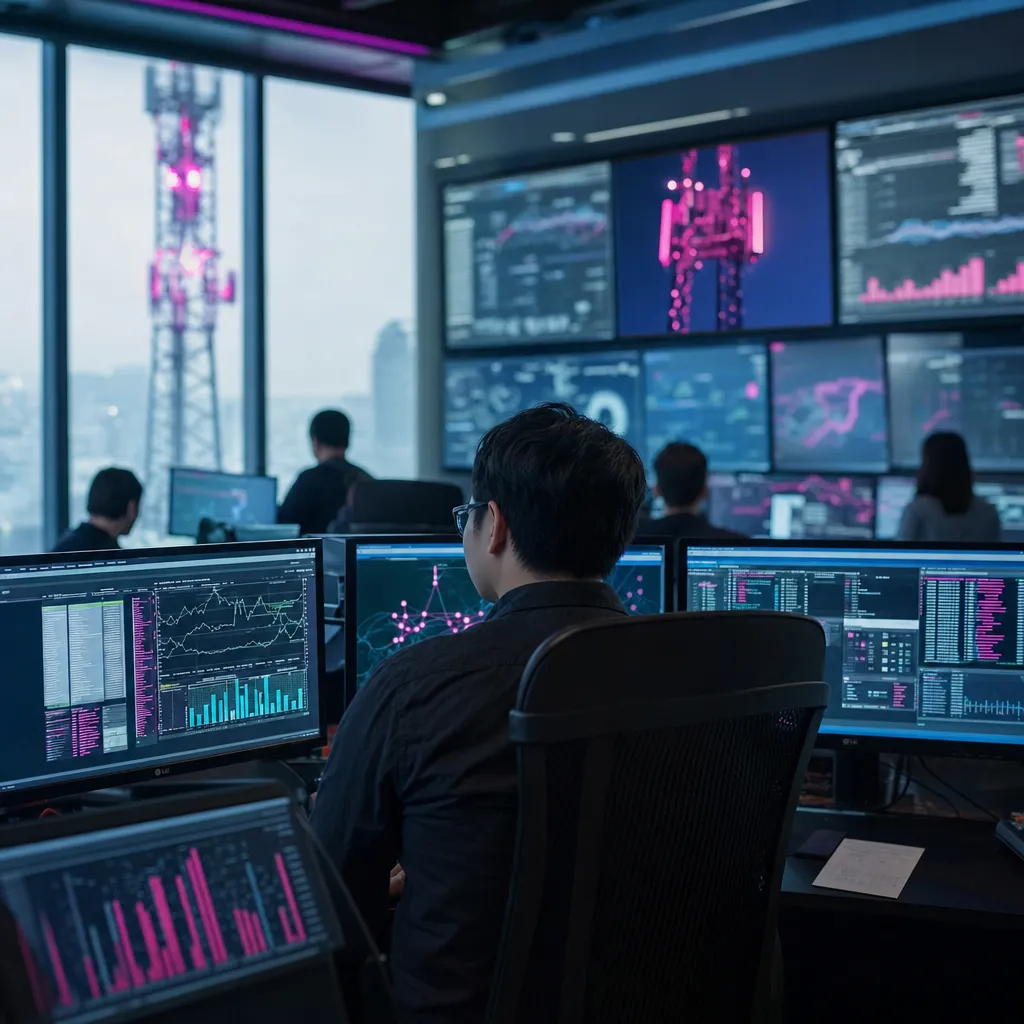
A network operations center where a person is operating related to T-Mobile to Reveal World's First AI-RAN Live Network Test Be
Why this matters T-Mobile will demonstrate the world's first AI-native radio access network on a live commercial 5G network before year-end, following measured results showing 50% better beamforming and 16% better downlink throughput.

T-Mobile to Reveal World's First AI-RAN Live Network Test Before Year-End

By Hector Herrera | November 27, 2026 | Telecom

T-Mobile confirmed it will demonstrate what it's calling the world's first AI-native radio access network (AI-RAN) on a live commercial 5G network before the end of 2026. The company is running parallel trials — one with Nokia's GPU-based AI-RAN platform, one with Ericsson's non-GPU system — and has already posted measured performance improvements in live beamforming tests that exceed what conventional rule-based network management can achieve. The year-end reveal would mark the first time AI-driven radio management has moved from controlled lab conditions to a real, operating commercial network.

The significance is structural. AI-RAN isn't a software feature added to an existing radio tower — it's a different architectural approach to how mobile networks decide what to do with spectrum in real time. Getting it right at scale is a years-long engineering problem. Getting it to work first on a live commercial network is worth a headline.

What AI-RAN Actually Is

Traditional radio access networks operate on rule-based management: the base station (the cell tower equipment) follows pre-programmed parameters to decide how to allocate spectrum, adjust transmission power, and steer antennas toward users. These rules are set by network engineers and updated periodically, but they don't adapt to real-time conditions beyond narrow automated thresholds.

AI-RAN replaces parts of that rule-based system with machine learning models that continuously observe network conditions — user locations, interference patterns, traffic loads — and adjust transmission parameters in real time. The key applications include:

  • Beamforming optimization — AI steers antenna beams toward individual users more precisely than fixed rules allow, increasing signal strength and reducing interference
  • Spectrum scheduling — AI predicts when and where demand will peak and pre-positions capacity accordingly
  • Energy optimization — AI powers down antenna elements during low-demand periods more aggressively than rule-based systems, reducing operating costs

The Performance Numbers From T-Mobile's Ericsson Trial

T-Mobile's live beamforming trial with Ericsson on a commercial 5G-Advanced network, reported by RCR Wireless, produced three measured improvements compared to the rule-based baseline:

  • 50% improvement in advanced beamforming performance
  • 16% better downlink throughput (data delivered to devices)
  • 12% better spectral efficiency (more data per unit of spectrum)

These are not lab numbers. They were measured on a live network carrying real traffic. A 16% throughput improvement on existing spectrum — without buying additional spectrum or deploying additional towers — is economically meaningful. Carriers have spent hundreds of billions of dollars acquiring spectrum over the past decade. AI-RAN offers a path to extract more value from spectrum already owned.
Nokia and Ericsson: Different Architectures

T-Mobile's parallel testing of both Nokia's and Ericsson's systems reflects a deliberate vendor strategy. The two platforms take different architectural approaches:

Nokia's AI-RAN uses GPU-based processing — running AI inference on graphics processors co-located with radio equipment. This approach delivers high computational power but requires hardware upgrades to deployed cell sites.

Ericsson's AI-RAN achieves its results without GPUs, using optimized AI models that run on existing radio hardware. This matters for deployment economics: software-upgradeable without hardware swaps is dramatically cheaper to roll out at scale across tens of thousands of cell sites.

T-Mobile has not indicated which platform it will feature in the year-end reveal. Running both tests simultaneously may be about generating comparison data, or it may be about maintaining negotiating leverage with both vendors.

Why This Year-End Timing Matters

The industry has been talking about AI-RAN since at least 2024. NVIDIA has built a business around selling GPU compute for AI-RAN. Nokia, Ericsson, and Samsung have all published research. The missing piece was live commercial deployment — moving from controlled tests to real networks serving real users under real conditions.

If T-Mobile's year-end demonstration holds up, it establishes a proof point that the rest of the industry will accelerate toward. Verizon, AT&T, and carriers in Europe and Asia will face investor and board questions about their AI-RAN timelines. The standard shifts from "we're testing AI-RAN" to "when are you deploying it."

Spectrum regulators will also take note. If AI-RAN demonstrably improves spectral efficiency at scale, it complicates the argument for allocating additional spectrum to carriers struggling with congestion — the answer may be better software, not more spectrum.

What to Watch

The year-end reveal. If T-Mobile publishes performance data from a full AI-RAN deployment on a live market, that data will be scrutinized by every major carrier's engineering team simultaneously. Watch also for whether the Nokia or Ericsson system gets the headline — that choice will shape vendor momentum in AI-RAN procurement conversations heading into 2027.


Sources: RCR Wireless

Key Takeaways

  • ✓ Beamforming optimization
  • ✓ 50% improvement in advanced beamforming performance
  • ✓ 12% better spectral efficiency

Did this help you understand AI better?

Your feedback helps us write more useful content.

Hector Herrera

Written by

Hector Herrera

Hector Herrera is an AI systems architect in Houston and founder of Hex AI Systems. He designs and runs AI systems in production and writes daily about how AI is reshaping business, government and everyday life. 20+ years building for the web. Houston, TX.

More from Hector →

Get tomorrow's AI briefing

Join readers who start their day with NexChron. Free, daily, no spam.

More from NexChron