Hitachi joined Anthropic's Critical Infrastructure Defense Program today as its operational technology founding partner, bringing power grid and water utility expertise to a program that deploys Claude AI to defend critical systems.
Hitachi has joined Anthropic's Critical Infrastructure Defense Program as its operational technology founding partner, adding real-world expertise in power grids, water utilities, and industrial facilities to a program that deploys Claude AI models directly inside the systems that keep physical infrastructure running. The announcement, reported today via Business Wire, comes one day after Anthropic launched the program with 11 founding partners — and signals that the initiative is specifically targeting the gap between IT (information technology) and OT (operational technology) security.
What the Program Does
Anthropic's Critical Infrastructure Defense Program pairs Claude models with on-site Anthropic engineers to identify and remediate vulnerabilities in critical systems. The model — positioned as a defensive tool — analyzes system configurations, flags anomalous patterns, and assists security teams in patching before attackers can exploit weaknesses.
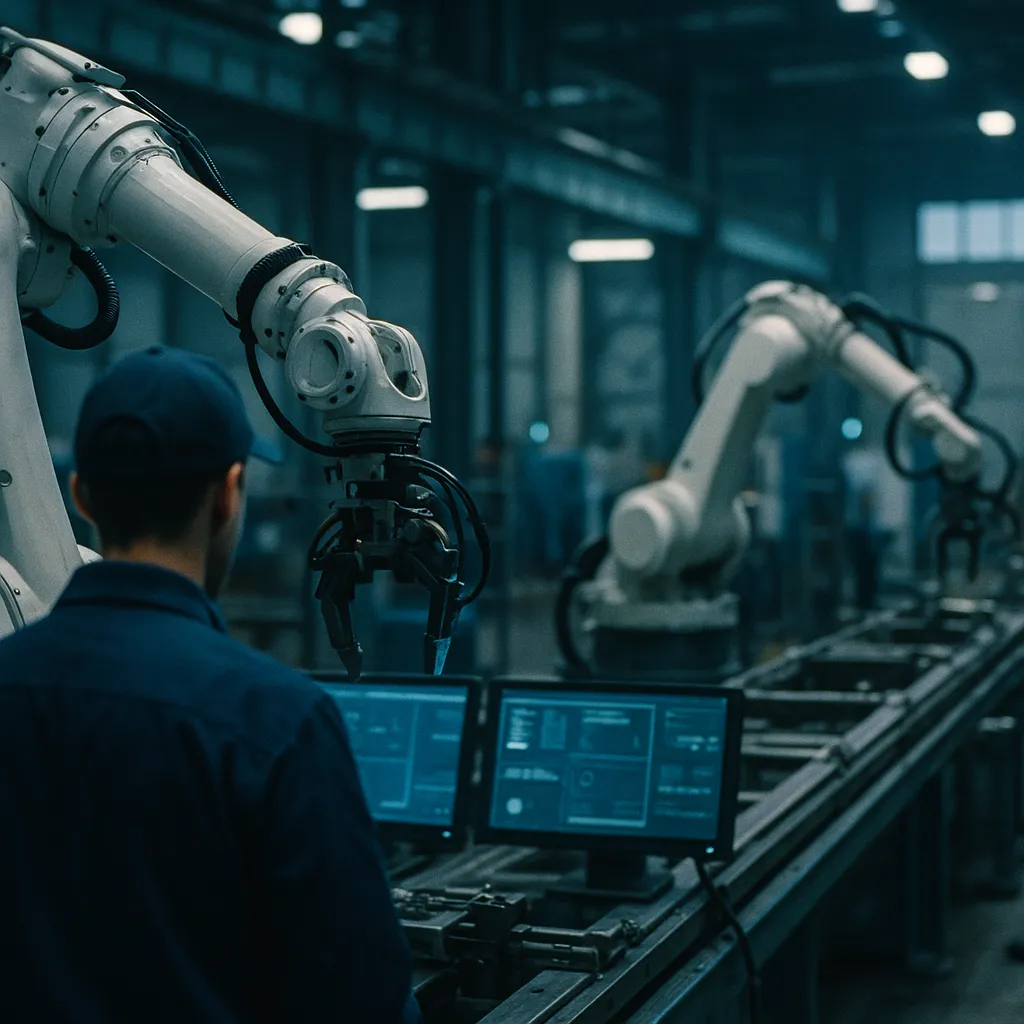
OT security is a distinct problem from IT security. Operational technology refers to the hardware and software that controls physical processes: the systems that open valves in a water treatment plant, balance loads on a power grid, or sequence robots on a factory floor. These systems were often designed decades ago, prioritizing uptime and physical control over cybersecurity, and they don't respond well to the patch-and-restart cycles common in enterprise IT.
Hitachi's role in the program addresses that gap directly. The company operates and services OT environments across energy, water, and manufacturing — making it the partner best positioned to apply the program's AI capabilities to the physical layer.
The Founding Partner Lineup
The program launched October 8 with 11 founding partners. The confirmed names include cybersecurity firms CrowdStrike, Palo Alto Networks, and Dragos — the last of which specializes specifically in OT and industrial control system (ICS) security. Hitachi's addition brings the count to at least 12.
Get this in your inbox.
Daily AI intelligence. Free. No spam.
The partnership structure matters: Anthropic is not selling a product here. The program involves on-site engineers working alongside clients, which suggests a high-touch, case-by-case deployment model rather than a SaaS rollout.
Why This Is Happening Now
Critical infrastructure has been under sustained pressure from state-sponsored threat actors for years. The U.S. Cybersecurity and Infrastructure Security Agency (CISA) documented a sharp increase in OT-targeted intrusions through 2025 and 2026, with several incidents attributed to Chinese and Russian actors probing grid and water systems.
The timing is not incidental. As AI lowers the cost of sophisticated attacks — as illustrated by the ARTEX-linked breaches of nine South Korean banks reported today — defenders are racing to use the same capabilities on the other side of the equation.
For industries relying on aging OT systems, the practical question is whether AI-assisted vulnerability discovery can move faster than attackers can exploit the same weaknesses. Hitachi's involvement suggests at least one major OT operator believes it can.
What to Watch
Anthropic has not publicly named all 11 original founding partners, and no timeline has been announced for when program findings will be published or shared across the industry. The key signals to watch: whether the program produces public vulnerability disclosures, whether it expands to utilities and municipalities beyond founding partners, and how regulators — particularly CISA and the Department of Energy — engage with the model.
By Hector Herrera
Did this help you understand AI better?
Your feedback helps us write more useful content.
Get tomorrow's AI briefing
Join readers who start their day with NexChron. Free, daily, no spam.