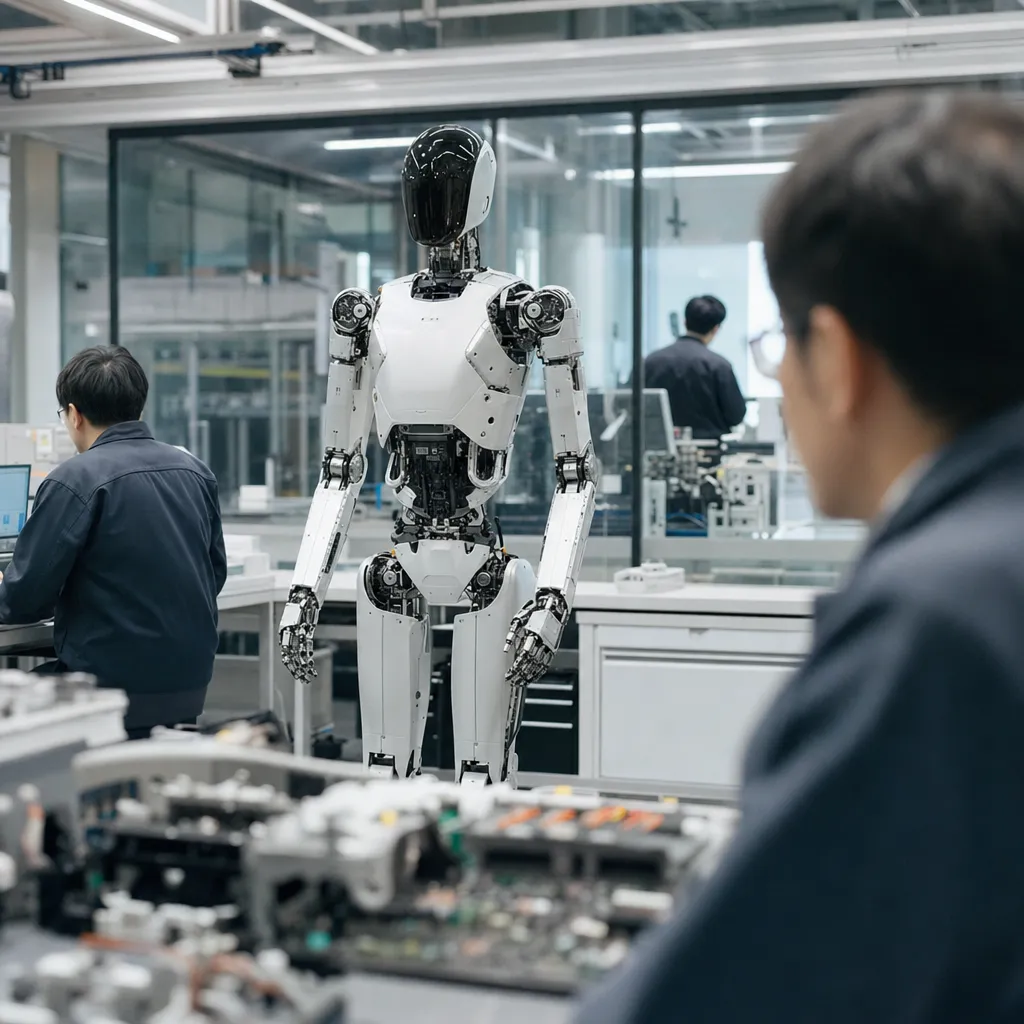
Tencent chief AI scientist Yao Shunyu said frontier models are approaching a capability threshold where the barrier to serious biological harm — including bioweapon development — drops materially.
Tencent's chief AI scientist said this week that frontier AI models are nearing a threshold where their biological capabilities could enable serious harm — including, he said explicitly, the development of bioweapons. The warning, delivered at a Hong Kong science event, is significant not for its novelty but for its source: a sitting chief scientist at one of the world's largest AI companies, speaking publicly, at the same event where Tencent launched a new open-weight model.
What He Said
Yao Shunyu — who joined Tencent from OpenAI — told attendees that biological risks are harder to manage than cybersecurity risks, and that frontier models are approaching the capability threshold where the barrier to serious biological harm drops materially. According to The Next Web's report on the event, the concern is not that current models can generate ready-made bioweapons, but that the gap between "not capable" and "capable enough to matter" is narrower than most people assume — and closing.
Tencent's new Hy4 model had its training data stripped of offensive cybersecurity material, Yao noted. He made no equivalent statement about biological knowledge.
Get this in your inbox.
Daily AI intelligence. Free. No spam.
The Open-Weight Problem
The uncomfortable context: Tencent is simultaneously releasing Hy4 as an open-weight model, meaning the model weights are downloadable and runnable without any safety guardrails the developer builds in. If Yao's threshold concern is accurate — that frontier models are approaching a biologically dangerous capability level — then releasing those weights publicly is a decision that deserves scrutiny, not just acknowledgment.
Tencent plans to publish a safety report alongside the weight release in the coming days.
What to Watch
Read Tencent's safety report when it publishes. The specific question: does it include biological capability evaluations? Biosecurity researchers have developed standardized uplift tests — assessments of whether a model meaningfully lowers the barrier to creating dangerous pathogens — and how Tencent handles that benchmark will either set a standard for open-weight releases or reveal a gap in the evaluation process.
Yao's warning validates arguments that biosecurity researchers and figures like Yoshua Bengio have been making for over a year. Hearing it from inside a frontier lab matters. What Tencent does with its own model is the test.
Did this help you understand AI better?
Your feedback helps us write more useful content.
Get tomorrow's AI briefing
Join readers who start their day with NexChron. Free, daily, no spam.