NVIDIA Launches Ising, the First Open-Source AI Models Built for Quantum Computing
NVIDIA released Ising on World Quantum Day — the first open-source AI models purpose-built for quantum hardware. They cut calibration time from days to hours and deliver 3x more accurate error correction.
Why this matters
NVIDIA released Ising on World Quantum Day — the first open-source AI models purpose-built for quantum hardware. They cut calibration time from days to hours and deliver 3x more accurate error correction.
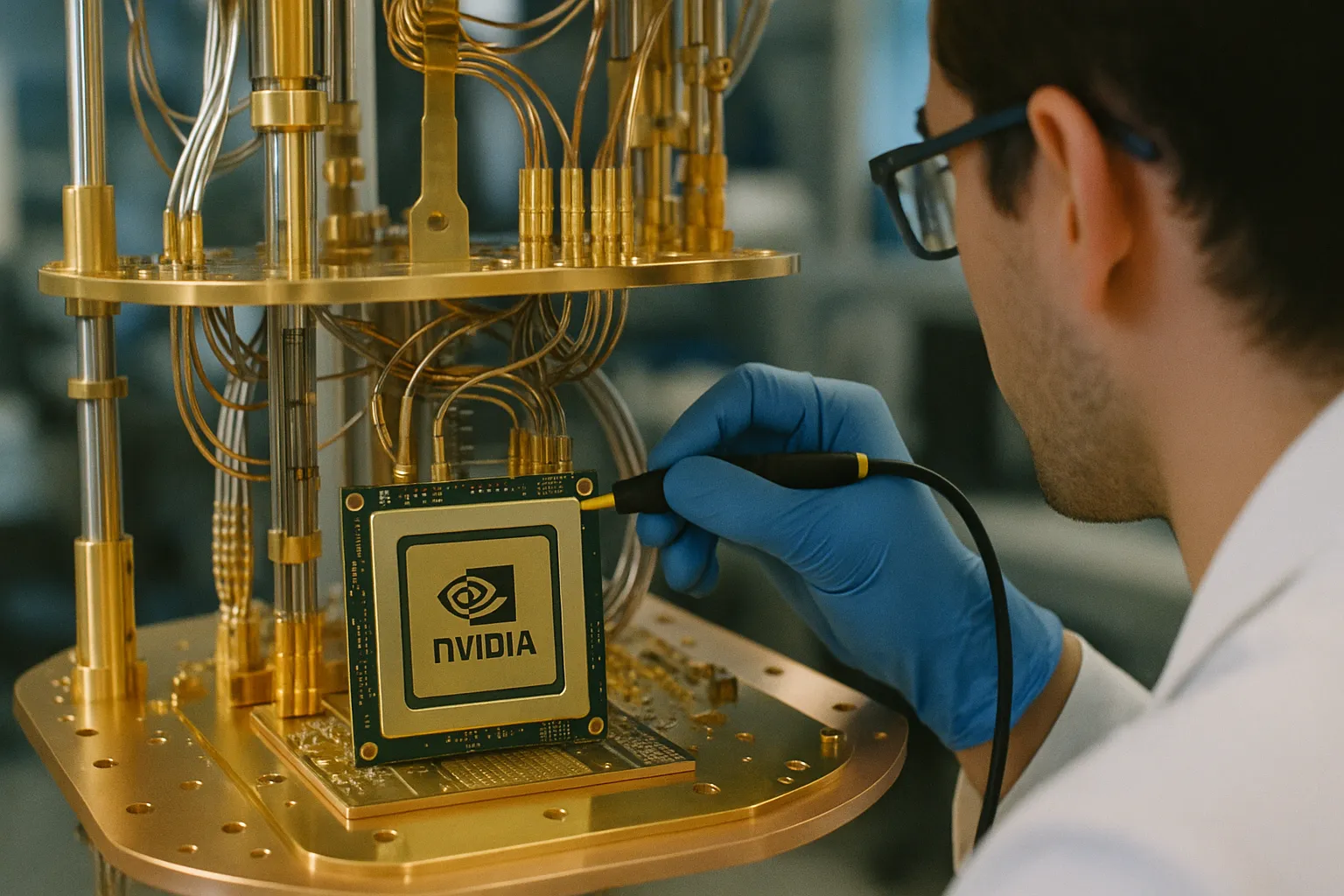
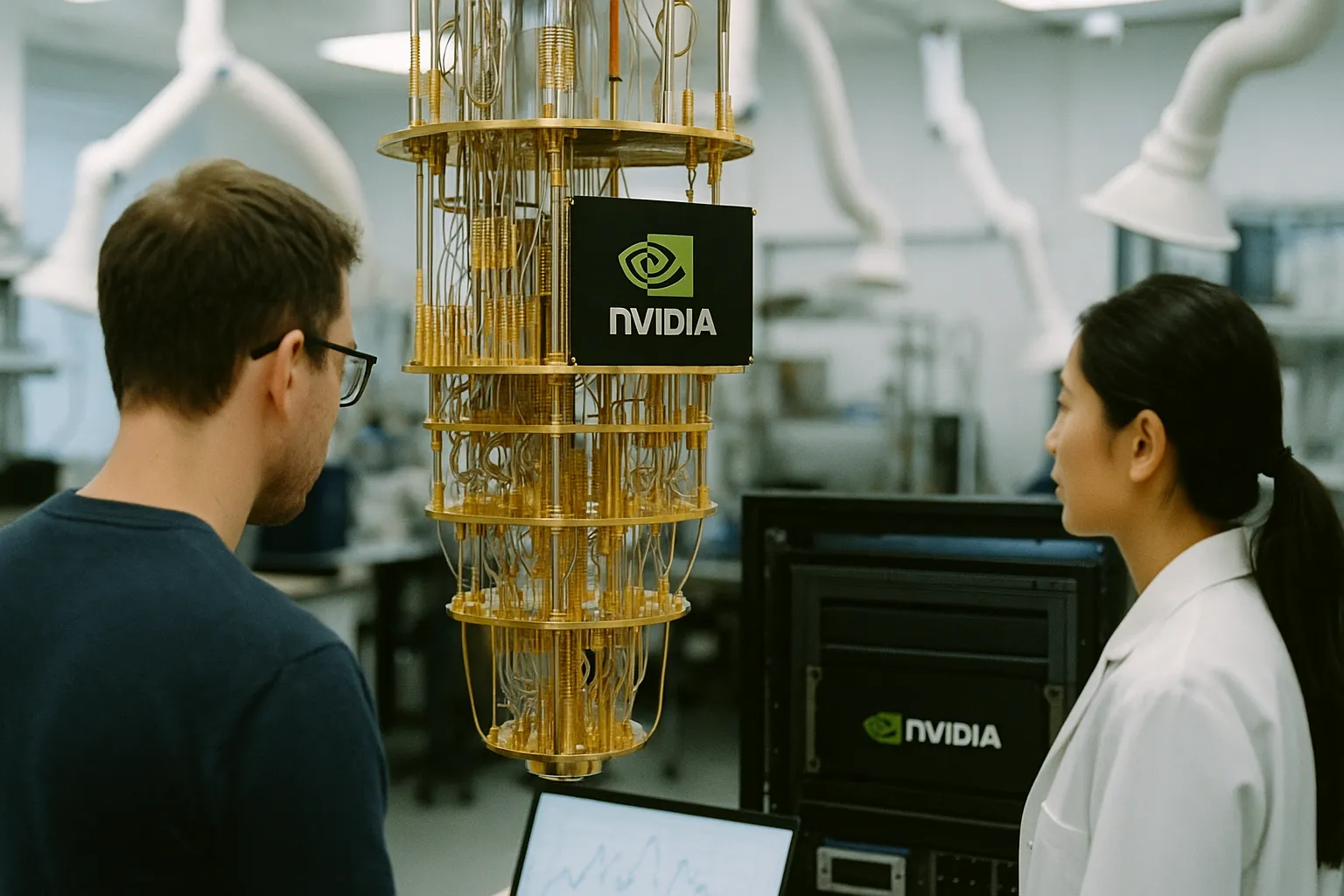
NVIDIA released Ising today — a family of open-source AI models designed specifically to solve the hardest bottlenecks in quantum hardware development. The announcement, timed to World Quantum Day, is the first time AI models have been purpose-built and released publicly to address quantum processor engineering challenges at the infrastructure level.
What Quantum Calibration Actually Is
To understand why Ising matters, you need to know what calibration means in quantum computing. A quantum processor — unlike a conventional chip — requires constant, precise tuning to keep its qubits (the fundamental unit of quantum computation) operating within tight error tolerances. Temperature shifts, electromagnetic interference, and hardware aging cause qubits to drift. Before a quantum computer can run useful calculations, engineers must calibrate it: measure every qubit's behavior and adjust parameters until everything is within spec.
Until now, that process could take days. For a technology still proving its commercial value, days of downtime per calibration cycle is a serious barrier to practical deployment.
Ising Calibration — A vision-language model that reads quantum processor diagnostic data and outputs tuning parameters. It cuts calibration time from days to hours. The "vision-language" architecture means it processes both visual readouts (like qubit frequency maps) and text-based configuration inputs together, the same approach used in multimodal AI models like GPT-4o.
Get this in your inbox.
Daily AI intelligence. Free. No spam.
Ising Decoding — A model focused on quantum error correction (QEC). QEC is the process of detecting and fixing errors in quantum computations in real time — without it, quantum computers produce unreliable results. Ising Decoding delivers:
2.5x faster error correction than the current open-source standard
3x more accurate decoding results than the current open-source standard
Both models are open-source, meaning any quantum hardware company, university lab, or research team can download, run, and build on them without licensing fees.
Why This Release Is Significant
The quantum computing industry has historically advanced through hardware: better qubits, lower error rates, more qubit counts. The Ising release signals a shift — that AI-driven software may unlock practical utility from quantum hardware that already exists, rather than waiting for the next hardware generation.
The calibration problem is particularly acute because it scales poorly. A 100-qubit processor requires significantly more calibration work than a 10-qubit one. As the industry pushes toward the 1,000+ qubit systems needed for commercially relevant computation, manual or slow calibration becomes an exponentially worse bottleneck. Ising Calibration's reduction from days to hours is not a linear improvement at this scale; it changes what's operationally feasible.
The error correction improvement matters for similar reasons. Quantum error correction is computationally expensive — Ising Decoding's 2.5x speed and 3x accuracy gains mean that real-time QEC becomes viable on hardware that previously couldn't sustain it.
NVIDIA is releasing these models openly rather than as a proprietary service, which follows a pattern the company has used to build ecosystem dominance in GPU computing. By becoming the infrastructure layer that quantum hardware vendors build on, NVIDIA positions itself centrally in quantum computing's commercial development — regardless of which qubit technology (superconducting, photonic, ion trap) eventually wins.
What to Watch
The near-term question is adoption: which quantum hardware companies integrate Ising Calibration and Ising Decoding into their stacks first, and whether the performance claims hold across qubit architectures other than the ones NVIDIA tested against. Watch for announcements from IBM Quantum, IonQ, Quantinuum, and Google Quantum AI responding to or adopting the Ising suite in the coming weeks.
Hector Herrera is an AI systems architect and the founder of Hex AI Systems. He designs and runs AI systems in production and writes daily about how AI is reshaping business, government and everyday life. 20+ years building for the web. Houston, TX.