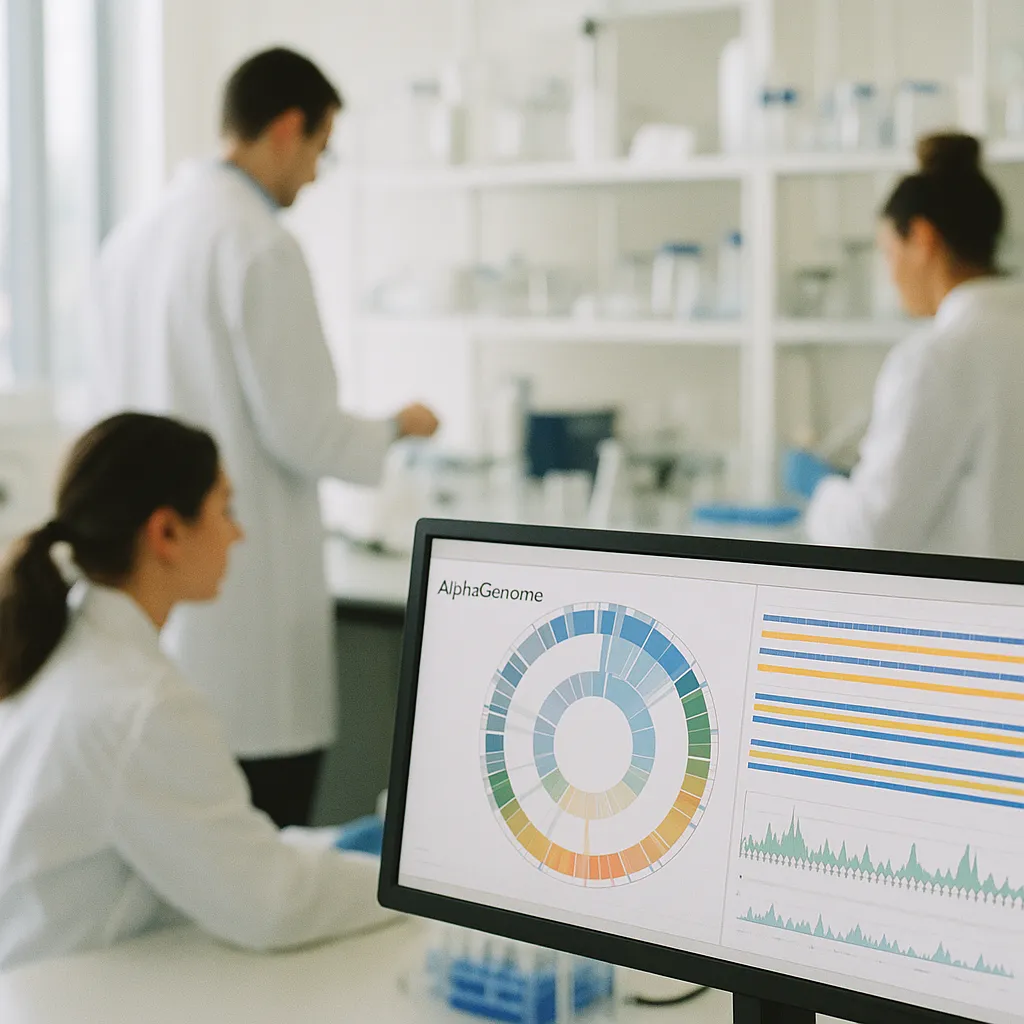
Google unveiled Gemini for Science at I/O 2026, giving researchers natural-language access to model biological, chemical, and physical systems using AlphaFold and Google Scholar integration.
Google Launches Gemini for Science to Help Researchers Model Complex Systems
By Hector Herrera | May 20, 2026 | Vertical: Science | Type: Breaking News
Google unveiled Gemini for Science at I/O 2026, a research tool that lets scientists query complex biological, chemical, and physical datasets using natural language — a direct attempt to bring frontier AI capabilities into the daily workflow of researchers who aren't AI specialists.
The announcement arrives at a moment when AI's potential for accelerating scientific research has been well demonstrated in isolated systems, but accessible tooling for working scientists has remained largely unavailable outside well-resourced labs.
What Gemini for Science Offers
According to Google's I/O keynote, Gemini for Science enables:
- Natural language queries across multimodal scientific data — researchers can ask questions spanning text, images, molecular structures, and numerical datasets simultaneously
- Google Scholar integration — model outputs are surfaced alongside relevant citations, giving researchers a path to verify claims rather than accepting AI output at face value
- AlphaFold infrastructure — the tool builds on DeepMind's protein structure prediction work, extending AI-assisted analysis into drug discovery workflows
Google identified three initial focus areas: drug discovery, climate modeling, and materials science. These aren't arbitrary choices — they're the domains where AI has already demonstrated measurable results and where working researchers have the clearest incentive to adopt new tools.
Get this in your inbox.
Daily AI intelligence. Free. No spam.
Why the Tooling Gap Has Mattered
AI tools like AlphaFold, Google's Graphcast weather forecasting model, and various drug-target prediction systems have generated meaningful scientific results over the past several years. But these systems have been largely accessible only to researchers with computational training and institutional computing infrastructure.
A molecular biologist studying protein interactions doesn't necessarily know how to query a foundation model, configure inference infrastructure, or interpret raw model outputs. The gap between "AI can do this" and "a working scientist can use this to do their work" has been the field's persistent bottleneck.
Gemini for Science is designed as a natural language bridge across that gap — meeting researchers in their existing workflow rather than requiring them to acquire a new technical skill set. Google Scholar's deep penetration in academic workflows gives the tool a meaningful distribution advantage: it's already where most scientists go to find literature.
What Wasn't Answered
Access and pricing. Is Gemini for Science available to any Google account holder, restricted to Google AI Ultra subscribers, or limited to institutional partners? The keynote didn't specify. For academic researchers — many working at institutions with constrained budgets — pricing directly determines whether the tool reaches the people it's designed for.
Data handling for proprietary research. Pharmaceutical and defense research involves sensitive, often proprietary datasets. Researchers at these institutions need clear policies on what data Google retains and how it's processed before feeding confidential work into any cloud-backed AI tool. Google hasn't addressed this publicly.
Verification and uncertainty signaling. AI models hallucinate — they produce confident-sounding outputs that are factually wrong. In scientific research, a plausible but incorrect answer is worse than no answer. Google's Scholar integration suggests awareness of this problem, but the keynote didn't detail how the tool signals uncertain outputs or distinguishes well-supported conclusions from model inference.
What to Watch
The near-term test is whether working scientists find Gemini for Science useful in their actual daily practice — not just in a polished I/O demo. Uptake and researcher feedback in the months following the I/O announcement will indicate whether this becomes a serious research instrument or a demonstration that outpaced the product. Competing AI research platforms — Elicit, Consensus, and specialized biomedical models — have been building in this space for years. The access and pricing details Google releases over the next few weeks will determine how directly it competes.
By Hector Herrera
Did this help you understand AI better?
Your feedback helps us write more useful content.
Get tomorrow's AI briefing
Join readers who start their day with NexChron. Free, daily, no spam.