Neuro-Symbolic AI Cuts Model Energy Use by 100x While Boosting Accuracy
Researchers published findings showing a neuro-symbolic AI architecture can reduce energy consumption up to 100-fold compared to standard deep learning while simultaneously improving task accuracy.
Why this matters
Researchers published findings showing a neuro-symbolic AI architecture can reduce energy consumption up to 100-fold compared to standard deep learning while simultaneously improving task accuracy.
Neuro-Symbolic AI Cuts Model Energy Use 100-Fold While Improving Accuracy
By Hector Herrera | April 12, 2026 | Science
Researchers have published findings showing a neuro-symbolic AI architecture can reduce energy consumption by up to 100 times compared to standard deep learning while simultaneously improving accuracy on the same tasks. If the results hold at scale, this is one of the more significant findings in AI efficiency research in recent years—not because it makes current AI models cheaper to run, but because it points toward a fundamentally different design philosophy.
What Happened
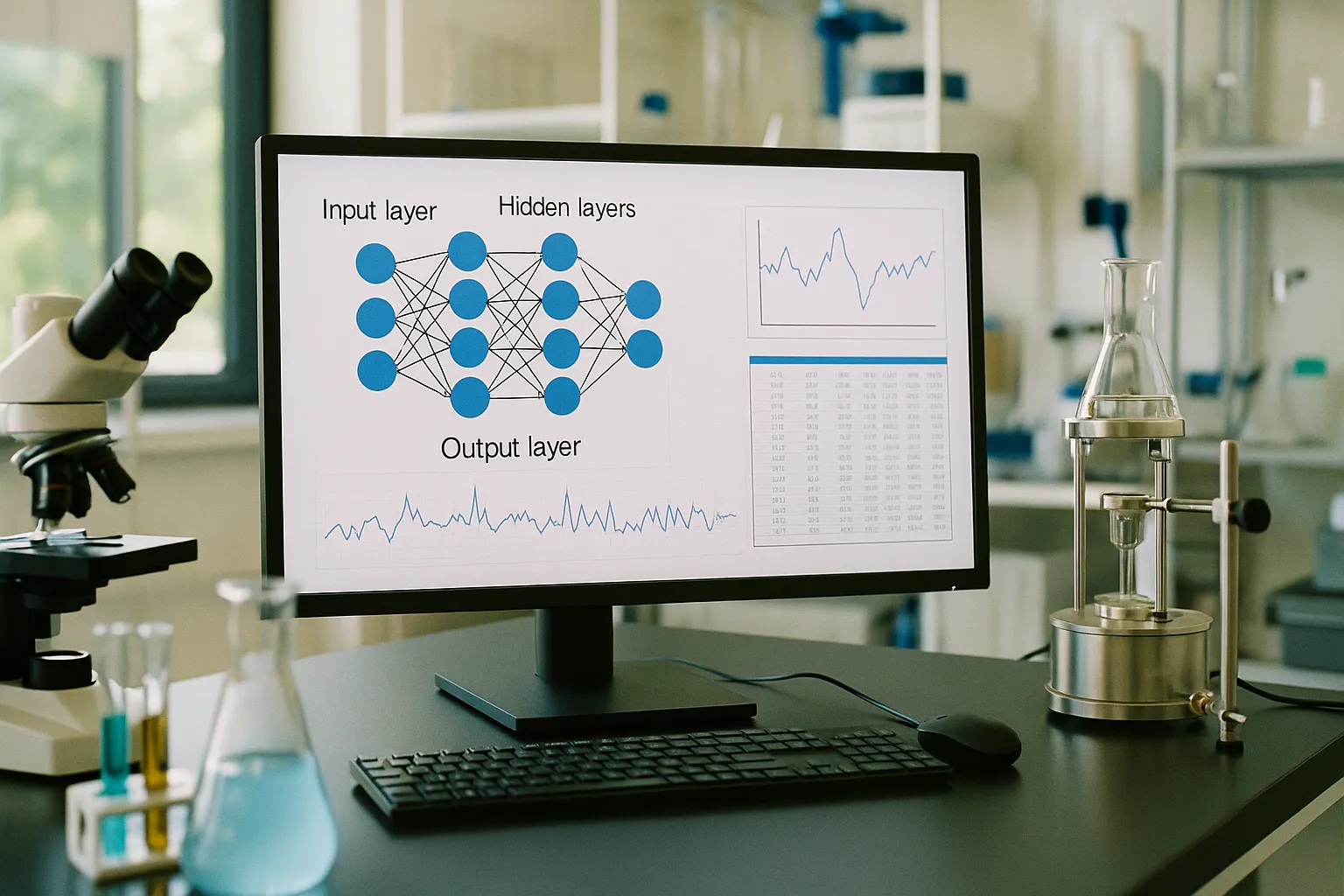
The research, published via ScienceDaily and set to be presented at the International Conference on Robotics and Automation in Vienna in May, describes a neuro-symbolic AI system that combines two historically distinct approaches to artificial intelligence: neural networks (the basis of modern deep learning and large language models) and symbolic reasoning (rule-based systems that represent knowledge explicitly as logic and relationships).
The combined system achieved up to 100-fold reduction in energy consumption at inference time—the computational cost of running an already-trained model on new inputs—while improving task accuracy compared to a standard deep learning baseline.
Context
To understand why this matters, you need to understand the energy problem in AI.
Training a large language model is expensive—it's a one-time cost measured in millions of dollars of compute. Inference is the ongoing cost: every time you ask ChatGPT a question, run an AI image generator, or use an AI-powered search result, the deployed model is performing inference. At the scale that frontier AI operates—billions of queries per day across all major AI services—inference energy costs are enormous and growing.
The AI industry has been working on inference efficiency for several years: model distillation (training smaller models that approximate larger ones), quantization (reducing numerical precision to cut computation), and hardware specialization (chips like NVIDIA's H100 and Google's TPUs optimized for neural network math). These approaches have produced real gains, but they're optimizations within the same architectural paradigm.
Neuro-symbolic AI is a different paradigm.
The Architecture
Standard deep learning models—transformers, which underpin GPT-4, Claude, Gemini, and most frontier AI—process input through billions of numerical parameters, finding patterns through brute-force statistical association. They don't "reason" in a formal sense; they predict the most likely next token based on patterns in training data.
Get this in your inbox.
Daily AI intelligence. Free. No spam.
Symbolic AI, by contrast, represents knowledge as explicit rules and relationships. Given a set of facts and rules, a symbolic system can derive conclusions through logical inference. This is how older AI systems worked—expert systems, theorem provers, knowledge graphs.
Neuro-symbolic AI combines both. The neural component handles perception and pattern recognition tasks where symbolic systems struggle—understanding natural language, interpreting images, processing ambiguous inputs. The symbolic component handles multi-step reasoning tasks where neural systems are inefficient—logic chains, formal constraints, explicit rule application.
The energy efficiency gain comes from a key insight: once a symbolic rule is established, applying it costs almost nothing computationally. A rule that says "if X then Y" doesn't require billions of parameters to apply—it requires a lookup. Neural networks brute-force their way to conclusions that symbolic systems reach through directed inference.
The researchers describe this as mirroring human step-by-step problem-solving rather than brute-force pattern matching.
Impact
For AI infrastructure: A 100-fold reduction in inference energy would transform the economics of AI deployment. Services that are currently viable only at hyperscale could become accessible to smaller organizations. AI applications that are currently too costly to run continuously could run in real time.
For the clean energy transition: AI data center power demand is one of the most significant challenges facing grid operators and renewable energy planners. If neuro-symbolic architectures can deliver comparable capability at a fraction of the energy cost, the AI industry's carbon footprint improves substantially.
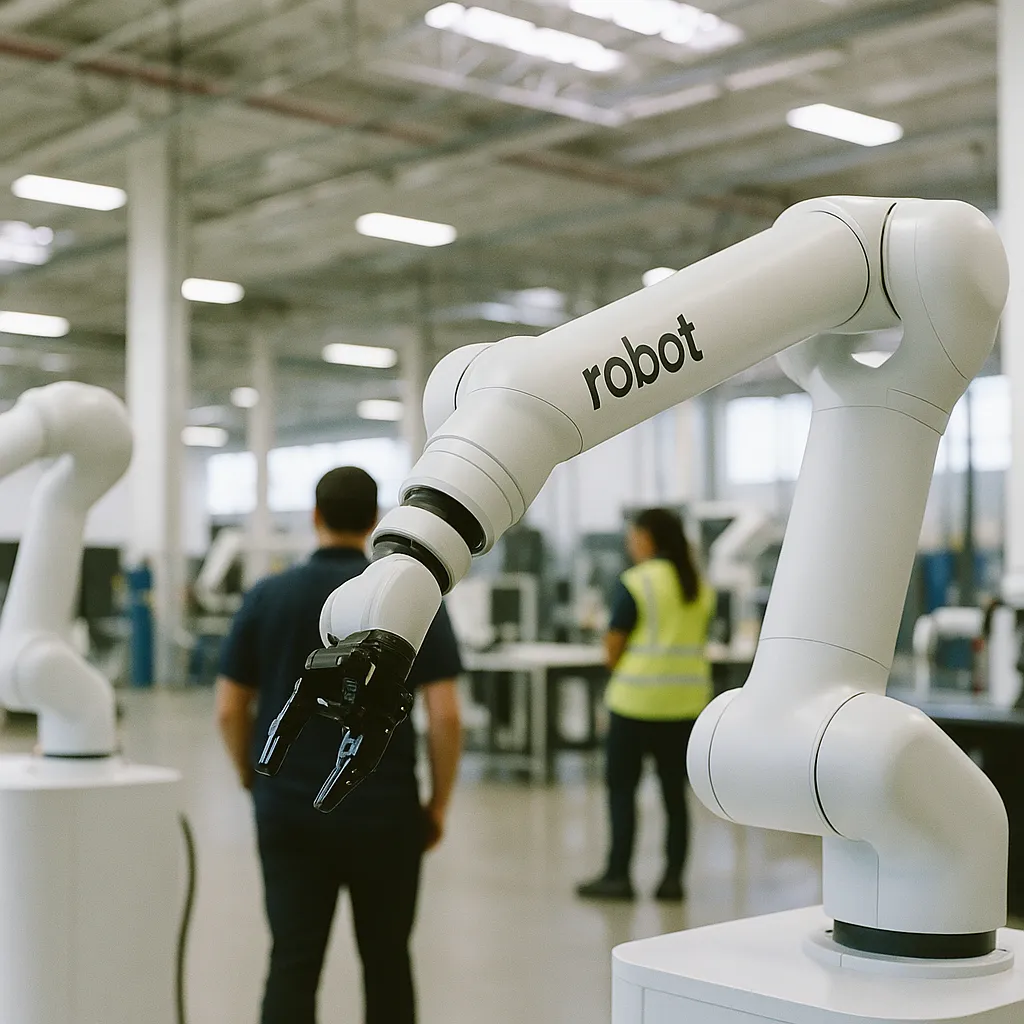
For robotics and embodied AI: The paper is being presented at a robotics conference, which is not incidental. Robots operating in the physical world need to reason in real time under power constraints that data centers don't face. A robot running on a battery cannot afford the energy consumption of a large transformer model for every decision. Neuro-symbolic architectures that reason efficiently are directly relevant to making capable robots practical.
For AI research: This finding gives neuro-symbolic AI—an older research area that fell out of fashion when deep learning began its performance dominance around 2012—significant new relevance. Expect renewed research investment and competition in this area.
Caveats
A single paper, even a promising one, is not a solved problem. The 100-fold efficiency improvement was demonstrated on specific tasks; whether it generalizes to the full range of tasks handled by large language models is an open research question. Integration complexity—connecting neural and symbolic components in ways that are robust and generalizable—remains a significant engineering challenge.
The research community will examine these results carefully at Vienna in May.
What to Watch
The ICRA presentation in Vienna will be the first major peer review of these findings by the robotics and AI research community. Watch for follow-on papers testing the approach on different task domains, and for whether major AI labs—OpenAI, Anthropic, Google DeepMind—begin publishing neuro-symbolic research of their own.
Also watch for hardware implications. Current AI accelerator chips are designed specifically for the matrix multiplication operations that power neural networks. Neuro-symbolic systems have different computational profiles. If the architecture gains traction, chip designers will eventually follow.
Hector Herrera covers AI research and science for NexChron.
Hector Herrera is an AI systems architect and the founder of Hex AI Systems. He designs and runs AI systems in production and writes daily about how AI is reshaping business, government and everyday life. 20+ years building for the web. Houston, TX.