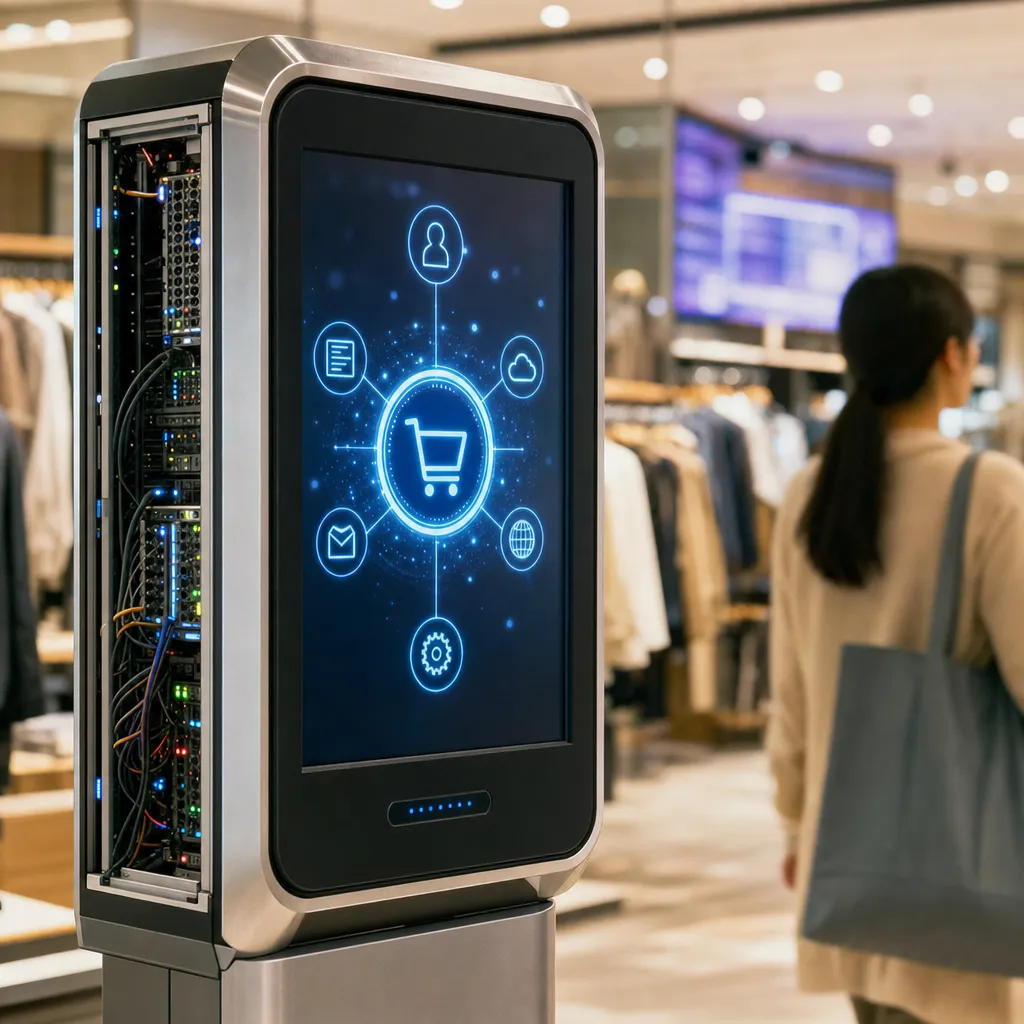
Walmart launched its Agent Gateway, an MCP server connecting ChatGPT, Gemini, and Meta Muse to Walmart and Sam's Club. AI agent usage is up 129% year over year and agent-assisted baskets are 40% larger.
Walmart launched its Agent Gateway this week — an MCP server that connects third-party AI assistants directly to Walmart and Sam's Club shopping systems — and reported that AI agent usage on its platforms is up 129% year over year.
That growth number, combined with the specific architecture choice, signals that Walmart is treating AI agents as a primary shopping channel, not an experiment.
What MCP Is (And Why It Matters Here)
MCP stands for Model Context Protocol — an open standard, originally developed by Anthropic, that lets AI assistants connect to external systems through a standardized interface. Think of it as a USB port for AI agents: instead of building custom integrations for every AI platform, Walmart built one MCP server that any compatible assistant can plug into.
The practical result: a shopper using ChatGPT, Google Gemini, or Meta Muse can now search Walmart's inventory, check prices, and complete purchases without leaving their AI assistant of choice.
What Walmart Built
According to Quartz, Walmart's Agent Gateway architecture includes several deliberate constraints:
- No access to payment card data. Agents can complete purchases but cannot read or store raw card numbers.
- No ability to change payment methods. An agent cannot swap your saved card for another one mid-transaction.
- Spending controls and access profiles — called "Agent Profiles" — are coming later in November, letting customers set per-agent spending limits and define what any given assistant is allowed to do.
The security boundary here is significant. One of the core concerns about shopping agents is that they create new attack surfaces: a compromised agent could theoretically redirect purchases, change shipping addresses, or access payment data. Walmart's design explicitly walls off the most sensitive actions.
The Usage Numbers
Walmart's internal data shows:
Get this in your inbox.
Daily AI intelligence. Free. No spam.
- Sparky — Walmart's proprietary shopping assistant — is up 129% year over year in active usage
- Agent-assisted baskets are 40% larger than unassisted ones
The basket-size figure is the one retailers care about most. If a customer asking an AI "what do I need for Thanksgiving dinner" gets a full ingredient list added to their cart in one shot, that's structurally different from a customer browsing and selecting individually. It's a conversion and upsell mechanism built into the interaction model.
What This Means for Retail
Walmart is the largest U.S. retailer by revenue. Its architectural choices tend to become industry defaults.
The MCP approach specifically has implications:
For other retailers: Any merchant that wants to be reachable through AI shopping agents now faces a standards question. Walmart chose MCP. If the major AI assistants optimize for MCP-connected merchants, non-MCP retailers become harder to find through agent-driven shopping.
For AI assistant makers: ChatGPT, Gemini, and Meta Muse now have a direct commercial hook into Walmart's inventory. That makes their assistants more useful — and makes Walmart more embedded in those platforms' default behaviors.
For consumers: The Agent Profiles feature coming later this month is the one to watch for practical utility. Setting a $200 weekly spending limit on a household assistant, or restricting a child's assistant to specific product categories, turns AI shopping from a novelty into something usable by cautious consumers.
For payment networks: The explicit decision to block agents from accessing raw card data suggests Walmart is working within existing payment security frameworks rather than trying to route around them. That's notable given ongoing debates about whether AI agents need new authentication standards.
What to Watch
The Agent Profiles rollout — expected before the end of November — will show how much control Walmart gives consumers over agent behavior. If granular, auditable controls ship on time, it becomes a template for responsible AI agent commerce. Also watch whether Amazon and Target announce MCP-compatible infrastructure in response.
Source: Quartz, November 2026
Did this help you understand AI better?
Your feedback helps us write more useful content.
Get tomorrow's AI briefing
Join readers who start their day with NexChron. Free, daily, no spam.