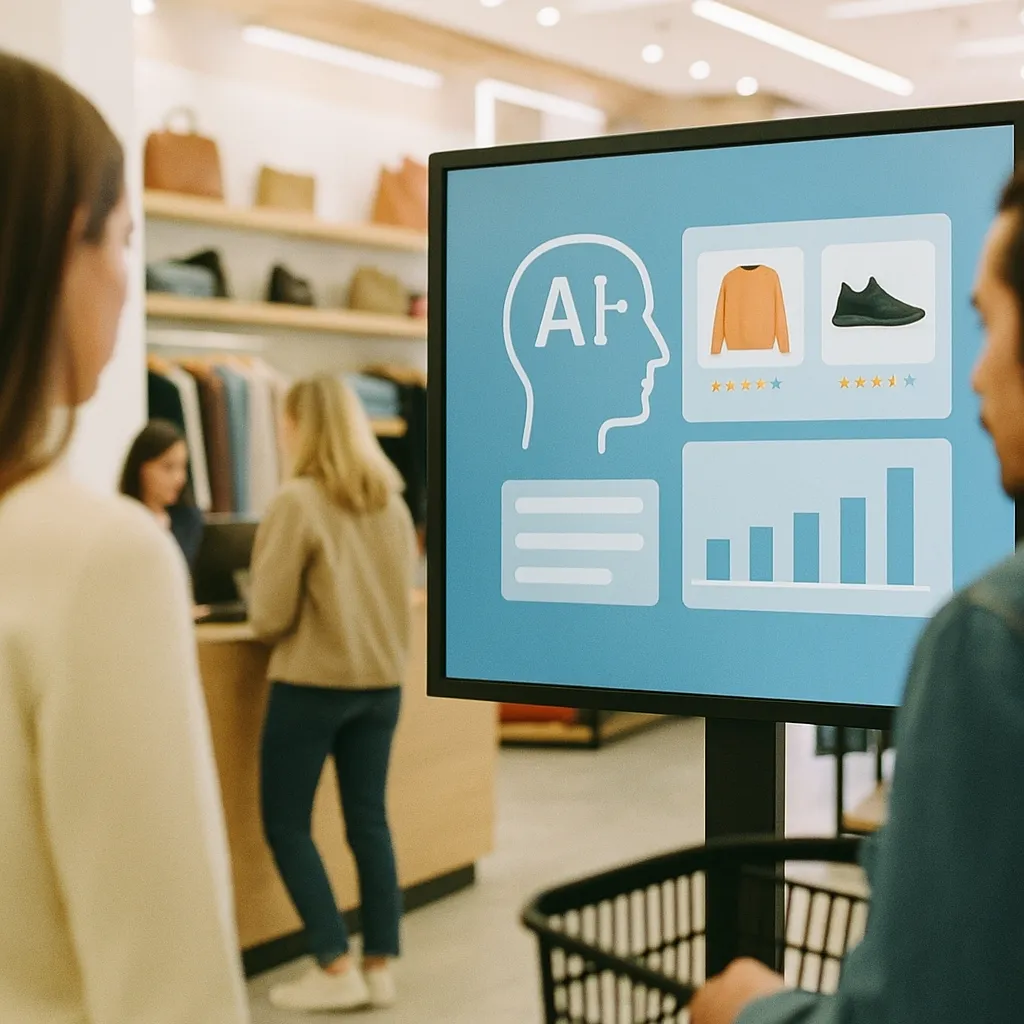
68% of consumers used AI-enabled shopping tools in the past three months. Amazon and Walmart are racing to control the AI interface — the decision layer — that mediates every purchase those consumers make.
Amazon and Walmart Race to Own Retail's AI 'Decision Layer'
By Hector Herrera | June 4, 2026
New research shows 68% of consumers used at least one AI-enabled shopping tool in the past three months — and Amazon and Walmart are racing to control the AI layer that mediates every purchase those consumers make. The competition is not primarily about algorithms or product catalogs. It is about which platform becomes the default starting point when a shopper types "I need running shoes that work with my bad knees" into a search bar and expects an intelligent, personalized answer. Whoever owns that interface owns the beginning of retail commerce.
What the 'Decision Layer' Actually Means
The decision layer is industry shorthand for the AI interface that sits between a consumer's intent and a purchase. Traditional e-commerce starts with keyword search — consumers describe a product, get a list of results, and compare options manually. The decision layer replaces that with natural language — consumers describe needs, context, preferences, and constraints in plain language, and the AI returns curated recommendations that account for price, availability, personal history, and situational relevance.
The difference in practice: instead of searching "women's running shoes size 8 cushioned," a consumer says "I run three miles on pavement every morning and my knees have been bothering me — what shoes should I try?" The decision layer handles the translation from human problem to specific product recommendation, and it does so in a way that makes switching back to keyword search feel cumbersome.
That friction is what makes owning the decision layer commercially significant. The platform that consumers default to for AI shopping advice controls product discovery, recommendation visibility, and ultimately purchase intent — the most valuable real estate in e-commerce.
The Numbers Behind the Race
Research published by PYMNTS documents the scale and pace of AI shopping adoption:
- 68% of consumers have used at least one AI-enabled shopping tool in the past three months
- Shoppers now average 55 digital shopping days per month — nearly every other day
- 95% of retailers report AI is actively reducing annual operating costs
- 9 in 10 retailers plan to increase AI budgets in 2026
The consumer-side data (68% adoption in three months) is the most significant figure. AI-enabled shopping tools have reached majority adoption faster than mobile commerce did in its early years. Retailers who treat AI shopping assistance as a future consideration are already behind the majority of their customers' behavior.
Get this in your inbox.
Daily AI intelligence. Free. No spam.
Amazon's Approach
Amazon's natural advantage in the decision layer race is its dataset. Two decades of purchase history, search behavior, review patterns, and household consumption data give Amazon the raw material for highly personalized recommendations that genuinely know individual shopping patterns at scale. Amazon's AI shopping assistant, integrated across its mobile app and Alexa devices, is being extended to handle complex, multi-variable shopping queries — not just finding the cheapest version of a known product, but surfacing the right product for a described situation.
The risk for Amazon: its decision layer is anchored to Amazon's own inventory. Consumers who use Amazon's AI for shopping are getting Amazon's recommendations for Amazon's catalog, which reinforces platform lock-in but limits the tool's perceived neutrality.
Walmart's Differentiation
Walmart's strategic bet is on physical-digital inventory integration — connecting real-time in-store stock levels directly into its AI shopping interface. When a consumer asks Walmart's AI for a recommendation, the response can account not only for what's available online but for what's on the shelf at their local store, available for pickup in under an hour.
This integration represents a genuine competitive moat that Amazon cannot easily replicate. Amazon's fulfillment network is optimized for next-day or same-day delivery; it has no equivalent of 4,700 U.S. stores whose inventory can be surfaced in real time as an AI recommendation layer. For consumers with time-sensitive needs — a child's birthday gift needed today, a household item needed before guests arrive — Walmart's AI decision layer can offer something Amazon's cannot.
Walmart has been building the data infrastructure for this capability for years. The ability to surface local store inventory through an AI interface is the practical payoff of that investment.
The Risk for Everyone Else
The critical finding in the PYMNTS research is understated in the headline: AI is reshaping commerce faster than most retailers can adapt. That is not a warning about future disruption — it is a description of the current gap between what consumers are doing and what retailers are prepared to support.
The decision layer race is primarily between Amazon and Walmart because they have the data scale, engineering capacity, and consumer reach to build AI shopping interfaces worth using. For small and mid-sized retailers, the risk is different: they may never own a decision layer at all. Their products may only be visible to AI-assisted shoppers if they appear in the recommendations generated by platforms they do not control.
That dependency mirrors what happened with search engine optimization in the 2010s — retailers who did not understand how search algorithms ranked products found themselves invisible to a growing share of online shoppers. AI recommendation visibility is the next version of that problem, and it is arriving faster.
The retailers planning to increase AI budgets in 2026 — nine in ten, per the research — are largely focused on internal cost reduction: inventory management, logistics optimization, customer service automation. Fewer are focused on the more urgent external question: where will their products appear when a consumer's AI assistant decides what to recommend?
What to Watch
The decision layer race will be decided by default behavior — which AI shopping assistant consumers open first when they have a purchase intent. Amazon and Walmart are both investing heavily in making their tools the default. The next 12 months will clarify which platform captures that default position for which consumer segments. Watch for Amazon and Walmart to announce new AI shopping assistant features before the holiday 2026 shopping season, when default shopping behavior patterns for the year get locked in.
Did this help you understand AI better?
Your feedback helps us write more useful content.
Get tomorrow's AI briefing
Join readers who start their day with NexChron. Free, daily, no spam.