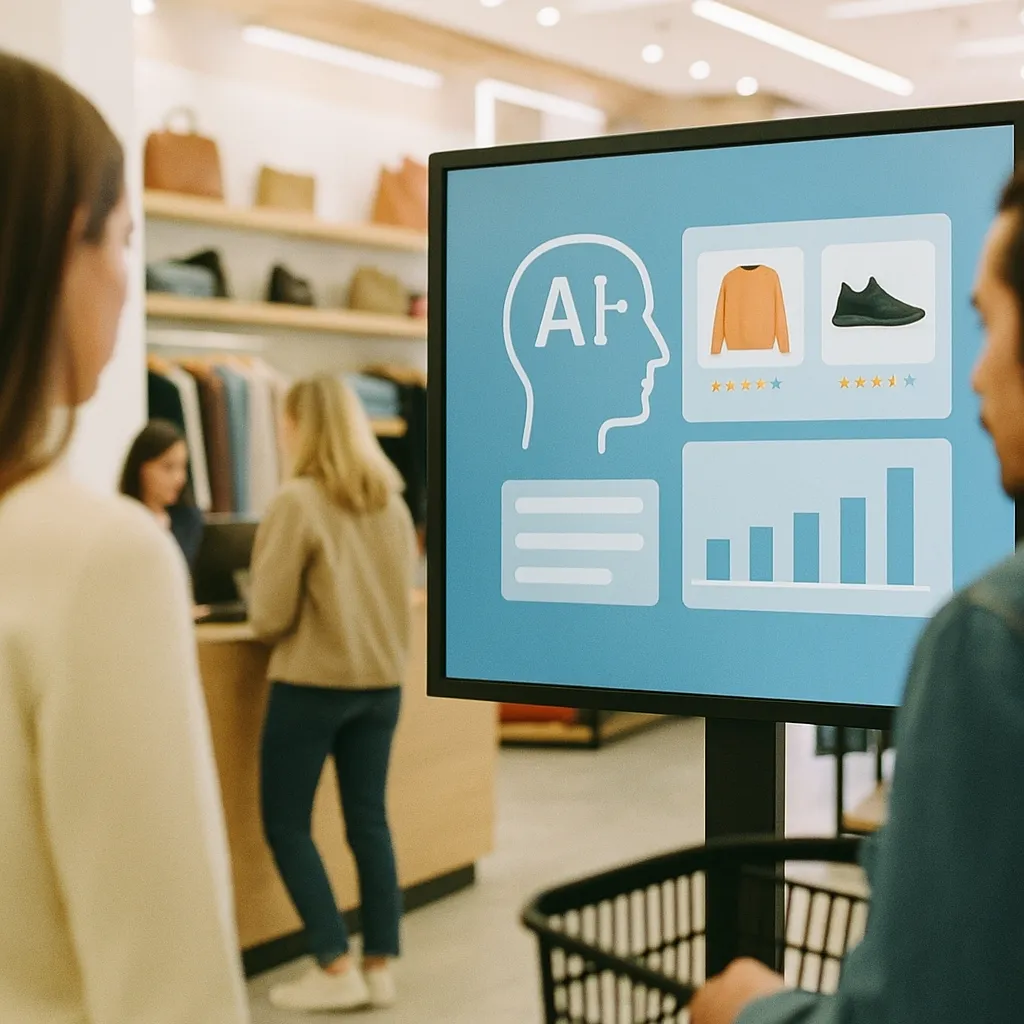
7-Eleven Japan's decade of AI inventory management and store-level demand forecasting has produced a measurable competitive advantage that global retail chains are now studying as a deployable blueprint.
7-Eleven Japan Built the AI Retail Playbook. Now Everyone Is Reading It.
By Hector Herrera | June 6, 2026 | Retail
7-Eleven Japan's decade-long investment in AI-driven inventory management, store-level demand forecasting, and automated reordering has produced a measurable competitive advantage that global retail chains are now actively studying. The system isn't a pilot or proof of concept — it's the operational infrastructure behind one of the world's highest-performing convenience retail networks, and retail analysts say it offers a deployable blueprint for chains facing margin compression from e-commerce and rising labor costs.
The gap between 7-Eleven Japan and most Western retailers isn't technology — it's time. Japan's operation has been running AI inventory systems since before most American chains started pilot programs. That head start has compounded into a capability that is genuinely difficult to replicate quickly.
What the System Actually Does
7-Eleven Japan's AI platform operates at the individual store level, not the regional or category level. That specificity is what makes it work.
The system:
- Predicts product demand for each SKU (stock-keeping unit — an individual product variant) at each specific store location, accounting for local customer patterns, time of day, day of week, weather, and proximity to events
- Automates reordering based on those predictions, reducing the manual ordering burden on store managers
- Cuts food waste by matching fresh food orders to predicted demand rather than ordering to maximum availability
- Enables near-zero overstock at scale — in a convenience retail network, that means lower carrying costs and less markdown exposure across thousands of locations
According to PYMNTS reporting on the retail AI era analysis, the competitive advantage is visible in operational metrics. Waste reduction in fresh food is particularly significant because fresh food carries both higher margins and higher waste costs than packaged goods — optimizing it moves both the revenue and cost lines simultaneously.
Why Store-Level Granularity Matters
Most retail AI systems operate at the category or regional level. They know that store cluster A tends to sell more of product category X than cluster B, and adjust allocation accordingly. That's useful but not the same as what 7-Eleven Japan built.
Get this in your inbox.
Daily AI intelligence. Free. No spam.
Store-level demand forecasting means the system knows that the specific 7-Eleven at Shibuya Station sells more onigiri (rice balls) between 7:30 and 9:00 AM on weekdays because of commuter traffic patterns — and less on national holidays when that pedestrian flow disappears. The model encodes the behavioral patterns of each location's specific customer base.
That level of specificity requires three things: (1) years of sales data per location, (2) the infrastructure to run predictions at scale across thousands of stores, and (3) organizational discipline to act on the predictions rather than defaulting to manager intuition.
The third point is underappreciated. Technology implementations fail not because the AI is wrong but because humans in the loop override it based on habit. 7-Eleven Japan's operational discipline in following AI-generated ordering recommendations is as important to the outcome as the model itself.
What Western Chains Are Taking From This
Retail analysts identify the 7-Eleven Japan model as a reference architecture for global chains facing:
- Margin compression from e-commerce competition — Amazon, Instacart, and grocery delivery services have squeezed convenience retail margins by removing the impulse-purchase advantage
- Labor cost increases — in markets where minimum wages are rising, reducing the manual labor component of inventory management has direct P&L impact
- Food waste regulatory pressure — the EU and several U.S. states are moving toward food waste reduction mandates that make AI-optimized ordering a compliance tool, not just a cost tool
The challenge for Western chains is the data foundation. 7-Eleven Japan has decades of granular store-level sales data. A U.S. chain starting fresh has to build that dataset while running the business, which means the first 18 to 24 months of AI inventory deployment will underperform the Japan benchmark. That's not a reason to delay — it's a reason to start.
What the Amazon and Walmart Response Looks Like
Both Amazon and Walmart have been building AI inventory infrastructure at scale. Amazon's Go store format runs real-time inventory tracking through computer vision rather than POS data, giving it a different data architecture but a similar goal: reduce overstock and stockouts at the individual location level. Walmart's distributed inventory approach uses AI to optimize fulfillment across stores, distribution centers, and third-party marketplace sellers.
If 7-Eleven Japan's model becomes the reference standard for convenience retail AI, it creates pressure on both giants' grocery and convenience formats to match that store-level granularity — which neither currently achieves across their full footprints.
What to Watch
Watch whether 7-Eleven International — which manages the brand's global licensing — moves to standardize the Japan AI inventory platform for licensees outside Japan. Currently, 7-Eleven's U.S. operations (owned by parent company Seven & i Holdings but operated under a different management structure) do not run the same AI inventory stack as Japan. A global platform rollout would be the most significant AI adoption event in convenience retail this decade.
Also watch the acquisition landscape. As the business case for AI-driven inventory management becomes harder to ignore, expect larger chains to acquire companies with proven store-level forecasting capabilities rather than building from scratch.
Sources: PYMNTS — 7-Eleven Japan Wrote the Blueprint for the Retail AI Era
Did this help you understand AI better?
Your feedback helps us write more useful content.
Get tomorrow's AI briefing
Join readers who start their day with NexChron. Free, daily, no spam.