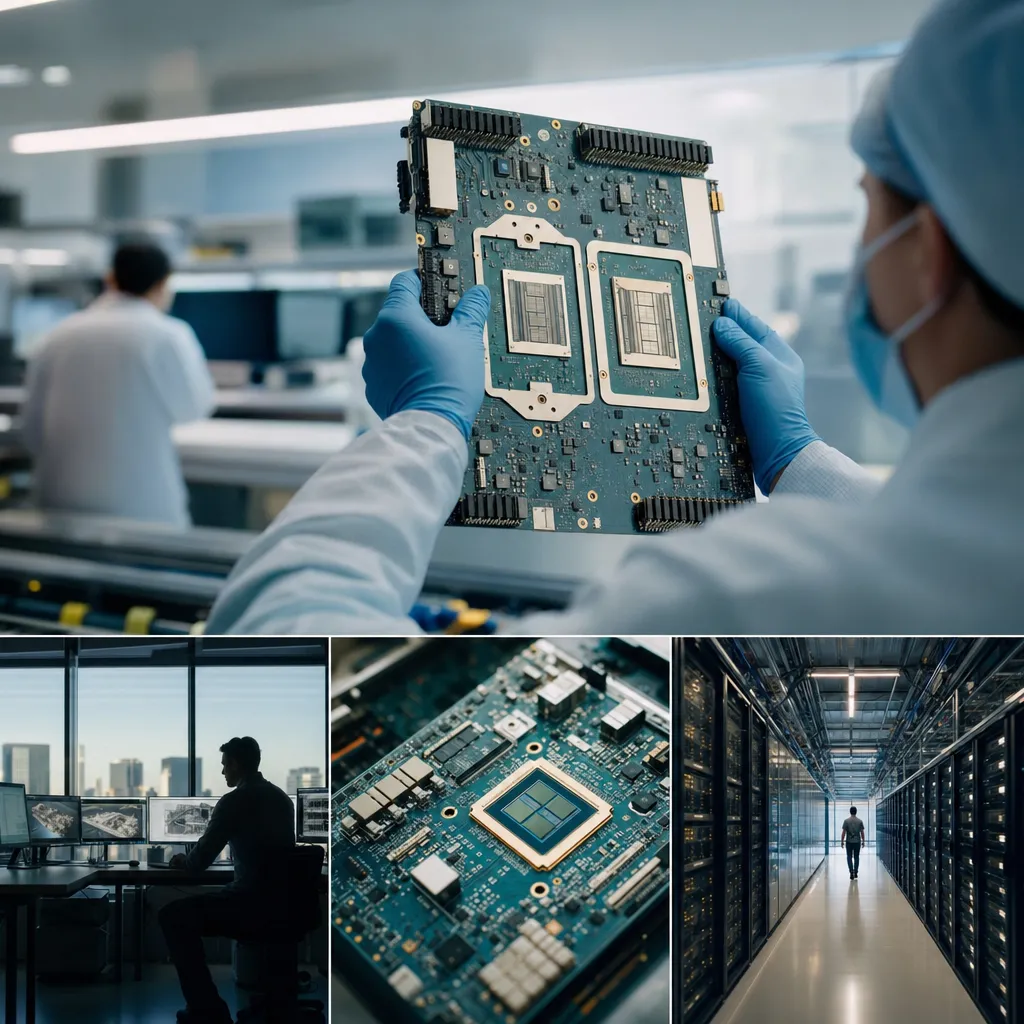
Google announced the TPU 8tx, its first chip with hardware-enforced confidential computing, and the TPU 8i Max, which fuses two chips for large-context inference — completing its eighth-generation lineup.
Google added two new chips to its eighth-generation TPU lineup today: the TPU 8tx, the first TPU with hardware-enforced confidential computing, and the TPU 8i Max, a high-density inference accelerator that bonds two TPU 8i chips into a single package. The additions give Google four distinct eighth-generation TPU systems within a single calendar year — one for every major stage of the agentic AI lifecycle.
Why it matters: Confidential computing — keeping model weights and data encrypted while they're actively being processed, not just at rest or in transit — has been the missing hardware guarantee for enterprises in regulated industries. The TPU 8tx answers that need with a silicon-level enforcement mechanism, not a software promise. At the same time, the TPU 8i Max targets a bottleneck that's becoming acute as agentic AI systems grow: processing long contexts at scale.
Background
Google's TPU (Tensor Processing Unit) line has powered its own AI training workloads since 2016 and became commercially available through Google Cloud. The eighth generation launched earlier in 2026 with the TPU 8i for inference and TPU 8e for energy-efficient deployments. Today's additions — announced on the [Google Cloud](/health/merck-google-cloud-billion-ai-deal) blog — complete a four-system lineup designed to cover the full range of enterprise AI use cases.
The Two New Chips
TPU 8tx — Confidential computing for regulated industries
The TPU 8tx is built for organizations that cannot afford to have their model weights or data exposed to any third party — including the cloud host. That covers financial services firms with proprietary trading models, healthcare companies operating under HIPAA and GDPR, government agencies handling classified workloads, and any enterprise whose AI models represent core competitive IP.
Get this in your inbox.
Daily AI intelligence. Free. No spam.
Hardware-enforced confidential computing means the chip itself maintains a secure enclave: data and model parameters are encrypted in memory and remain encrypted during active computation. The only entity that can decrypt them is the authorized workload running inside the enclave. Cloud operators, including Google, cannot access the contents. This is a hardware guarantee, not a contract provision.
TPU 8i Max — Fused chips for large contexts
The TPU 8i Max takes two TPU 8i chips and bonds them into a single physical package using advanced packaging technology. The result is an accelerator optimized for two workloads that are becoming enterprise-critical:
- Large context windows: Agentic AI systems often need to process entire codebases, long legal documents, or multi-session conversation histories in a single pass. The standard TPU 8i hits memory and bandwidth constraints at scale. The 8i Max removes them.
- High compute density: Data centers running large inference fleets benefit from fitting more compute into fewer physical units, reducing rack space and power overhead per unit of inference throughput.
What This Means for the Industry
Google now offers a TPU 8 variant for every major AI infrastructure requirement:
| Use case |
TPU 8 system |
| Large-scale model training |
TPU 8 (base) |
| Standard inference |
TPU 8i |
| Secure/confidential inference |
TPU 8tx (new) |
| High-context, high-density inference |
TPU 8i Max (new) |
The move positions Google more aggressively against Nvidia's H100/H200 dominance and AWS's Trainium/Inferentia custom silicon. More consequentially, the TPU 8tx introduces a credible hardware answer to the question that has stalled AI adoption in regulated sectors: "Can I trust the cloud provider with my model?"
For enterprise buyers, the practical question is whether hardware-enforced confidentiality changes procurement calculus. For many highly regulated use cases, the answer is likely yes — not because software solutions don't exist, but because hardware enforcement removes an entire category of trust decisions from the security review process.
What to Watch
Availability and pricing for both chips will determine real-world adoption. Google hasn't published production availability dates. Watch for signals from regulated-industry Google Cloud customers in Q1 2027 — that's when deployments from today's announcement would typically show up in earnings calls and case studies. Watch also for how Nvidia and AWS respond: if the TPU 8tx drives meaningful enterprise wins, expect hardware-level confidential computing features to accelerate on competing platforms.
Source: Google Cloud Blog, November 9, 2026
Did this help you understand AI better?
Your feedback helps us write more useful content.
Get tomorrow's AI briefing
Join readers who start their day with NexChron. Free, daily, no spam.