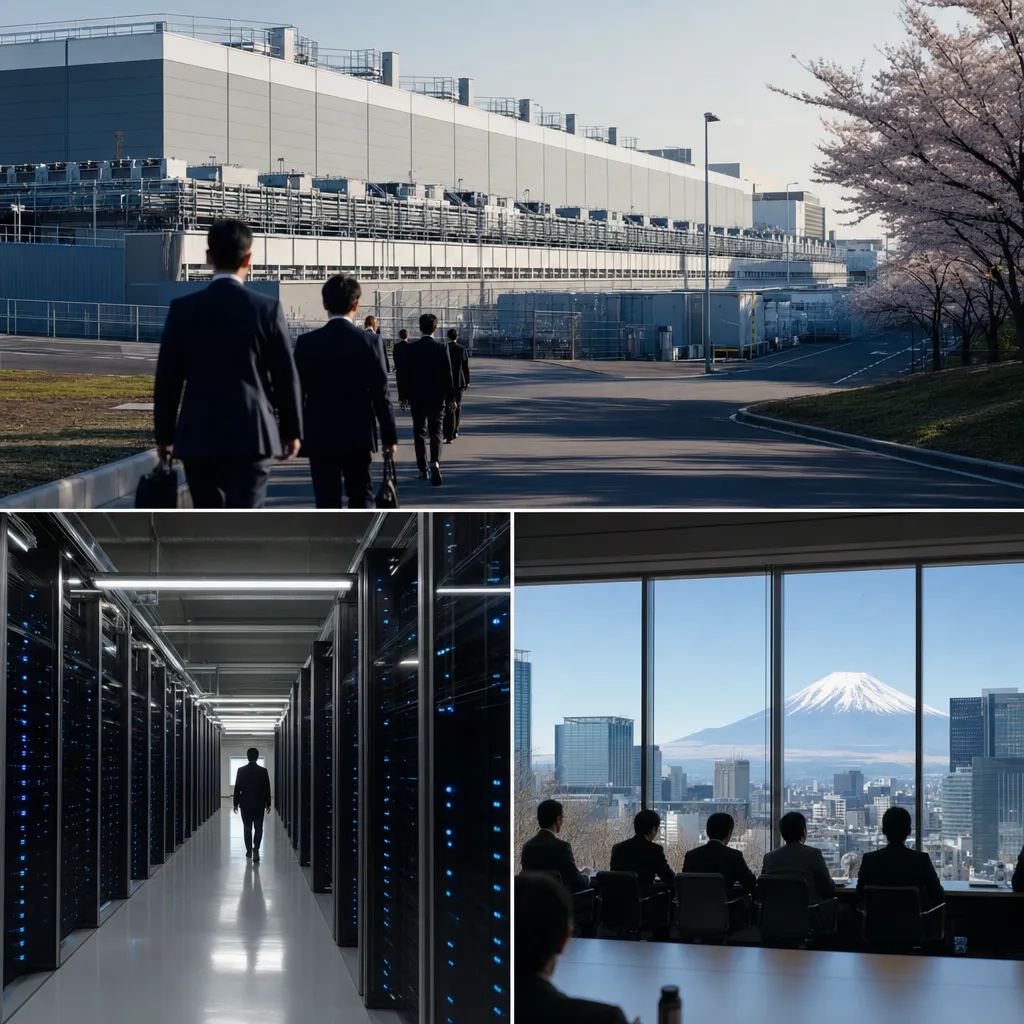
Google Cloud CEO Thomas Kurian announced Japan's national government will receive early access to Google's frontier AI models for cybersecurity, making Japan the first G7 government outside the U.S. to get privileged AI access — timed days before the Trump-Xi summit.
Google Gives Japan's Government Early Access to Frontier AI for Cybersecurity and Critical Infrastructure
By Hector Herrera | November 17, 2026 | News
Google Cloud CEO Thomas Kurian announced November 16 that Japan's national government and critical infrastructure operators will receive early access to Google's most advanced AI models as part of a national cybersecurity partnership. The move makes Japan the first G7 government outside the United States to receive privileged access to frontier AI capabilities — a geopolitical signal timed days before the anticipated Trump-Xi summit and the latest move in an AI lab race to anchor national AI strategies in key allied nations before geopolitical fault lines harden.
What Was Announced
The partnership, announced by Kurian on November 16, provides:
- Early access to Google's frontier AI models — the most advanced versions before they reach general commercial availability
- Recipients: Japan's national government agencies and critical infrastructure operators (energy, finance, transportation, and communications sectors)
- Use cases: Cybersecurity threat detection and response, protection of critical national infrastructure
- Framework: A national-level partnership, not a standard enterprise cloud contract
The announcement builds on Google Cloud's existing infrastructure presence in Japan, which includes multiple data center regions. The AI access layer deepens that relationship into the most sensitive government workloads.
Get this in your inbox.
Daily AI intelligence. Free. No spam.
Why the Timing Is Deliberate
The announcement comes days before an anticipated meeting between U.S. President Donald Trump and Chinese President Xi Jinping — a moment when the geopolitical boundaries around AI technology are under active negotiation.
Japan sits at the center of the U.S.-China AI tension. It is a U.S. treaty ally with deep economic ties to China, a major Nvidia customer, and a government that has been explicit about wanting to build domestic AI capabilities while remaining in the Western technology ecosystem. Google's announcement plants a flag: Japan's government AI runs on American frontier models.
For Google, the deal follows a pattern visible across 2026: AI labs competing to become the foundational AI infrastructure for allied governments, the way cloud providers competed to win government contracts in the 2010s. Google has similar partnerships in the works with Australian, German, and UK government agencies. Microsoft's Azure Government and Amazon's AWS GovCloud have established leads in the U.S. government market; the competition is now playing out internationally.
The Broader Geopolitical AI Race
The Japan announcement reflects a structural shift in how AI labs think about their role:
- Sovereign AI is a real thing now. Governments are making deliberate choices about which country's AI foundation they build on, recognizing that dependence on a foreign AI platform creates intelligence, infrastructure, and strategic risks
- Early access as a lock-in mechanism. Governments that train their agencies on a particular AI model's capabilities, interfaces, and outputs create switching costs that persist for years — just as early cloud adoption created long-term vendor relationships
- The race has a ticking clock. Once a government standardizes on one AI platform for national security applications, the window for competitors closes
China has its own version of this race, signing AI partnership deals with Gulf states, African governments, and Southeast Asian nations. The Japan deal is partly about keeping a critical ally out of that orbit.
What to Watch
Whether Japan's government AI partnership with Google remains exclusive or whether Microsoft, Amazon, or domestic Japanese AI efforts (NTT, Fujitsu, NEC) secure parallel access. Also watch how China responds — Japan's explicit alignment with American frontier AI for critical infrastructure is a meaningful signal in the bilateral relationship, and Beijing's response will reveal how much it values its own AI partnership agenda with Tokyo. The Trump-Xi summit in the coming days provides the first real context for how this geopolitical AI positioning plays in direct negotiations.
Did this help you understand AI better?
Your feedback helps us write more useful content.
Get tomorrow's AI briefing
Join readers who start their day with NexChron. Free, daily, no spam.