Your daily AI intelligence for November 15, 2026.
Good morning. Here's your AI intelligence for Sunday, November 15, 2026.
AI Infrastructure Hits a New Capital High
LangChain raised $300 million in a Series C led by CapitalG, pushing its valuation to $3 billion — more than doubling from its last round. The money goes toward scaling AI agent infrastructure for enterprises that have moved past experimentation and are now deploying agentic workflows at scale. LangChain's orchestration layer sits beneath a growing share of production AI systems, which makes this round less a bet on a startup and more a bet on the entire agentic tier of the AI stack.
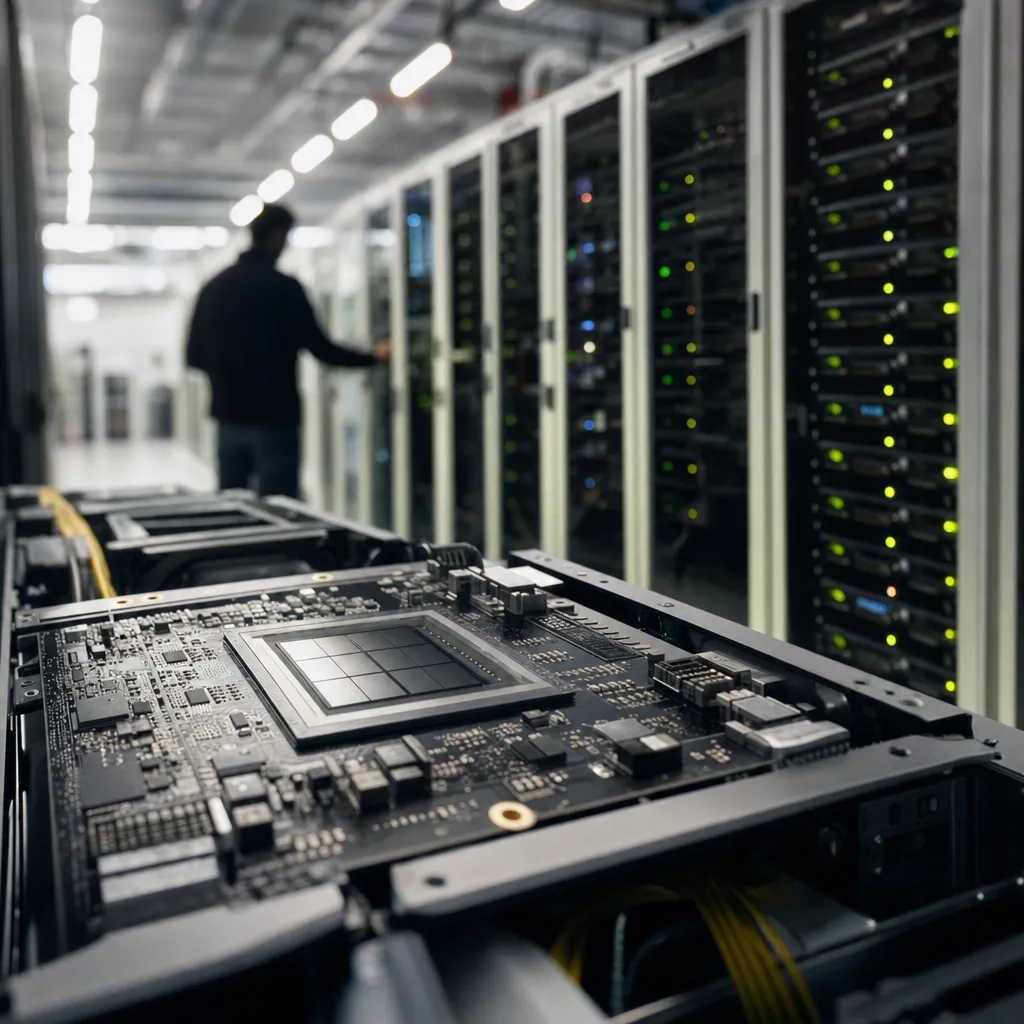
The hardware war got more interesting this week too. AMD's MI455X outperformed Nvidia's Vera Rubin chip by up to 30% on DeepSeek-R1 inference in the latest MLPerf benchmarks — clocking 21,333 tokens per second to Vera Rubin's lower figure. This is the strongest data-driven challenge to Nvidia's AI hardware dominance yet. AMD isn't catching up on paper; it's ahead on a production benchmark that enterprises actually use to make procurement decisions.
The Energy and Housing Reckoning
The Federal Reserve published findings this week that AI data center construction is pulling skilled labor and materials away from residential homebuilding. Electrician wages are rising in AI infrastructure hotspots, and housing completions are slowing in those same markets. It's the first significant documentation of AI infrastructure growth creating direct tradeoffs with housing supply — a collision that policymakers haven't yet addressed.
South Australia made that tradeoff explicit in a different way: the state approved natural gas electricity to power AI data centers, drawing immediate backlash from climate advocates who argue it contradicts the state's renewable energy commitments. South Australia has been a showcase for renewable energy in the Southern Hemisphere. The decision signals that AI infrastructure demand is now strong enough to bend energy policy globally — including in jurisdictions that built their identity around clean power.
On the other side of that equation, Google.org awarded $2.5 million to LF Energy to scale open-source AI demand forecasting and grid resilience tools across European grid operators. The grant arrives as AI data centers drive surging power demand that aging European grid infrastructure wasn't designed to handle. Open-source AI tools for grid management won't fix the capacity problem overnight, but they're a necessary foundation for smarter grid operation as the load grows.
Get this in your inbox.
Daily AI intelligence. Free. No spam.
A Bad Week for AI Platform Security
Fireworks AI widened its October breach disclosure significantly. What started as a reported security incident now includes customer datasets, stored secrets, and partial model weights — placing it among the most consequential AI platform compromises of the year. Security analysts are calling October 2026 "Black October" for AI platforms, noting at least nine separate breaches across the industry. For enterprise teams using hosted AI services, this week is a reminder that model providers are now high-value targets and that breach disclosures often expand well beyond their initial scope.
Courts and Copyright Are Moving Fast
OpenAI and Anthropic were sued on the same day in Texas federal court by a company claiming their models infringe patents covering the attention mechanism — the architecture at the heart of every transformer-based AI system. If the patent claims hold, the exposure is industry-wide, not limited to two companies. Transformer architecture is not a marginal component; it is the foundation. This case will be watched closely.
The first U.S. AI Music Awards took place this week, honoring artists who created songs with AI assistance. Winners described AI-assisted music as a skilled craft requiring human direction and judgment. The timing is awkward: Universal Music Group and Sony are actively suing the platforms that produced those award-winning songs. The cultural legitimacy of AI-assisted creation is advancing faster than the legal framework around it.
Commerce and the AI Referral Shift
Adobe's holiday forecast is striking: AI-referred traffic to U.S. retail sites is projected to surge 130% year-over-year this holiday season, with Thanksgiving expected to spike 159%. That's not incremental growth — it's a structural shift in how consumers find products before they ever reach a retailer's website. Retailers who built their digital strategy around search and social are running behind. AI assistants are becoming a first point of product discovery, and most retailers have no strategy for it yet.
The insurance industry is further along. Nine in ten insurance executives increased AI budgets this year, and Allstate is now deploying a consumer-facing agentic AI assistant — the first major U.S. insurer to reach that stage. The pattern across financial services is consistent: pilot phase is over, enterprise deployment is underway, and the companies moving fastest are building the systems that will define customer interaction for the next decade.
Education's Widening AI Gap
Google is expanding its free AI Educator Series to five more countries after its own research revealed a troubling gap: 85% of teachers now use generative AI tools, but only 18% received any formal training on them. Students are, in many cases, more fluent in AI tools than their teachers. That's not a minor lag — it's a structural inversion of how education is supposed to work. Google's program addresses the symptom. The underlying issue is that professional development systems in most countries weren't built to move at the pace AI is moving.
What to Watch Today
AMD vs. Nvidia in procurement rooms. The MLPerf results will circulate through enterprise IT and hyperscaler procurement teams this week. Watch for any public signals from major cloud providers about MI455X evaluation or deployment timelines.
Fireworks AI fallout. The expansion of the breach to include model weights is unusual and significant. Watch for downstream notifications from enterprise customers and any regulatory inquiries, particularly in the EU where breach notification requirements are strict.
Retail AI readiness. With Thanksgiving five weeks out, Adobe's 130% traffic projection will start shaping retailer strategy conversations in real time. Watch for announcements from major retailers about AI-referred traffic handling, affiliate policy changes, or agent-blocking decisions.
Did this help you understand AI better?
Your feedback helps us write more useful content.
Get tomorrow's AI briefing
Join readers who start their day with NexChron. Free, daily, no spam.