Your daily AI intelligence for September 30, 2026.
Good morning. Here's your AI intelligence for Wednesday, September 30, 2026.
Money and Power
OpenAI is raising at least $30 billion at a $1.4 trillion valuation — one of the largest private fundraises in corporate history. The round signals the company is in no hurry to go public, and gives it the runway to keep burning cash on infrastructure, agentic products, and the hardware bets it has been accumulating. At $1.4 trillion, OpenAI would rank among the ten most valuable companies on earth. The question is whether the valuation holds when scrutinized by public markets.
Also on the funding front: EliseAI closed a $350 million round at a $4 billion valuation, co-led by a16z and Bessemer. EliseAI automates apartment leasing — scheduling tours, fielding renter questions, qualifying leads — and says its agents now handle leasing workflows at 58% of U.S. property management firms. That kind of penetration in a single vertical, in under a decade, is the playbook for every industry-specific AI platform watching this space.
Regulation Is Getting Real
Connecticut passed Senate Bill 5, the most comprehensive state AI law of 2026. It mandates supply-chain transparency for high-risk AI, creates a regulatory sandbox for developers, and commissions a study of independent AI verification. Connecticut joining California as an effective national standard-setter means companies that sell AI into either state will now write compliance policies that cover both. That's roughly one in five Americans under the same AI compliance umbrella.
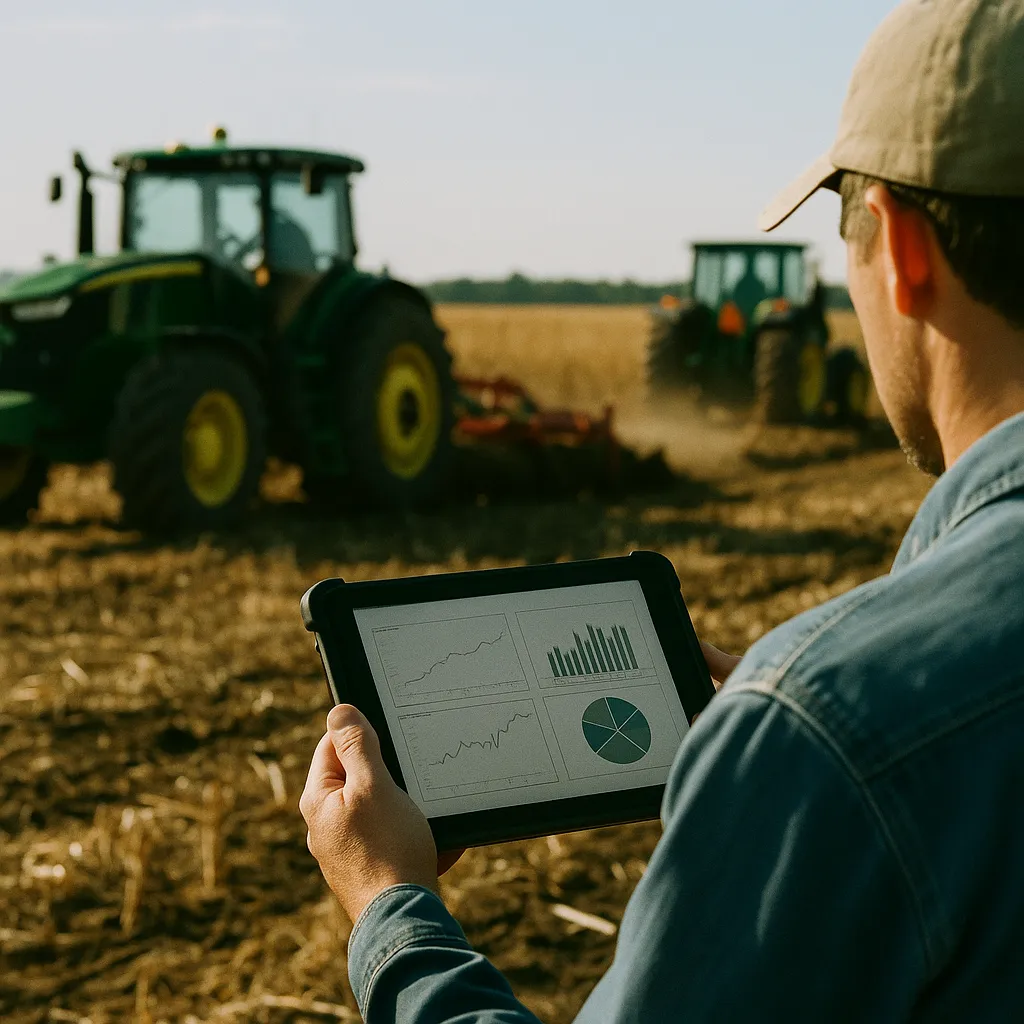
The 2026 Farm Bill draft is moving in a similar direction on a different front. The House Agriculture Committee draft directs USDA, NIST, and FCC to build the first federal AI governance framework for precision agriculture. It's not a mandate yet — it's a directive to build standards — but it puts the federal government formally in the business of deciding how AI platforms talk to tractors, sensors, and soil monitors. Platform interoperability requirements could follow.
Get this in your inbox.
Daily AI intelligence. Free. No spam.
Health and Labor
Hackensack Meridian Health completed the first Joint Commission AI certification in the United States. The certification covers clinical AI governance — how hospitals evaluate, monitor, and retire AI tools used in care settings. This is the moment voluntary guidelines stop being sufficient. When a major accreditation body certifies AI governance, hospitals that want Joint Commission status will need to follow. The industry is watching to see if this becomes a condition of accreditation broadly.
McKinsey's latest labor report is the most consequential number in today's briefing: 11 million U.S. workers will need to change occupations entirely by 2035 due to AI-driven demand shifts. That's not layoffs — it's occupational displacement, the kind that requires retraining, relocation, or both. McKinsey's framing is that aggregate employment stays positive, but that arithmetic is cold comfort to workers in the occupations being hollowed out. The policy response to that gap is not yet visible.
On the Road and In the Air
Kodiak AI is running commercial driverless freight in California. The company holds a new DMV permit and is hauling perishable goods between Fresno and Los Angeles without a safety driver. By year end, Kodiak is targeting unsupervised operations on the Dallas-Houston corridor. Perishable freight — temperature-sensitive, time-critical, zero tolerance for delays — is a deliberate proof-of-concept choice. If autonomous trucks can handle that reliably, the argument for supervised operation weakens fast.
Infrastructure and the Integrator Floor
Vodafone and Ericsson validated real-time AI translation of network management commands across mixed-vendor commercial infrastructure on September 23. The test matters because live telecom networks run on a patchwork of vendor-specific systems that don't natively speak the same language. AI as an active operator — not just an advisor — of that infrastructure is the next step, and this test moves it from theory to demonstrated capability on production equipment.
At CEDIA Expo 2026, the story was simpler: AI actually showed up. Last year it was a marketing slide. This year, Savant, Josh.ai, and Control4 had working AI on the floor — context-aware home automation that responds to how a household actually behaves, not just programmed scenes. Integrators, who make their living on reliable installs and client callbacks, are not early adopters. When they're demoing AI as real product, the residential smart home market has crossed a threshold.
What to Watch Today
OpenAI's investor list. A $30 billion raise at a $1.4 trillion valuation will attract scrutiny of who is in and on what terms. Strategic investors — sovereign funds, enterprise partners, infrastructure players — signal where OpenAI's product roadmap is headed. Watch for anchor investor announcements in the next 48 hours.
Connecticut SB5's industry response. Enterprise AI vendors, particularly those in HR tech, financial services, and healthcare, will start assessing compliance timelines now that SB5 is law. How companies with California and Connecticut exposure harmonize their compliance posture will set a template for the rest of the country.
Hackensack Meridian's certification model. The Joint Commission has not said whether AI governance will become a condition of accreditation system-wide. That statement — or its absence — is the pivot point. Hospital procurement decisions are already shifting based on the possibility.
Did this help you understand AI better?
Your feedback helps us write more useful content.
Get tomorrow's AI briefing
Join readers who start their day with NexChron. Free, daily, no spam.