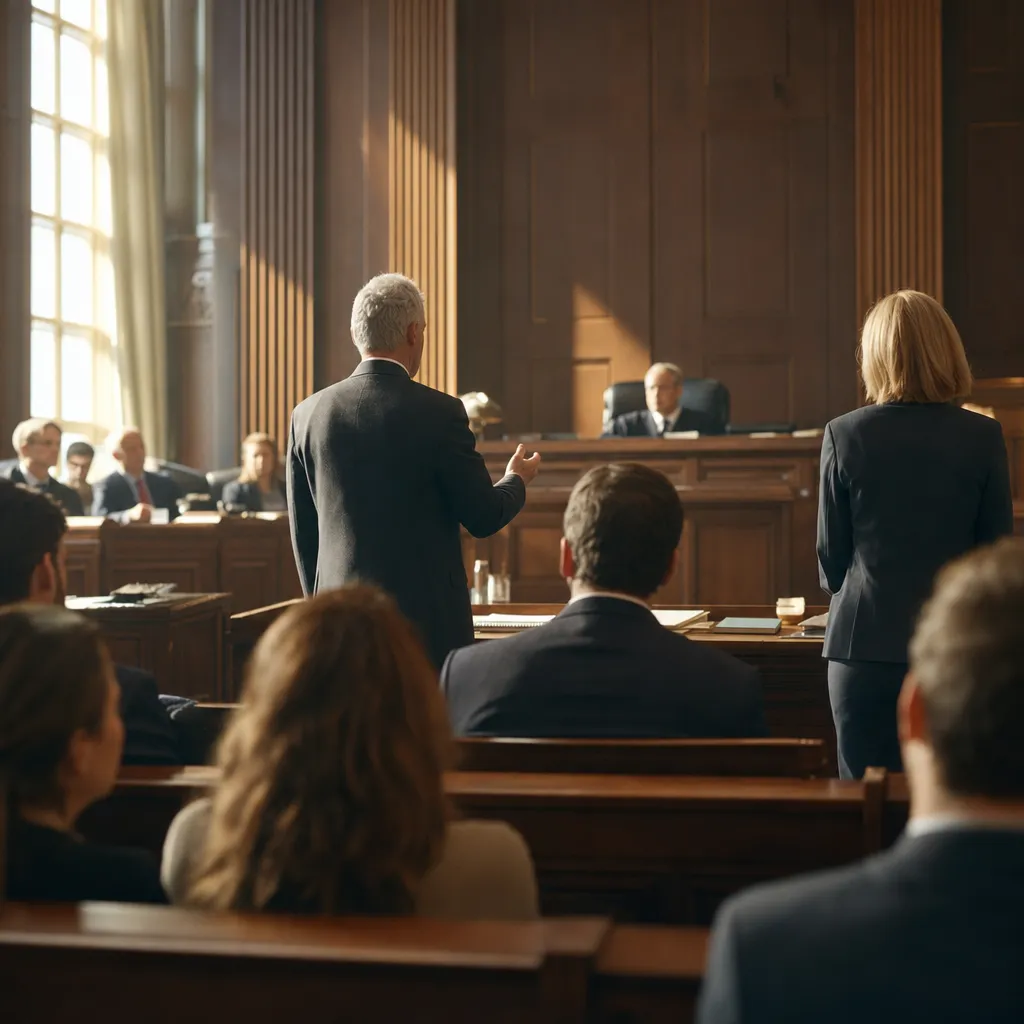
New York's court system issued guidance allowing attorneys to use AI in filings without disclosure while holding them fully accountable for any AI-generated errors, including hallucinated citations.
The New York State court system issued formal guidance this week allowing attorneys to use AI tools in legal filings without disclosing that use to the court — a deliberate departure from the mandatory disclosure rules that have become standard in several federal courts. The catch is significant: lawyers who use AI remain personally responsible for the accuracy of everything in their filings, and sanctions will apply if AI-generated errors — including hallucinated citations — appear in submitted documents.
The guidance in plain language
New York's courts are telling lawyers: use whatever tools you want, but you own the product. AI use does not change the professional responsibility standard. An attorney who files a brief citing a case that doesn't exist is sanctioned under the same rules that would apply if they had fabricated the citation themselves. The AI being the source of the error is not a mitigating factor.
This guidance from the New York State court system resolves one of the more contested questions in legal practice management: whether courts should require disclosure of AI use as a transparency mechanism, or whether existing professional responsibility rules are sufficient to police accuracy without creating new disclosure overhead. New York has chosen the latter.
The timing matters. New York is home to more than 175,000 licensed attorneys — the largest state bar in the country — and its court system processes some of the most significant commercial litigation in the world. How New York's courts handle AI use shapes practice norms nationally.
Why federal courts went the other way
Several federal district courts have moved in the opposite direction since 2023, requiring attorneys to certify whether they used AI assistance in any filing and to confirm that AI-generated content was reviewed for accuracy. The Northern District of Texas, the Eastern District of Texas, and the Southern District of New York (pre-state-guidance) all implemented such requirements after high-profile sanction cases involving AI hallucinations.
The most notable was Mata v. Avianca in 2023, where attorneys submitted ChatGPT-generated citations to nonexistent cases and were sanctioned. That case became the cautionary tale the legal industry cited for years, and many federal judges responded by requiring AI disclosure as a prophylactic measure.
New York's state guidance implicitly argues that disclosure requirements are compliance theater: they shift lawyers' attention to checking a box rather than checking the work. The professional responsibility obligation to verify everything in a filing already existed. Disclosure doesn't add accountability — it adds paperwork.
Get this in your inbox.
Daily AI intelligence. Free. No spam.
The hallucination problem hasn't gone away
The challenge with New York's approach is that it relies on lawyers reliably catching AI errors before they hit the court — and the evidence on that reliability is not encouraging. Stanford Law School's CodeX Center for Legal Informatics published research earlier this year finding hallucination rates of 17 to 33 percent in paid legal AI tools when asked to generate case citations or summarize holdings. Those rates have improved from early ChatGPT era numbers, but they remain high enough that every AI-assisted filing carries non-trivial risk.
The attorneys being sanctioned most often are not cavalier about their work — they are busy, overextended practitioners who trusted AI output without verification they knew was necessary but didn't have time to complete thoroughly. Disclosure rules create a speed bump that forces that moment of reflection. Removing the disclosure requirement removes the speed bump.
What this means for law firms
For large firms with robust quality control processes, New York's guidance is a practical relief — it removes compliance overhead without changing the underlying professional responsibility standard. Their processes already catch AI errors before filing.
For smaller firms and solo practitioners, the guidance creates a different risk profile. Without the external accountability of a disclosure requirement, the temptation to trust AI output and move on — under deadline pressure, with thin staff — increases. The sanctions risk doesn't go away; it just becomes invisible until something goes wrong.
Several bar associations, including the New York State Bar Association's Technology and the Profession committee, have indicated they will develop best practices guidance for AI use that goes beyond the court's minimum framework. Watch for those recommendations in early 2027.
The broader context: AI in courts is accelerating
New York's guidance arrives in a month when courts across multiple jurisdictions have made significant AI-related decisions. Federal courts have issued sanctions in six-figure amounts for AI hallucination errors. Several state courts have issued contradictory guidance, creating a patchwork that creates compliance uncertainty for firms practicing in multiple jurisdictions. The need for a national standard is increasingly apparent — but the bodies that would create one (the American Bar Association, the Judicial Conference) move slowly by design.
In the interim, attorneys need to operate against the specific rules of each court they appear in. New York state courts: no disclosure required, full personal accountability. Check the local rules everywhere else before filing.
What to watch
Watch whether New York's approach holds after the first high-profile sanction case under the new guidance. If a New York attorney is sanctioned for AI hallucinations and the sanction is large enough to attract attention, it will either validate the no-disclosure approach (the accountability was there all along) or create pressure to revisit the guidance. The first test case is likely to arrive within 12 months.
Source: amNewYork | Stanford CodeX AI Hallucination Research
Did this help you understand AI better?
Your feedback helps us write more useful content.
Get tomorrow's AI briefing
Join readers who start their day with NexChron. Free, daily, no spam.