Legal & Compliance | 3 min read

Judge Cancels Entire Case After Lawyers on Both Sides Admit They Never Read AI-Generated Filings

A Mississippi federal judge dismissed a case and sanctioned four lawyers after both sides submitted AI-generated filings they never reviewed — the most dramatic judicial response yet to AI hallucinations in courts.

Hector Herrera
Hector Herrera
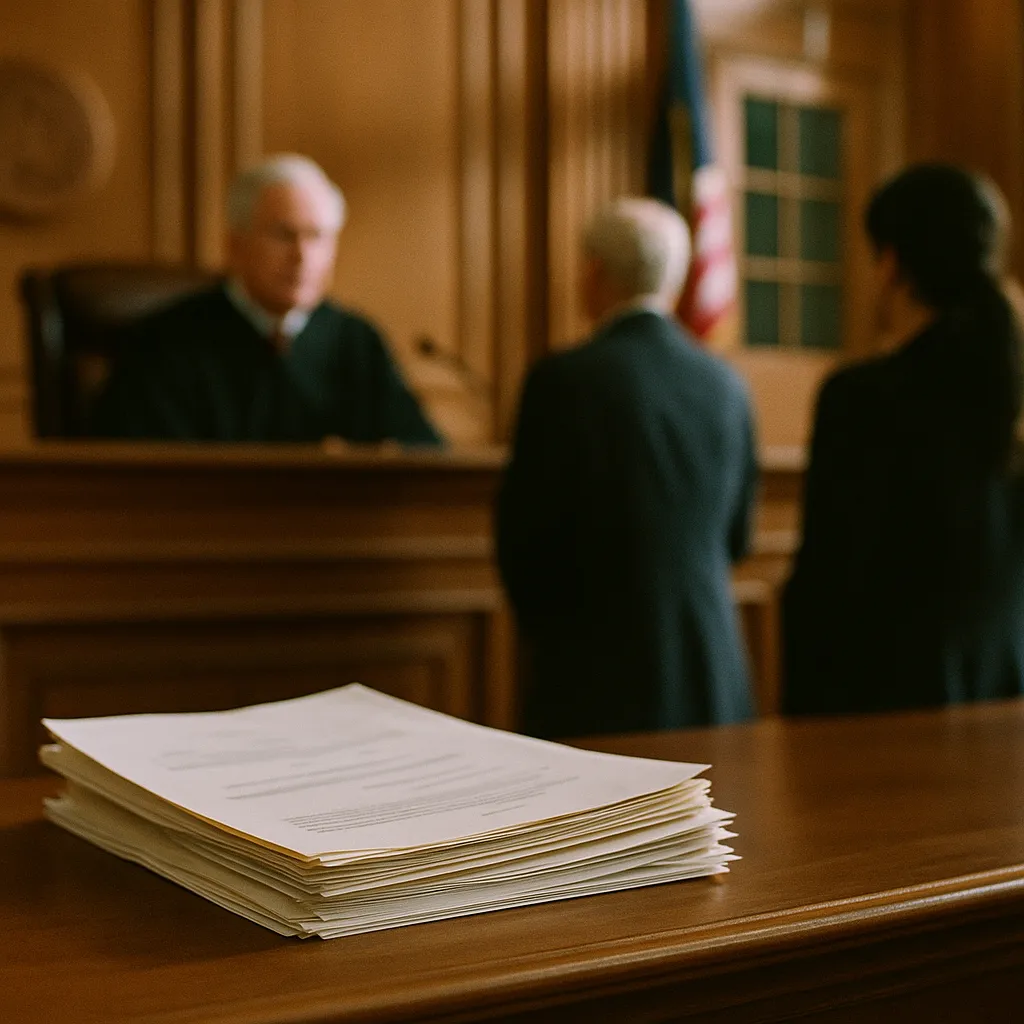
A courtroom featuring documents, related to Judge Cancels Entire Case After Lawyers on Both Sides Admit
Why this matters A Mississippi federal judge dismissed a case and sanctioned four lawyers after both sides submitted AI-generated filings they never reviewed — the most dramatic judicial response yet to AI hallucinations in courts.

Judge Cancels Entire Case After Lawyers on Both Sides Admit They Never Read AI-Generated Filings

By Hector Herrera | June 11, 2026 | Vertical: Legal | Type: Breaking News

A Mississippi federal judge dismissed an entire case and sanctioned all four attorneys involved after lawyers on both sides admitted they had submitted AI-generated court filings packed with fabricated citations — and had never reviewed what the AI wrote. Judge Sharion Aycock's ruling is the most sweeping judicial response yet to the flood of unverified AI-generated legal documents hitting federal courts, and it marks a turning point: the profession can no longer treat AI hallucinations in legal filings as a fringe problem.

Background

Since ChatGPT's public release in late 2022, federal courts have seen a mounting wave of AI-generated briefs containing fictitious case citations — a phenomenon called hallucination, where AI language models invent plausible-sounding but nonexistent sources with full bibliographic detail. The first high-profile case was a 2023 New York federal court matter where an attorney submitted a brief citing six cases that did not exist. Most early incidents involved one side. The Mississippi case is the first widely reported instance of opposing counsel both using unreviewed AI filings simultaneously — effectively having two AI systems argue against each other while human lawyers watched.

The Details

  • Judge: Sharion Aycock, U.S. District Court for the Northern District of Mississippi
  • Action: Dismissed the entire case; removed all four attorneys from the matter
  • Sanction: Two of the four attorneys are barred from Judge Aycock's courtroom for two years
  • Basis: Both opposing counsel admitted to submitting AI-generated filings they had not personally reviewed, which contained fabricated case citations
  • Result: Neither side could defend the accuracy of arguments made in their own name

The ruling goes beyond prior sanctions — which typically imposed fines or required attorneys to complete AI training — by ending the underlying litigation entirely. The clients, not just the lawyers, paid the price for counsel's negligence.

What This Means

For attorneys: The ruling functions as a bright-line standard. Submitting an AI-generated filing without reviewing it for accuracy is not a technical oversight — it is professional misconduct that can end a case and result in courtroom bans. Bar associations in several states have already issued guidance requiring attorneys to certify that AI-assisted work has been personally reviewed; Judge Aycock's ruling gives that guidance teeth.
For law firms: The risk calculus on unsupervised AI use in litigation has shifted materially. Any attorney using an AI drafting tool who cannot personally verify every citation in every filing is now exposed to the kind of sanction that ends client relationships and triggers malpractice claims.

For courts: Federal judges have been reluctant to issue blanket AI prohibitions, preferring case-by-case accountability. This ruling suggests a harder posture is emerging — judges willing to dismiss cases as a deterrent signal, not just penalize individual attorneys after the fact.

For legal AI vendors: Companies selling AI-assisted drafting tools to law firms will face growing pressure to build real-time citation verification — checking that every cited case actually exists and says what the brief claims — directly into their workflows. That capability exists but is not yet standard.

The broader issue isn't AI in legal work — it's unsupervised AI in legal work. Courts are not banning the tools. They are making the professional stakes high enough that supervision becomes non-negotiable.

What to Watch

Expect bar associations in Mississippi and other states to cite this ruling when updating professional conduct rules around AI use. Watch for whether Judge Aycock's two-year courtroom ban survives any appeal — if it does, it establishes a sanction severity that will be cited in every subsequent AI misconduct case.


Sources: Gizmodo

Key Takeaways

  • By Hector Herrera | June 11, 2026 | Vertical: Legal | Type: Breaking News
  • For legal AI vendors:

Did this help you understand AI better?

Your feedback helps us write more useful content.

Hector Herrera

Written by

Hector Herrera

Hector Herrera is the founder of Hex AI Systems, where he builds AI-powered operations for mid-market businesses across 16 industries. He writes daily about how AI is reshaping business, government, and everyday life. 20+ years in technology. Houston, TX.

More from Hector →

Get tomorrow's AI briefing

Join readers who start their day with NexChron. Free, daily, no spam.

More from NexChron