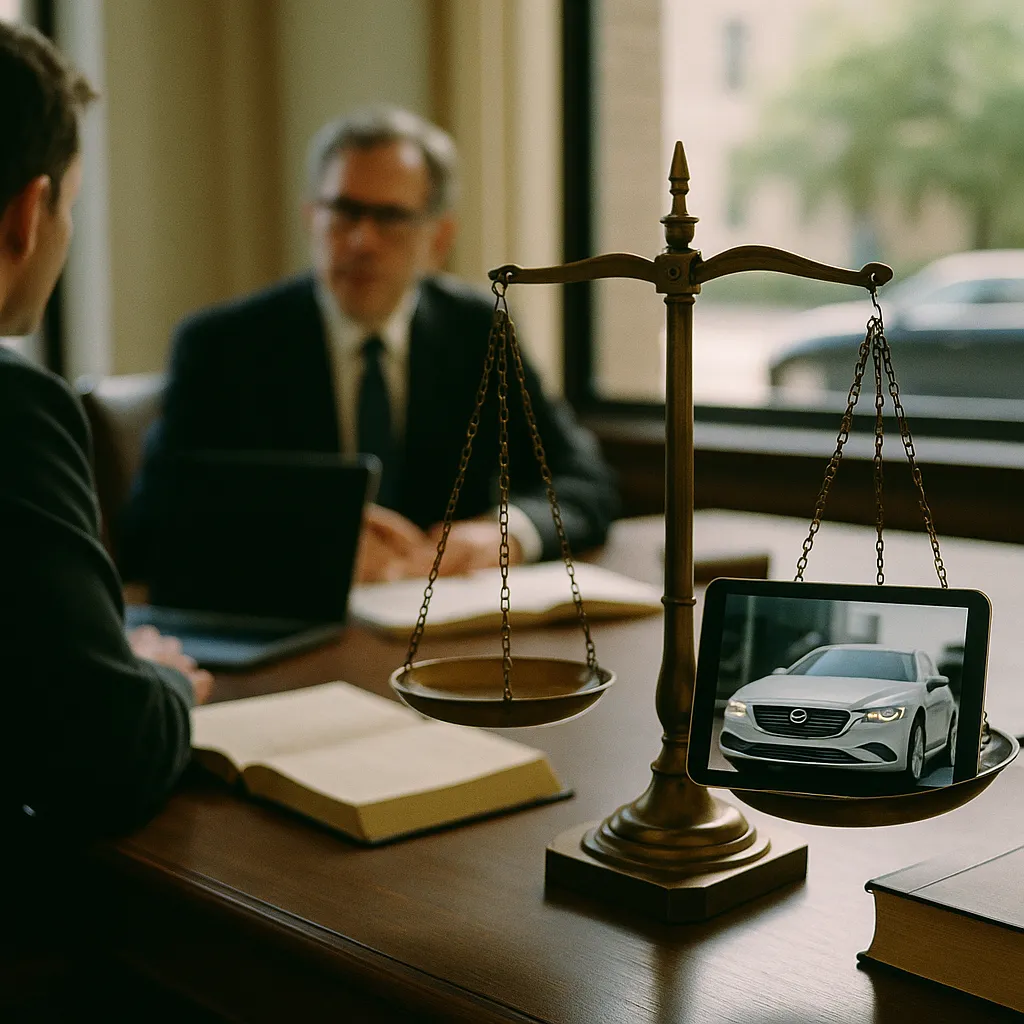
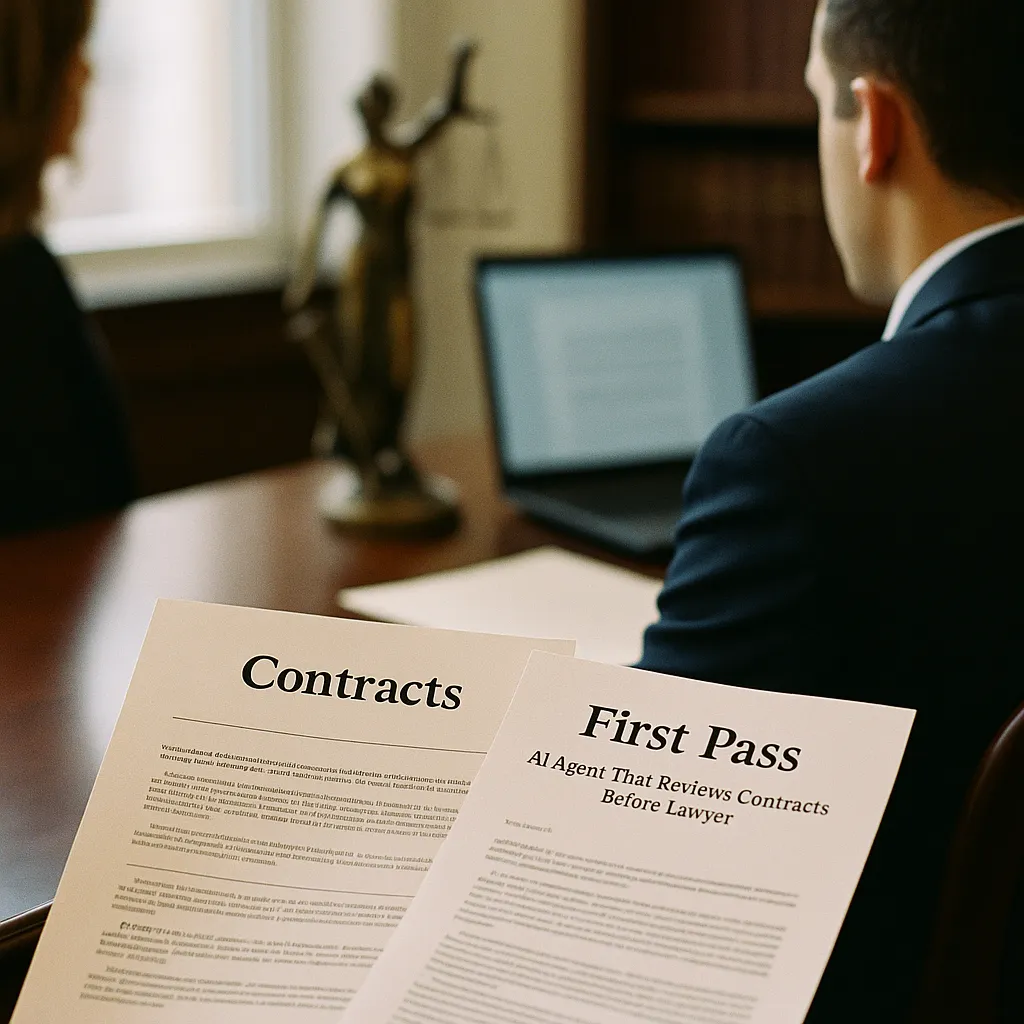
The Regional Court of Munich ruled that Google's AI Overview summaries are Google's own speech — not aggregated third-party content — making the company directly liable when they contain false information.
German Court Rules Google Directly Liable When AI Overviews Publish False Claims
By Hector Herrera | June 13, 2026 | Legal · Breaking News
A German court has ruled that Google's AI Overview summaries are Google's own speech — not passively aggregated search results — making the company directly liable when those summaries contain false information. The Regional Court of Munich issued the ruling in a case involving two publishers who were incorrectly linked to scams by an AI-generated answer that had no basis in any source Google indexed.
What the Court Decided
The Munich court rejected Google's argument that AI Overviews function like a search engine — a neutral conduit for third-party content — and instead classified them as Google's own statements. That distinction matters enormously under German defamation and unfair competition law: a platform that merely links to content has different legal exposure than a publisher that makes the claim itself.
The case was brought by two Munich-based publishers after Google's AI Overview surfaced text that incorrectly associated them with subscription traps and online scams. The AI-generated summary made connections that did not appear in any of the underlying sources — the model apparently synthesized or hallucinated the damaging association. The publishers argued that made Google the author of a false factual claim, not a search engine displaying someone else's content.
The Munich court agreed.
The Key Legal Finding
The court's core holding: AI-generated summaries that appear under Google's name, in Google's interface, presented as Google's answer to a user's query, constitute Google's own speech for legal purposes.
This distinction pulls AI Overviews out of the safe harbor that has protected search engines under both U.S. and EU law for decades. In the United States, Section 230 of the Communications Decency Act shields platforms from liability for third-party content. Germany has its own analogous protections. The Munich ruling holds that AI-generated synthesis is not third-party content — it is content Google created, using third-party inputs.
Google confirmed it will appeal the ruling.
Get this in your inbox.
Daily AI intelligence. Free. No spam.
Why This Case Is Different From Prior AI Liability Disputes
Most AI liability cases to date have involved:
- AI tools that generate harmful content on request (chatbot abuse cases)
- AI-assisted content that humans publish (media and journalism)
- AI systems deployed by third parties that cause harm (autonomous vehicle accidents, medical diagnosis tools)
This case is different: it targets the output of an AI feature embedded in the world's dominant search engine, triggered automatically by ordinary user queries, at massive scale. Google processes approximately 8.5 billion searches per day. AI Overviews appear on a significant portion of those results in markets where the feature is enabled.
The implication is that even a low false-positive rate — hallucinated or incorrect AI summaries — translates to millions of potentially actionable false statements per day if the Munich ruling's logic is applied broadly.
What This Means for Google and the Industry
For Google: An appeal is almost certain, and the Munich decision is not binding outside Germany. But German courts carry weight in EU legal interpretation, and the ruling will be cited in similar cases across European jurisdictions. Google's legal team will spend the next year arguing that AI Overviews are qualitatively different from editorial publishing — and that argument will get harder to make as the feature becomes more prominent in search.
For other AI search products: Every company that surfaces AI-generated answers directly in a user interface — Perplexity, Microsoft's Copilot Search, OpenAI's SearchGPT, Apple Intelligence — now has a German court precedent to navigate. The ruling's logic would apply equally to any product that presents AI-synthesized text as an answer, not merely a list of links.
For publishers: The two Munich publishers won a concrete remedy in a case that went to the heart of how AI search can damage reputations at scale. Expect more publishers, individuals, and businesses to bring similar cases in Germany and across the EU once this ruling is widely reported.
The Hallucination Problem as Legal Exposure
The Munich case illustrates a structural vulnerability in AI search products: hallucination — the tendency of large language models to generate plausible-sounding but factually incorrect text — is not just a product quality problem. Under this ruling, it is a legal liability.
Google and its peers have invested heavily in reducing hallucination rates, using techniques like retrieval-augmented generation (RAG), where the model is constrained to summarize only content it can actually retrieve, rather than generating from scratch. But even well-implemented RAG systems produce errors. The Munich case involved an association the model drew that did not appear in any source — a synthesis error that even a careful retrieval system might produce.
If AI search providers face direct publisher liability for every such error, the economics of the feature change significantly.
What to Watch
Google's appeal will likely take 12-18 months to resolve through German courts, with a possible referral to the Court of Justice of the European Union on the broader question of whether AI-generated summaries qualify for platform safe harbor protections under EU law. Meanwhile, the European AI Liability Directive — currently in draft — is being negotiated with exactly these questions in mind. The Munich ruling gives that negotiation a concrete precedent to either codify or overrule.
Watch for Google to update its AI Overviews product terms of service in Germany, or to disable the feature selectively for content categories — publishers, individuals, businesses — where defamation exposure is highest.
Did this help you understand AI better?
Your feedback helps us write more useful content.
Get tomorrow's AI briefing
Join readers who start their day with NexChron. Free, daily, no spam.