Canadian telecom TELUS launched a smart home AI assistant with Generative UI that dynamically assembles its own interface based on real-time context across all connected home devices.
TELUS Launches What It Calls the World's First Smart Home AI Assistant With Generative UI
By Hector Herrera | June 6, 2026 | Home
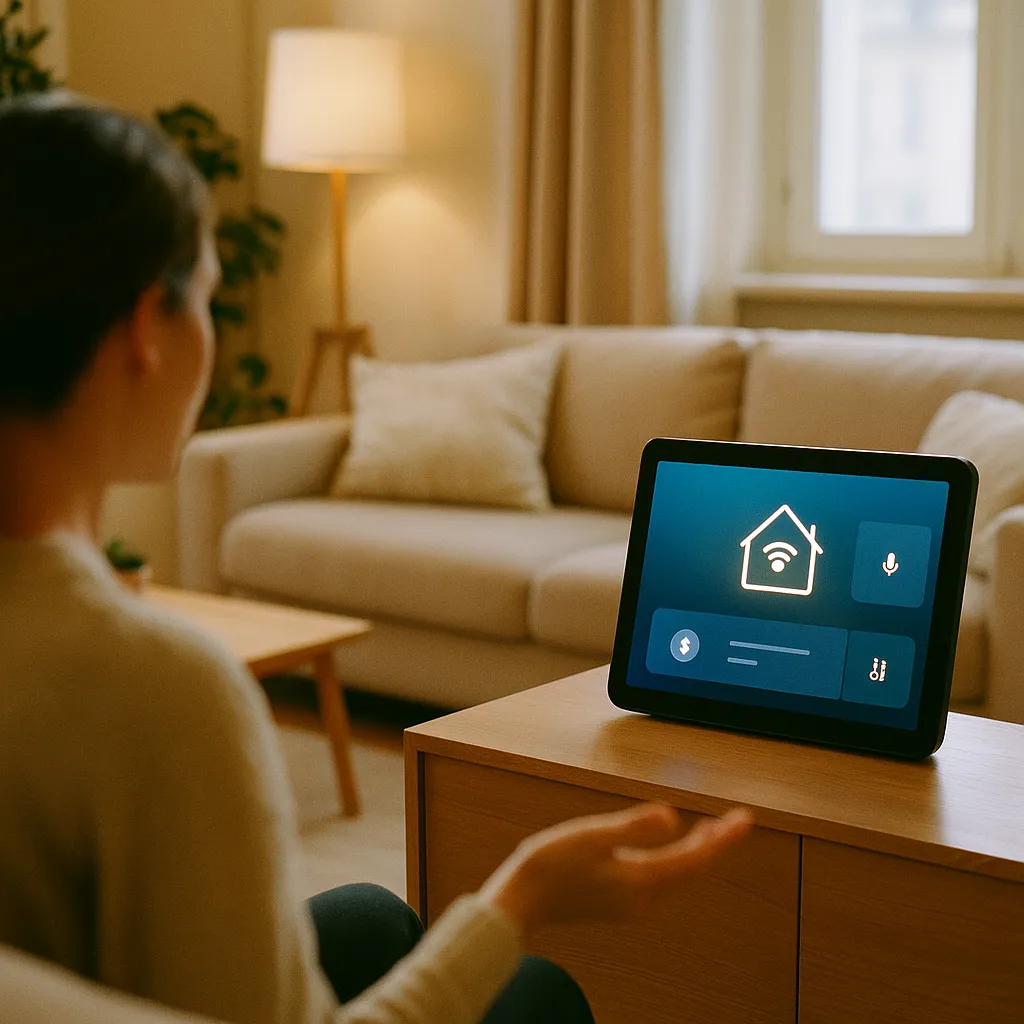
Canadian telecom TELUS launched what it describes as the world's first smart home AI assistant with Generative UI — a system that builds its own interface dynamically based on real-time context across all connected home devices. Instead of requiring users to navigate separate apps for each device category, the system presents a unified conversational AI interface that adapts its display to whatever you're actually trying to do. The announcement is notable less for TELUS specifically and more for what it signals about where the smart home interface paradigm is heading.
The smart home market has had a UX problem since it went mainstream. Consumers who adopt more than a handful of connected devices end up managing multiple apps, incompatible ecosystems, and configuration interfaces designed around product categories rather than human intent. Generative UI is a direct attempt to fix that.
What Generative UI Means in Practice
Generative UI refers to interfaces that are assembled dynamically by an AI model rather than designed statically by engineers. Instead of a fixed layout where "Lights" is always top-left and "Thermostat" is always top-right, the interface builds itself based on:
- Current context — time of day, who is home, which devices are active
- User intent — what the user is asking for or doing
- Device state — what the connected home ecosystem is currently doing
According to the PR Newswire announcement, the TELUS system unifies lighting, security cameras, thermostats, and entertainment under a single conversational AI layer. When a user says "I'm leaving for work," the interface doesn't surface a menu — it presents a departure checklist drawn from the connected devices' current states, with one-tap options to lock doors, arm security, and set the thermostat back.
What the Platform Integrates
The TELUS system functions as a unification layer across device categories:
Get this in your inbox.
Daily AI intelligence. Free. No spam.
- Lighting — scene control, scheduling, occupancy-triggered responses
- Security cameras — live view, motion alerts, access control
- Thermostats — scheduling, occupancy-based adjustment, energy optimization
- Entertainment — device control, multi-room audio, content recommendations
The integration model matters. TELUS is a telecom, not a device manufacturer — so this system is designed to sit on top of existing devices from multiple manufacturers rather than requiring TELUS-branded hardware. That's the right approach for markets where consumers already own a mix of Nest, Ring, Ecobee, Philips Hue, and other ecosystem-specific devices that don't naturally talk to each other.
Why This Is More Than a Product Launch
Smart home platforms have been "unified" before. Google Home, Amazon Alexa, and Apple HomeKit all promised single-interface control of connected devices. What they delivered was a central app that could address devices from multiple ecosystems — but the interface itself remained static, designed by engineers, and organized around device categories rather than user context.
Generative UI flips that structure. The interface is assembled by the AI at runtime, which means it can be contextually appropriate rather than generically organized. That's the same shift that made conversational AI genuinely useful for enterprise software — moving from navigating menus to stating intent and having the system respond with the right tools.
For smart home specifically, the practical test is whether the system handles the edge cases that break every static interface: guests in the house, device failures, conflicting scheduled routines, and the persistent problem of a connected home that's more complex to manage than the unconnected home it replaced.
Caveats Worth Noting
The claim of being "world's first" is common in telecom product launches and sometimes applies to specific feature configurations rather than meaningful technological firsts. Independent testing hasn't yet validated how adaptive the TELUS interface actually is in practice versus how it performs in controlled demonstrations.
The relevant question isn't whether TELUS got the implementation right on day one. It's whether the Generative UI approach to smart home control — dynamic interface assembly based on context — proves more useful than the static alternatives. If it does, every major smart home platform will adopt a version of it.
What to Watch
Watch whether Apple HomeKit, Google Home, or Amazon Alexa announces a generative interface approach in 2026. If any of the three dominant platforms moves in this direction, it would validate TELUS's bet on the interaction model and signal that the static smart home app era is ending. Also watch for developer adoption: if third-party device makers start certifying against the TELUS Generative UI specification, that's the signal that the platform has market traction beyond TELUS subscribers.
Sources: PR Newswire — TELUS Smart Home AI Generative UI Launch
Did this help you understand AI better?
Your feedback helps us write more useful content.
Get tomorrow's AI briefing
Join readers who start their day with NexChron. Free, daily, no spam.