Google launched Gemini Built-In, a licensing program extending Gemini AI to third-party smart speakers and cameras — taking Google conversational AI beyond Nest devices into the broader smart home market for the first time.
Google Opens Gemini AI to Third-Party Smart Home Hardware With New 'Gemini Built-In' Program
Google is extending Gemini AI beyond its own Nest and Pixel devices for the first time, launching a licensing program called Gemini Built-In that lets third-party manufacturers embed Gemini features into smart speakers, cameras, and other home hardware. The rollout is expected before the end of 2026. It is the first time Google has offered its conversational AI as a licensed component for the broader smart home ecosystem — and it positions Gemini as an infrastructure layer, not just a Google-branded feature.
What Gemini Built-In Actually Is
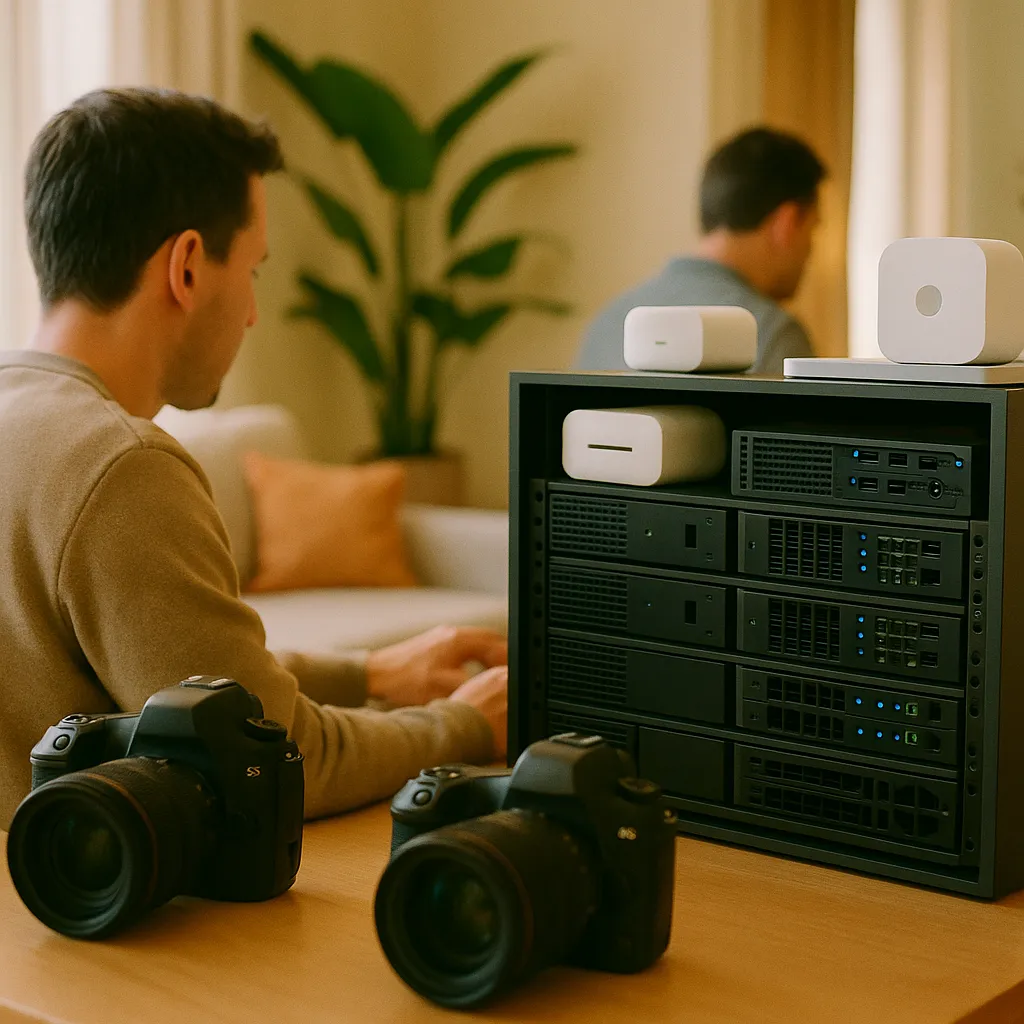
The program gives manufacturers access to Gemini AI capabilities through reference hardware designs — essentially pre-built technical specifications that manufacturers can build around without having to develop their own foundation model infrastructure. A speaker brand that wants Gemini-powered voice interaction does not need to train a model, run inference servers, or negotiate a complex custom API deal. They build to Google's reference design and Gemini comes with it.
This is the same model Amazon used to scale Alexa across hundreds of third-party devices: make it frictionless for manufacturers to embed the assistant, and the assistant becomes ambient in the home category. Google is applying that same playbook to Gemini with better underlying AI capability than Alexa had at comparable points in its development.
Why This Is a Platform Move, Not a Product Launch
Gemini Built-In is not a new smart speaker or a software update. It is a distribution strategy.
Get this in your inbox.
Daily AI intelligence. Free. No spam.
The smart home market has fractured across Google Home, Amazon Alexa, Apple HomeKit, and a long tail of proprietary platforms. Google's share of third-party smart speaker placement has eroded as Amazon deepened Alexa integrations and Apple pushed HomeKit with privacy positioning. Gemini Built-In is Google's answer: stop competing only at the device level and start competing at the AI layer.
For manufacturers, the calculus is straightforward. Gemini's conversational capabilities now benchmark higher than Alexa's on most reasoning and natural language tasks. A speaker brand choosing an AI backend in 2026 can offer meaningfully better responses with Gemini than with older assistant platforms. The reference design removes the integration cost that would otherwise be a barrier.
What It Means for Consumers
If Gemini Built-In scales the way Google intends, the practical outcome for consumers is that Gemini-powered voice interaction will appear in hardware they already buy — not just in Nest Home speakers or Pixel phones, but in third-party brands sold at hardware and home improvement stores.
The conversational quality difference between current-generation Gemini and 2019-era Alexa is significant. Gemini can handle multi-step, context-aware queries, maintain conversation state across turns, and integrate with Google Search and Google services in ways that make a smart speaker genuinely useful rather than limited to timers and music commands.
What to Watch
Adoption depends on which manufacturers sign on and how quickly they ship Gemini Built-In hardware. Watch for announcements from mid-tier speaker and camera brands at major consumer electronics events in the second half of 2026. If three or more established hardware brands ship Gemini Built-In devices before year-end, the program has succeeded as a distribution vehicle. If it stays limited to niche partners, it signals that manufacturers are holding out to see how the Google Home ecosystem evolves before committing.
By Hector Herrera
Did this help you understand AI better?
Your feedback helps us write more useful content.
Get tomorrow's AI briefing
Join readers who start their day with NexChron. Free, daily, no spam.