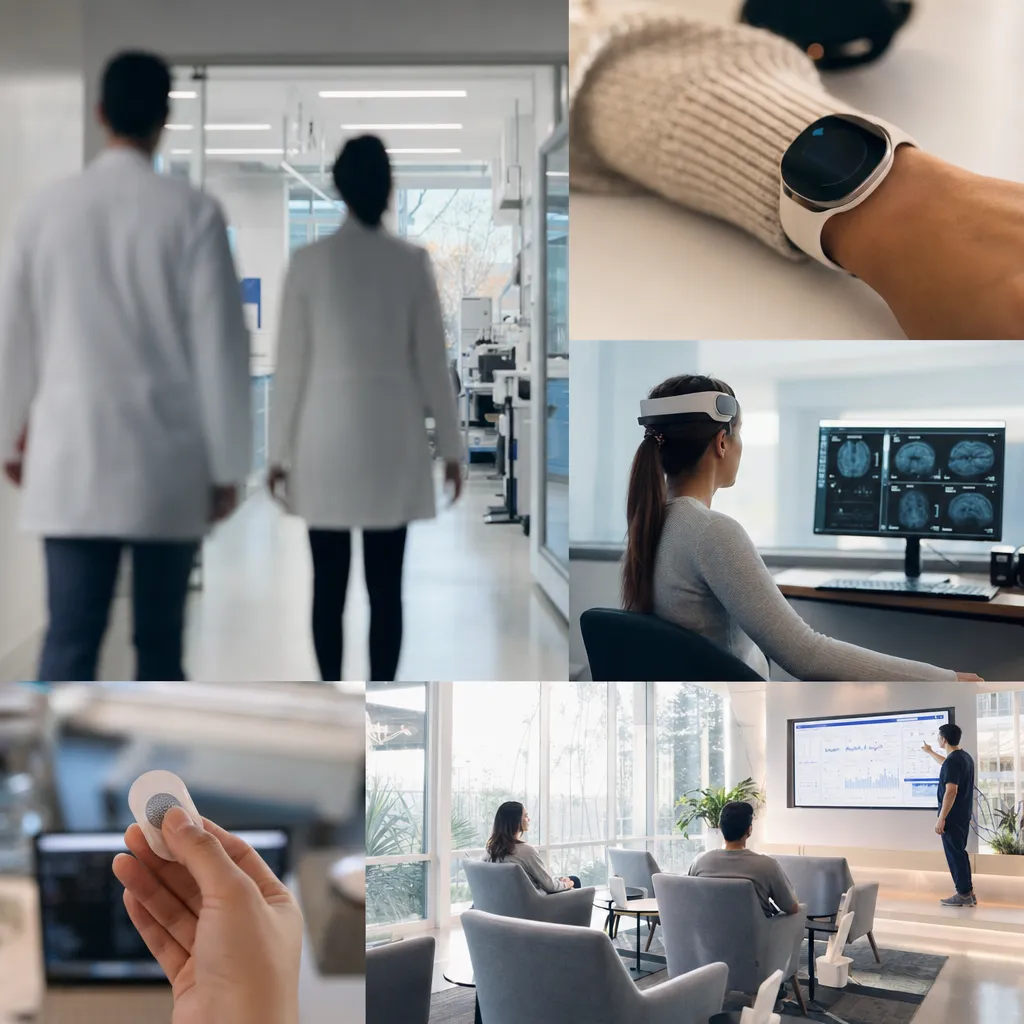
A proof-of-concept study demonstrates that AI foundation models trained on wearable sensor data can predict migraines a full 24 hours before onset — the first multimodal wearable AI demonstration for migraine forecasting.
A new proof-of-concept study has demonstrated that AI foundation models trained on wearable sensor data — specifically heart rate variability, skin temperature, and trapezius muscle tension — can predict moderate-to-severe headaches and fatigue a full 24 hours before onset with moderate-to-good accuracy. This is the first multimodal wearable foundation model demonstrated for migraine forecasting. The finding opens a direct commercial path to preventive health AI for the estimated one billion people globally who live with migraines.
Context: The Migraine Problem AI Could Solve
Migraines are among the most prevalent and debilitating neurological conditions in the world. The standard clinical approach is reactive: patients treat after onset. Preventive medications exist but require consistent daily use with side effects, and they do not work for everyone.
A 24-hour warning changes the calculus entirely. It creates a behavioral and pharmacological window — medication taken before a migraine peaks is far more effective than medication taken during an attack. A same-evening warning allows patients to adjust sleep, hydration, stress exposure, and scheduling before the attack arrives.
The fundamental challenge has always been that migraine triggers are highly individual and multivariate. What triggers one person's migraine is irrelevant to another's. That is precisely where foundation models — trained on large, diverse biosignal datasets and fine-tuned to individual physiological patterns — offer something rule-based clinical algorithms cannot.
The Details
The study used a multimodal approach combining three distinct biosignal streams captured by consumer-grade wearable sensors:
Get this in your inbox.
Daily AI intelligence. Free. No spam.
- Heart rate variability — a recognized marker of autonomic nervous system stress, which often precedes migraine onset
- Skin temperature — correlates with peripheral vascular changes that occur in the prodromal phase before head pain
- Trapezius muscle tension — shoulder and neck tension is both a migraine precursor and a prodromal symptom for a significant subset of sufferers
A foundation model trained across all three signal streams produced moderate-to-good predictive accuracy for onset events occurring 24 hours later. The researchers characterize this as a proof-of-concept rather than a production-ready clinical system — but the demonstration is meaningful because it shows that sensors already present in consumer wearables capture sufficient physiological signal for preventive forecasting.
No new hardware is required. Apple Watch, Fitbit, WHOOP, and Garmin devices already collect all three data streams. The barrier to commercial deployment is model development and clinical validation, not sensor capability.
What This Means
For patients: A 24-hour prediction window is clinically meaningful. Triptan medications and other abortive treatments are substantially more effective when taken before the prodromal phase develops into a full attack. An AI-powered warning the night before could meaningfully reduce the severity and duration of millions of migraines annually for people who currently have no advance notice.
For wearable device makers: This study makes a direct commercial case for migraine prediction as a platform feature. Apple, Fitbit, and WHOOP have all expanded into preventive health monitoring; a validated migraine prediction model is the kind of differentiated, high-retention capability their wellness subscription tiers require.
For the pharmaceutical industry: Predictive triggering data — knowing when a patient is 24 hours from an episode with reasonable confidence — creates new clinical trial designs for preventive interventions. It also shifts consumer demand toward on-demand treatment formats and away from daily preventive medication regimens.
For clinical AI regulation: FDA clearance for a medical-grade migraine prediction device would require a prospective clinical trial with a larger, more diverse population. The regulatory pathway exists — it is the same Class II device pathway used by ECG-based arrhythmia detection features on Apple Watch — but it requires rigorous validation that proof-of-concept studies do not supply.
What to Watch
Partnerships between wearable platform makers and clinical AI companies to move this finding toward a registered trial and regulatory submission. Apple has the data infrastructure, the installed base, and the health partnerships. A collaboration with a clinical AI firm to advance migraine prediction toward FDA clearance would be a logical next step in 2027.
Did this help you understand AI better?
Your feedback helps us write more useful content.
Get tomorrow's AI briefing
Join readers who start their day with NexChron. Free, daily, no spam.