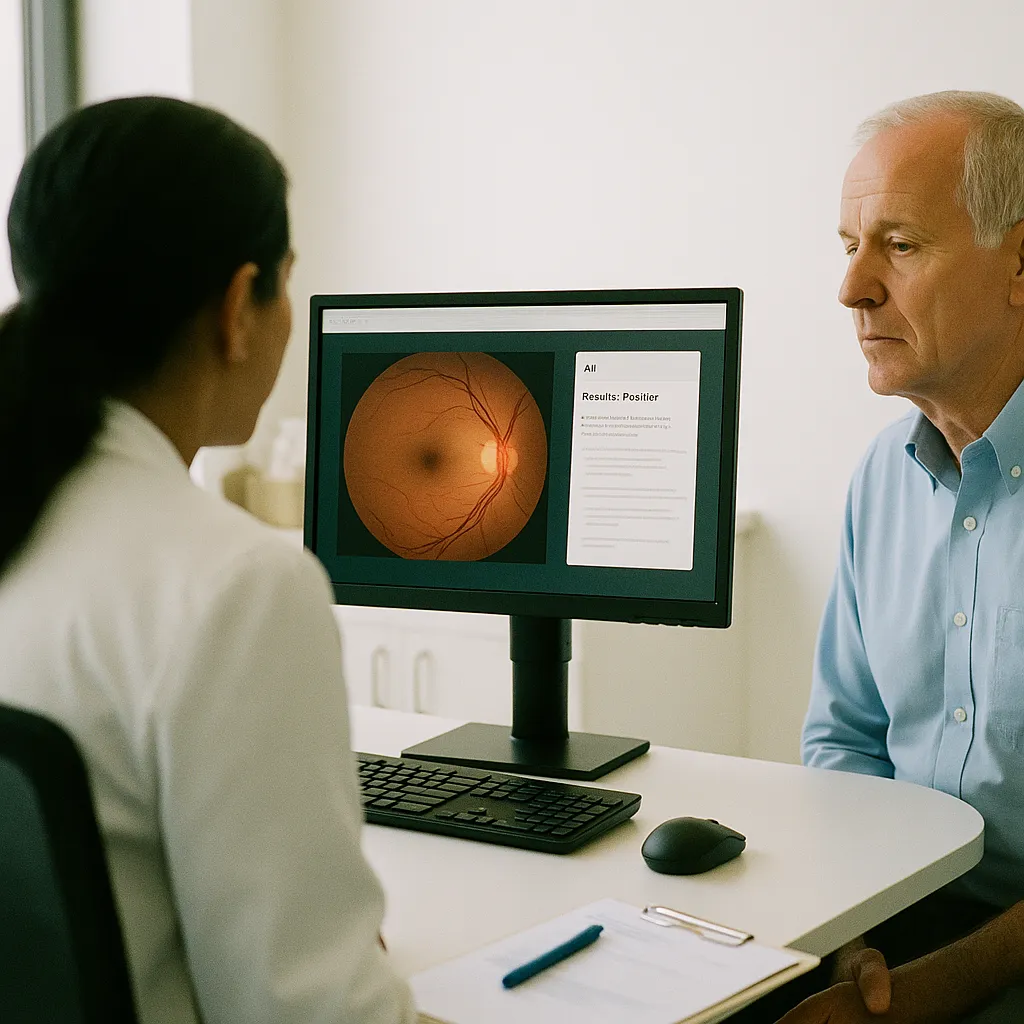
Utah became the first US state to allow an AI to initiate a new prescription without a physician's approval, with six independent auditors overseeing the pilot.
Utah just authorized an AI system to write initial prescriptions without a doctor's sign-off — a US first that tests whether AI can be the prescriber of record, not just a clinical advisor. The state simultaneously named six independent auditors to monitor whether the experiment goes wrong.
Why it matters: The approval reframes AI's role in healthcare from tool to practitioner. If the pilot succeeds, it will be cited in every future argument for autonomous clinical AI. If it fails, it will be cited in every argument against.
What happened
Utah's Office of Artificial Intelligence Policy approved a pilot program for startup Nolla Health, allowing its AI to assess patients and write initial prescriptions for mild acne treatments — no physician review required after a staged validation period, according to STAT News.
At the same time, the state named six independent auditors to oversee the program, including:
- Stanford's Clinical Excellence Research Center
- Coalition for Health AI (CHAI)
- Four additional organizations not disclosed in the initial announcement
The dual move — expanding AI autonomy while installing external oversight — is Utah's signature regulatory approach: push the frontier faster than other states, but under structured observation rather than blind trust.
Background: Utah's AI health sandbox
Utah established the nation's first health AI regulatory sandbox in 2024, giving its Office of Artificial Intelligence Policy authority to approve AI health pilots that would otherwise require full FDA clearance or state medical board approval. The sandbox model lets companies run structured tests under state oversight, with auditor-reviewed outcomes that can inform regulatory frameworks both in Utah and nationally.
Prior approvals under the sandbox permitted AI to assist clinical decision-making: flagging potential diagnoses, surfacing relevant patient history, suggesting treatments for a physician to review and authorize. The Nolla Health approval crosses a different threshold: the AI initiates the prescription, not just recommends one for a human to sign.
That distinction — AI as advisor versus AI as prescriber of record — is legally and ethically significant. US prescription law currently requires a licensed physician to authorize new prescriptions. Utah's sandbox is operating in a supervised gray zone while the broader legal framework evolves around it.
Why mild acne first
The decision to start with mild acne treatments is deliberate and strategic. Topical acne medications represent the lowest-risk entry point available:
Get this in your inbox.
Daily AI intelligence. Free. No spam.
- Treatments are widely available, many over-the-counter
- Clinical outcomes are well-understood and measurable
- Adverse events from mild acne prescriptions are rare and rarely serious
- The patient population is generally young and otherwise healthy
Starting here lets Utah observe AI prescription behavior in a forgiving environment. Errors are more recoverable than they would be in cardiovascular medications, psychiatric prescriptions, or immunosuppressants.
But the precedent isn't about acne — it's about the principle that AI can legally initiate treatment. That principle, if established through a successful pilot, is applicable to any condition where the risk profile can be justified. Low-complexity dermatology today; uncomplicated UTIs and seasonal allergies potentially next.
The audit structure and what it means
The six-auditor approach is more significant than it appears. Utah's Office of AI Policy described the auditors' scope as oversight of company claims — what Nolla Health tells patients and regulators about its AI's capabilities — in addition to monitoring clinical outcomes.
This addresses a documented failure pattern in health AI. A 2026 Stanford and Harvard clinical AI analysis found that AI medical tools frequently outperform their real-world clinical results when evaluated in controlled research settings. By auditing claims as well as outcomes, Utah is attempting to catch the gap between marketing and reality before it causes harm.
The Coalition for Health AI (CHAI) — one of the six named auditors — has developed a real-world performance evaluation framework for AI health products, specifically designed to surface the benchmark-to-deployment gap. Their inclusion signals Utah is treating this as substantive oversight, not ceremonial review.
What this means for healthcare AI broadly
For physicians and health systems: The Nolla approval doesn't threaten physician prescribing authority in the short term — mild acne sits at the extreme low end of clinical complexity. But it establishes a regulatory pathway. Positive outcomes will fuel arguments to expand AI prescribing to other low-complexity conditions.
For telemedicine: Telemedicine companies have pushed for broader AI autonomy in clinical workflows since 2023. The Utah approval gives them a reference point for regulatory discussions: a state government has evaluated and approved AI-initiated prescribing under a formal, audited oversight structure.
For the FDA: The FDA has cleared over 1,357 AI/ML-enabled medical devices. AI prescribing sits in a different regulatory category than diagnostic AI. Utah's pilot may force the agency to clarify where state sandbox authority ends and federal drug prescribing authority begins — a question that has no clear answer yet.
California passed clinical AI accountability legislation in October 2026 requiring audits before AI clinical tools can be deployed in the state. Those bills target accountability for existing AI systems. Utah is testing something further upstream: AI as the original decision-maker, not the assistant supporting one.
The access argument
Mild acne is also a condition where access barriers are genuine. Dermatologists are scarce in rural areas and appointment waits run 3-6 months in many markets. An AI that can assess and prescribe after a structured online intake removes that barrier entirely for a common, well-defined condition.
Supporters of clinical AI autonomy will point to this use case as proof-of-concept for AI as a primary-care supplement in underserved markets. The access argument has been the strongest political case for this technology — Utah's pilot is the first real-world test of whether it holds up under clinical scrutiny.
What to watch
The first auditor reports — expected within six months of pilot launch — will determine whether other states move quickly to replicate or distance themselves from Utah's approach. States with active health AI sandbox legislation include California, New York, and Texas; how they read Utah's outcomes will shape their next moves.
The FDA's response is the other critical variable. Federal guidance clarifying whether AI-initiated prescribing requires federal clearance regardless of state sandbox authority would either validate the Utah approach or create a direct conflict between state and federal jurisdiction.
Source: STAT News — Utah Expands Health AI Sandbox, Picks Third-Party Auditors
Did this help you understand AI better?
Your feedback helps us write more useful content.
Get tomorrow's AI briefing
Join readers who start their day with NexChron. Free, daily, no spam.