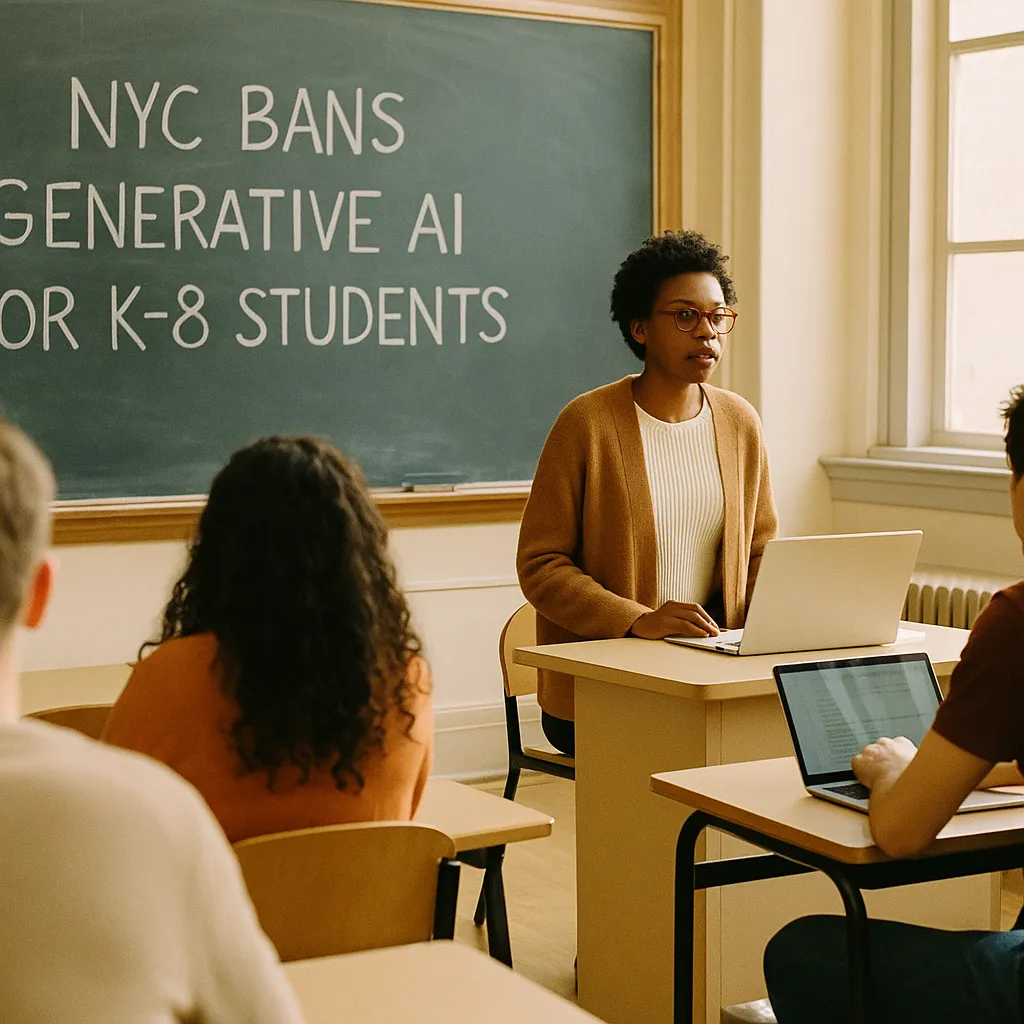
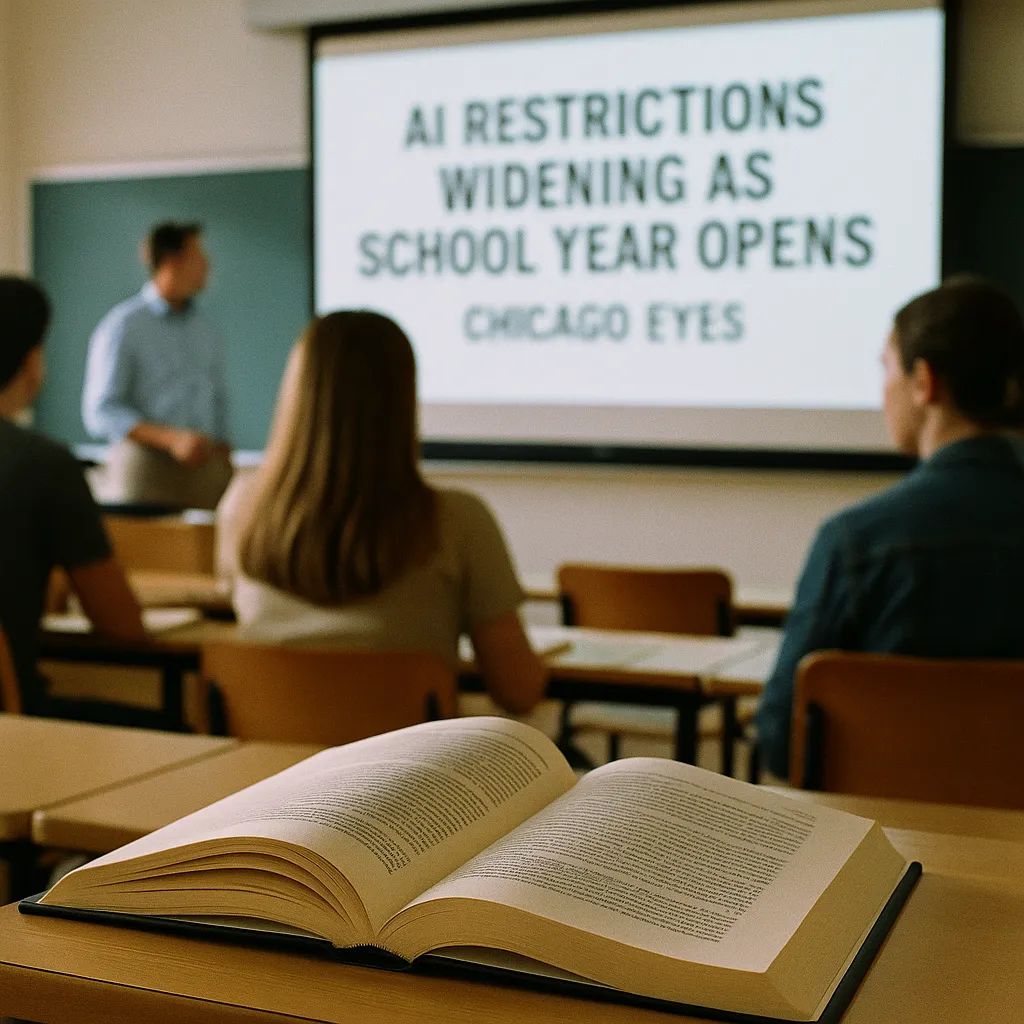
At least 17 U.S. states are advancing bills to restrict technology in schools, pitting state legislatures against the Trump administration's push to embed AI in American classrooms.
17 States Move to Restrict School Tech as EdTech Backlash Reaches Legislatures
By Hector Herrera | April 25, 2026 | Education · Government Policy
At least 17 U.S. states are now advancing legislation to restrict technology use during school hours, creating a direct collision between state-level policy instincts and the Trump administration's push to embed AI in American classrooms.
The tension is real and politically complicated. On one side: governors and state legislators responding to constituents — mostly parents — who are alarmed by data showing more than half of teenagers are already using AI to complete schoolwork. On the other: a federal government that views AI education as a competitiveness issue and has positioned school-based AI adoption as a national priority.
What the Bills Actually Do
According to Education Week's reporting, the 17 states' bills are not uniform. They range along a spectrum:
- Narrowly scoped phone bans — removing personal devices from classrooms or school buildings during the day
- AI-assignment restrictions — prohibiting or requiring disclosure when AI tools assist in completing academic work
- Broader EdTech limits — capping screen time, requiring parental consent for AI-enabled learning platforms, or mandating independent audits of algorithmic personalization tools
The phone-ban bills have the most legislative momentum and the broadest bipartisan support. The AI-specific restrictions are newer, more contested, and in several states explicitly tied to academic integrity concerns after districts documented widespread AI use on graded assignments.
Get this in your inbox.
Daily AI intelligence. Free. No spam.
The Federal Counterweight
The Trump administration's position is effectively the opposite: that restricting AI access in schools will leave American students behind peers in countries — notably China — that are accelerating AI education. The administration's AI education framework, released earlier this year, encourages districts to integrate AI tools and calls on states to adopt compatible policies.
This creates an unusual federal-state dynamic. Normally, education policy pushes authority down to states. Here, the federal government wants permissiveness while states want restriction. Neither side controls the other — states can pass phone bans without federal approval — but federal funding conditions could eventually become a pressure point.
Why More Than Half of Teens Are Already Using AI for Schoolwork
The survey data driving this legislation is worth understanding precisely. When students report using AI to "support" schoolwork, the behavior spans a wide range: summarizing a reading, checking grammar, generating an outline, and in some cases submitting AI-written text as their own work. Schools and researchers are still developing the vocabulary to distinguish between legitimate AI assistance and academic dishonesty, and state bills are struggling to draw that line in statutory language.
What's clear is that the tools arrived faster than the norms. Districts that lacked policies when AI writing tools became broadly available in 2023 are still working to establish them in 2026 — and the legislative backlash is partly a response to that institutional lag.
What to Watch
The 17-state figure will almost certainly grow before the end of current legislative sessions. Watch for whether any state passes AI-specific restrictions that could become a model for others — and for how the Trump administration responds if states with significant federal education funding enact policies that directly contradict federal AI guidance.
The more consequential long-term question is pedagogical, not legislative: what does AI-assisted learning actually look like in a classroom where it's done well? That answer isn't settled, and it won't be settled by a phone ban.
Source: Education Week, April 2026
Did this help you understand AI better?
Your feedback helps us write more useful content.
Get tomorrow's AI briefing
Join readers who start their day with NexChron. Free, daily, no spam.