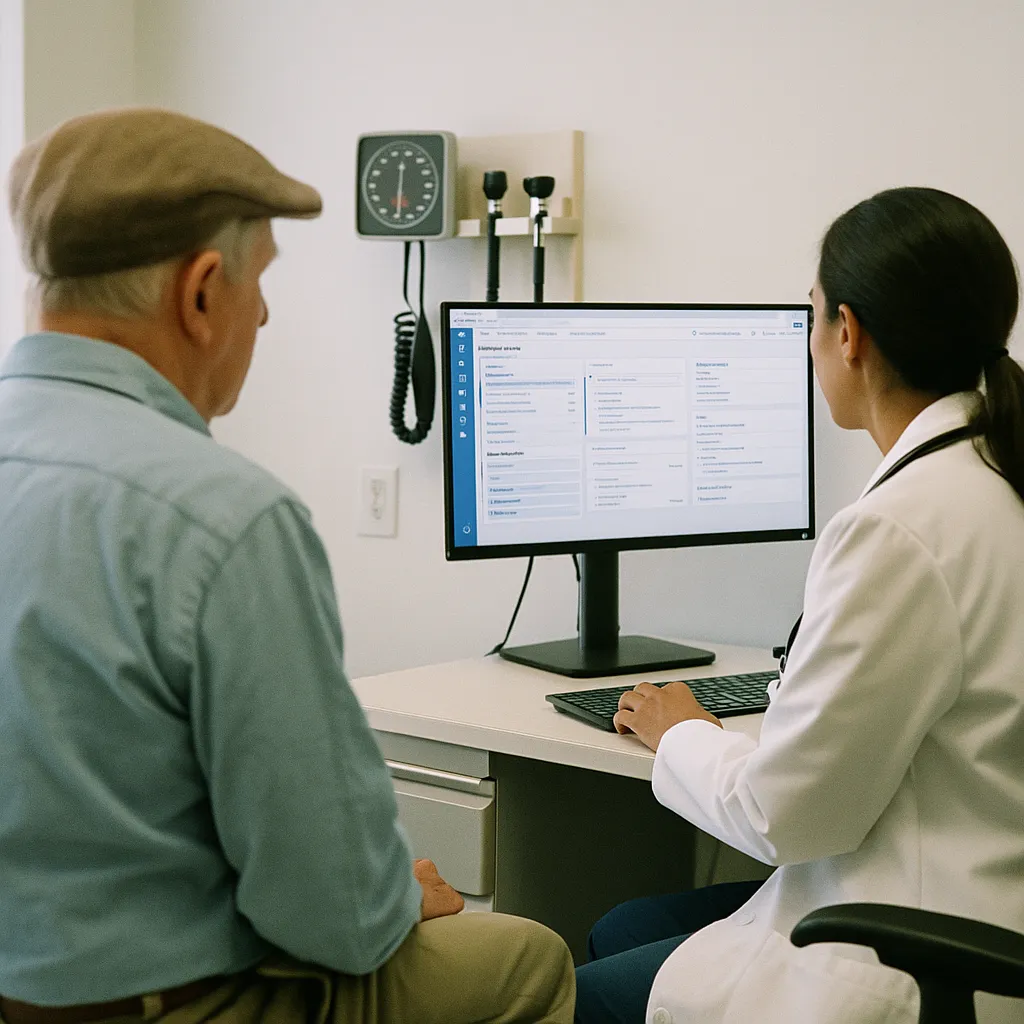
OpenAI released a healthcare policy blueprint calling for faster FDA pathways and expanded data access on the same day it launched ChatGPT for Clinicians — proposals critics say are designed to clear regulatory barriers for OpenAI's own commercial healthcare products.
OpenAI Publishes Healthcare Policy Blueprint That Would Disproportionately Benefit OpenAI
By Hector Herrera | May 11, 2026 | Health
OpenAI released a detailed healthcare policy blueprint calling for modernized FDA review pathways, expanded patient data access, and reformed liability frameworks — on the same day it launched ChatGPT for Clinicians, its commercial product for physicians. The proposals would clear major regulatory barriers currently slowing AI adoption in healthcare. Critics note that clearing those barriers would disproportionately benefit the company making the proposals.
The timing is not accidental. OpenAI is making a direct play for the healthcare market while simultaneously lobbying for the regulatory conditions that would make that market more accessible.
What OpenAI Is Proposing
The blueprint, released alongside the ChatGPT for Clinicians product announcement, calls for:
- Modernized FDA review pathways for AI-driven medical tools that would allow faster approval cycles and reduce the regulatory friction currently applied to software as a medical device (SaMD — software that performs a medical function without hardware).
- Expanded health data access that would make it easier for AI developers to train on de-identified patient records, insurance claims, and electronic health records at scale.
- Reformed liability frameworks that would clarify whether AI developers, healthcare providers, or patients bear legal responsibility when AI-assisted clinical decisions cause harm.
Taken together, the proposals would remove or reduce the three largest structural barriers to commercial AI deployment in clinical settings: regulatory approval speed, training data access, and liability uncertainty.
The Demand Signal Behind the Push
The commercial context is significant. According to STAT News, more than 40 million people globally now use ChatGPT daily for health information. Among those users, 41% cite inability to pay for a doctor visit as the reason they turn to an AI chatbot instead.
That figure deserves careful interpretation. It simultaneously:
Get this in your inbox.
Daily AI intelligence. Free. No spam.
- Demonstrates genuine unmet healthcare access need that AI is already filling in practice.
- Establishes that OpenAI already has a dominant position in consumer health AI — making regulatory reform that expands the market a direct financial benefit to the company.
- Raises questions about the safety implications of 40 million people receiving health guidance from a general-purpose chatbot not reviewed under clinical AI standards.
The blueprint does not address what happens when ChatGPT's health information is wrong, or what accountability mechanism exists when a patient acts on it.
ChatGPT for Clinicians: What It Is
The product launched alongside the blueprint is aimed at licensed healthcare providers rather than the general public. ChatGPT for Clinicians is designed to assist with clinical documentation, literature review, diagnostic support, and care plan drafting — the administrative burden that consumes an estimated 30-40% of physician working time in the U.S.
OpenAI has not published the technical specifications of what distinguishes ChatGPT for Clinicians from standard ChatGPT, what clinical validation data was collected before launch, or what FDA regulatory pathway (if any) the product was assessed under. These are not minor omissions — they are the central questions for any clinical AI deployment.
The Conflict-of-Interest Question Policymakers Are Raising
STAT News reports that critics of the blueprint are pointing directly at the structural conflict: a company seeking to dominate a regulated market is simultaneously calling for changes to the regulation governing that market.
This is not a new dynamic in Washington. Pharmaceutical companies, financial institutions, and energy producers have long engaged in policy advocacy that aligns regulatory frameworks with their commercial interests. But the healthcare AI context carries specific weight because:
- Clinical stakes are high. Regulatory friction in healthcare AI exists partly because AI errors in clinical settings can cause serious patient harm.
- Market concentration is emerging fast. OpenAI already has 40 million daily health users before clinical-grade regulatory frameworks are in place. Weakening those frameworks accelerates a consolidation dynamic that may be difficult to reverse.
- Data access reforms would lock in advantages. A company with existing large-scale user health data, expanded access to training data through reformed policies, and faster approval pathways would compound advantages that smaller and competing AI health companies may not be able to match.
This does not make the policy proposals wrong — some regulatory modernization in FDA AI review pathways is genuinely overdue and supported by independent healthcare technology researchers. But it does make independent scrutiny of each specific proposal more important than usual.
What Clinicians Need to Know Now
For practicing physicians and healthcare administrators considering ChatGPT for Clinicians, the practical questions to resolve before deployment:
- Regulatory status: Under what FDA classification is this product operating? Is it cleared as a medical device, operating under enforcement discretion, or positioned as an administrative tool only?
- Liability: Who is responsible if a care plan drafted with ChatGPT for Clinicians assistance leads to patient harm? The provider? OpenAI? This is currently unsettled law.
- EHR integration: Does the product have validated integrations with major electronic health record systems, and what are the data handling agreements governing patient information?
- Validation data: What clinical studies underpin accuracy claims for diagnostic support features?
Healthcare organizations that adopted earlier AI clinical tools without resolving these questions have encountered significant compliance and liability exposure. The same diligence applies here, regardless of the brand.
What to Watch
- FDA response to the blueprint. Whether FDA engages with OpenAI's specific proposals through formal comment processes, CDRH guidance updates, or congressional testimony will signal how seriously the agency treats the recommendations — and how vigorously it scrutinizes the source.
- Congressional reception. Healthcare AI legislation is active in both chambers. Whether legislators align with the blueprint's deregulatory approach or push for more stringent clinical AI standards will shape the market for years.
- Independent clinical validation. Third-party studies of ChatGPT for Clinicians' accuracy on diagnostic and care plan tasks — studies not commissioned by OpenAI — are the evidence base that matters for clinical adoption decisions.
The healthcare market is real, the demand is genuine, and OpenAI is not the only company pursuing it. But the manner in which regulatory frameworks are shaped will determine whether patients benefit or whether 40 million daily health users get faster access to an AI that has not been held to clinical standards.
Source: STAT News
This article is for informational purposes only and does not constitute medical advice. Consult a licensed healthcare provider for medical guidance.
Did this help you understand AI better?
Your feedback helps us write more useful content.
Get tomorrow's AI briefing
Join readers who start their day with NexChron. Free, daily, no spam.