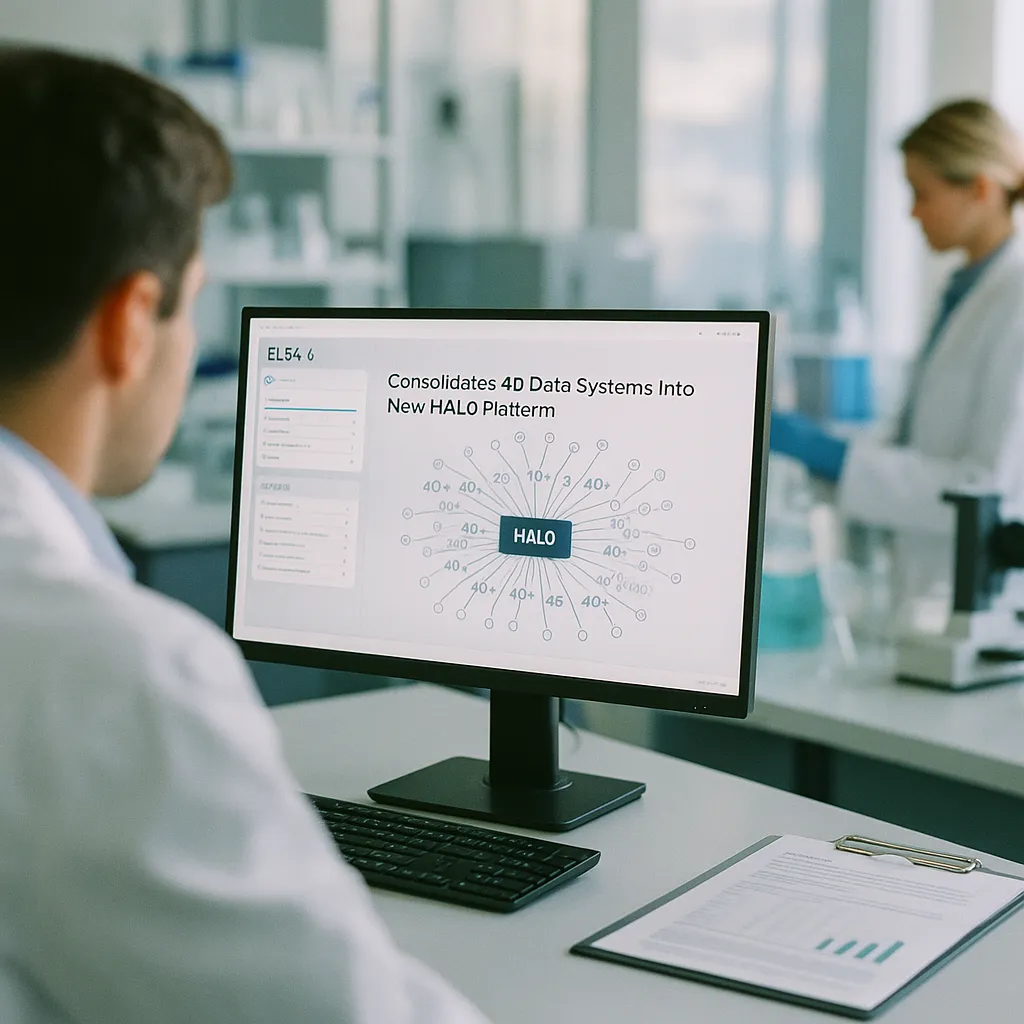
The FDA launched Elsa 4.0 for all agency staff and consolidated more than 40 disparate data systems into a unified platform called HALO — putting the agency's entire data universe behind a single AI interface for the first time.
FDA Launches Elsa 4.0 and Consolidates 40+ Data Systems Into New HALO Platform
By Hector Herrera | May 10, 2026 | Health
The FDA has rolled out a major upgrade to its internal AI system and completed a sweeping consolidation of more than 40 disparate data sources into a single unified platform — a structural shift that puts the agency's full data universe behind a single AI interface for the first time. For an agency that reviews everything from cancer drugs to infant formula, this is not a routine IT upgrade.
What the FDA Built
The upgrade has two parts, announced together in early May 2026.
Elsa 4.0 is the latest version of the FDA's internal AI assistant, now available to all agency staff across every division. The new version adds capabilities that were not present in earlier iterations:
- Agentic AI — the system can now execute multi-step tasks autonomously, not just respond to one-off queries
- Document generation — staff can draft regulatory documents, reports, and correspondence with AI assistance
- Data analysis — the system can run analysis across structured datasets without requiring custom queries
- Voice-to-text — hands-free data entry and dictation, relevant for lab and clinical settings
HALO — Harmonized AI & Lifecycle Operations for Data — is the platform underneath Elsa 4.0. According to the FDA's announcement, the agency consolidated more than 40 data sources, systems, and submission portals into HALO. That means regulatory submissions, clinical trial data, adverse event reports, inspection records, and laboratory findings — historically fragmented across legacy systems — now sit in a single queryable environment.
Why This Is Different From a Typical Government IT Project
Federal agencies consolidating data systems is not news. What is significant here is the combination: a unified data layer plus an AI layer on top of it, both deployed at the same time across the full agency.
Get this in your inbox.
Daily AI intelligence. Free. No spam.
Before HALO, an FDA reviewer working on a new drug application might need to pull from several separate systems to gather clinical data, prior approval history, and manufacturer inspection records. Each system had its own interface and its own access protocols. That fragmentation slowed reviews and created opportunities for information to be missed.
With Elsa 4.0 operating over HALO, the same reviewer can now ask a single query — in plain language — and surface relevant information from across that formerly siloed universe. The agentic capabilities mean the system can also be directed to monitor ongoing submissions, flag anomalies, or compile cross-dataset summaries without requiring a reviewer to manually initiate each step.
What the Numbers Don't Tell You
The FDA has not published specific metrics on how Elsa 4.0 will affect review timelines or staff capacity. That data will emerge in the months ahead. What the agency did communicate is the organizational scope: this is an agency-wide rollout, not a pilot in one department.
That distinction matters. Government AI deployments often stay confined to a single bureau or function for years before spreading. The FDA's decision to make Elsa 4.0 available to all staff simultaneously suggests institutional confidence in both the tool and the underlying data infrastructure.
What This Means for Industry
Drug makers, food manufacturers, and medical device companies that submit applications to the FDA have a stake in how the agency processes those submissions. Faster internal data access could accelerate review cycles — or it could surface inconsistencies in older submissions more quickly.
For the life sciences industry, the practical near-term implication is that FDA reviewers will have better access to more data, faster, during the review process. Submissions that might have benefited from information asymmetry — where agency reviewers couldn't easily cross-reference adverse event histories across compounds — will face a more informed review environment.
The agentic capabilities also raise a longer-term question: as the FDA builds AI tools that can take autonomous action inside regulatory workflows, how will the agency define what decisions require human sign-off? That governance question is not answered in this announcement.
What to Watch
Watch for FDA performance data on review timelines in the second half of 2026 — that will be the first empirical test of whether HALO-plus-Elsa actually accelerates regulatory throughput. Also watch for industry associations to engage with the FDA about how AI-assisted review processes interact with due process rights in enforcement and denial cases.
Sources: FDA via GlobeNewswire
Did this help you understand AI better?
Your feedback helps us write more useful content.
Get tomorrow's AI briefing
Join readers who start their day with NexChron. Free, daily, no spam.