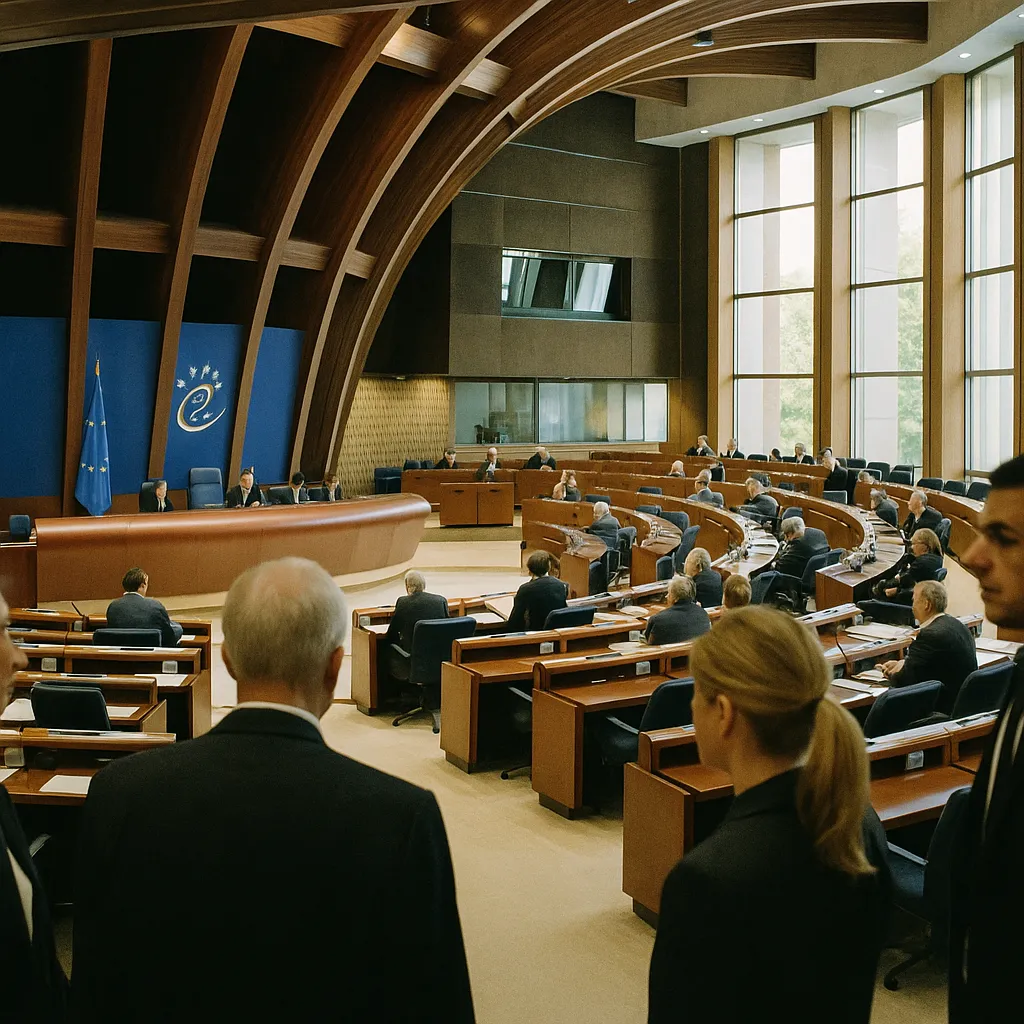
Trump's June 9 AI executive order deliberately sidelines guardrails in favor of private-sector self-governance and federal preemption of state regulation, CSIS analysts warn.
Trump's 'Light-Touch' AI and Cyber Executive Order Signals Accelerationist Policy Direction
By Hector Herrera | June 9, 2026 | Government
President Trump signed a sweeping AI and cybersecurity executive order on June 9, and a detailed CSIS analysis concludes it is a deliberate policy choice to accelerate AI deployment while sidelining safety guardrails. The order consolidates federal AI authority, blocks states from regulating AI independently, and relies on private-sector self-governance rather than enforceable federal rules — a configuration that CSIS analysts say confirms "accelerationists" remain in firm control of U.S. AI policy.
This is not a surprise to anyone who has followed the administration's trajectory since January 2026, but the June 9 order is the clearest expression yet of that doctrine in binding legal form. For enterprise compliance officers, it changes the calculus on which rules actually matter.
What the Order Does
The executive order contains three structural pillars, according to the CSIS analysis:
-
Federal preemption of state AI laws. The order instructs federal agencies to actively challenge state-level AI regulations that impose requirements beyond federal standards. This directly targets the patchwork of state laws — Colorado's AI Act, California's SB 1047 successor statutes, and a wave of new state data-governance requirements — that companies have been building compliance programs around.
-
Private-sector self-governance as the primary accountability mechanism. Rather than establishing binding federal safety requirements, the order designates industry-led frameworks (such as voluntary commitments from AI labs) as the baseline standard. Enforcement actions would require demonstrable harm, not preemptive compliance.
-
Consolidated federal AI authority under OSTP and NSC. The order reduces the role of independent agencies — including NIST's AI Safety Institute — in setting standards, centralizing AI governance within White House-controlled bodies. CSIS analysts read this as a mechanism to ensure acceleration-aligned personnel retain agenda control.
Get this in your inbox.
Daily AI intelligence. Free. No spam.
The "light touch" framing in the order's title is deliberate: it signals that regulatory friction is being treated as a threat to competitiveness rather than a protection against risk.
The CSIS Warning
CSIS analysts stop short of calling the order reckless, but their language is pointed. The analysis warns that by combining federal preemption with voluntary self-governance, the order creates a regulatory vacuum at the precise moment AI systems are being deployed in high-stakes sectors: healthcare decisions, criminal justice risk scoring, financial underwriting, and autonomous infrastructure management.
The key tension the analysis identifies: accelerating deployment timelines while removing state-level backstops means the first major AI-caused harm in a sensitive sector will hit before any federal enforcement infrastructure exists to respond. "The assumption baked into this order," the analysts write, "is that harms will be manageable and correctable. That assumption has not been tested at scale."
The CSIS paper also flags the international competitiveness dimension. The EU AI Act is now in full enforcement mode for high-risk applications. If U.S. AI products lack domestic governance requirements, EU regulators may impose extraterritorial compliance burdens on American companies seeking access to European markets — which could produce more compliance overhead, not less, than proactive domestic rules would have.
What This Means for Enterprise Compliance Teams
For companies building AI products or deploying AI in regulated industries, the order's practical effects are significant:
- State-law compliance programs now face legal uncertainty. If federal agencies begin challenging state AI laws, companies that built compliance stacks around California or Colorado rules may be holding investment in requirements that get preempted before they take effect.
- Voluntary frameworks become the operative standard — for now. NIST AI RMF (Risk Management Framework) voluntary guidelines, and any commitments made under the White House AI safety pledge program, are effectively the compliance floor under this order. Companies should document their alignment with these frameworks.
- Sector-specific regulators still apply. The EO does not override existing sector regulators. FDA rules on AI-assisted medical devices, OCC guidance on bank AI governance, and FTC consumer protection authority remain intact. Compliance programs should focus investment there.
- International operations require separate analysis. EU AI Act obligations, the UK's pro-innovation framework, and Canada's AIDA remain on separate tracks. The U.S. EO has no effect on those requirements.
The Political Backdrop
The phrase CSIS chose for its headline — "accelerationists still rule the roost" — is a reference to a distinct ideological current in U.S. tech policy: the view that AI's benefits are so large and so time-sensitive that regulatory friction of any kind is net-negative for humanity, not just for industry. Proponents include figures in both the administration and the venture capital community who have argued publicly that safety-focused regulation is a form of incumbency protection dressed in risk management language.
That argument has found a sympathetic administration. What CSIS is tracking is whether it survives its first contact with a real failure mode.
What to Watch
The next 90 days will reveal whether federal agencies begin filing legal challenges against state AI laws — that is the mechanism by which the preemption language actually matters. Watch for filings in Colorado, where the AI Act's June 30 implementation deadline creates an immediate test case. Also watch for how the EU responds: the European Commission may accelerate enforcement actions against U.S. AI products that lack equivalent domestic governance oversight, creating the international friction the order is supposedly designed to avoid.
Sources: CSIS analysis of the Trump AI/cyber executive order
Did this help you understand AI better?
Your feedback helps us write more useful content.
Get tomorrow's AI briefing
Join readers who start their day with NexChron. Free, daily, no spam.