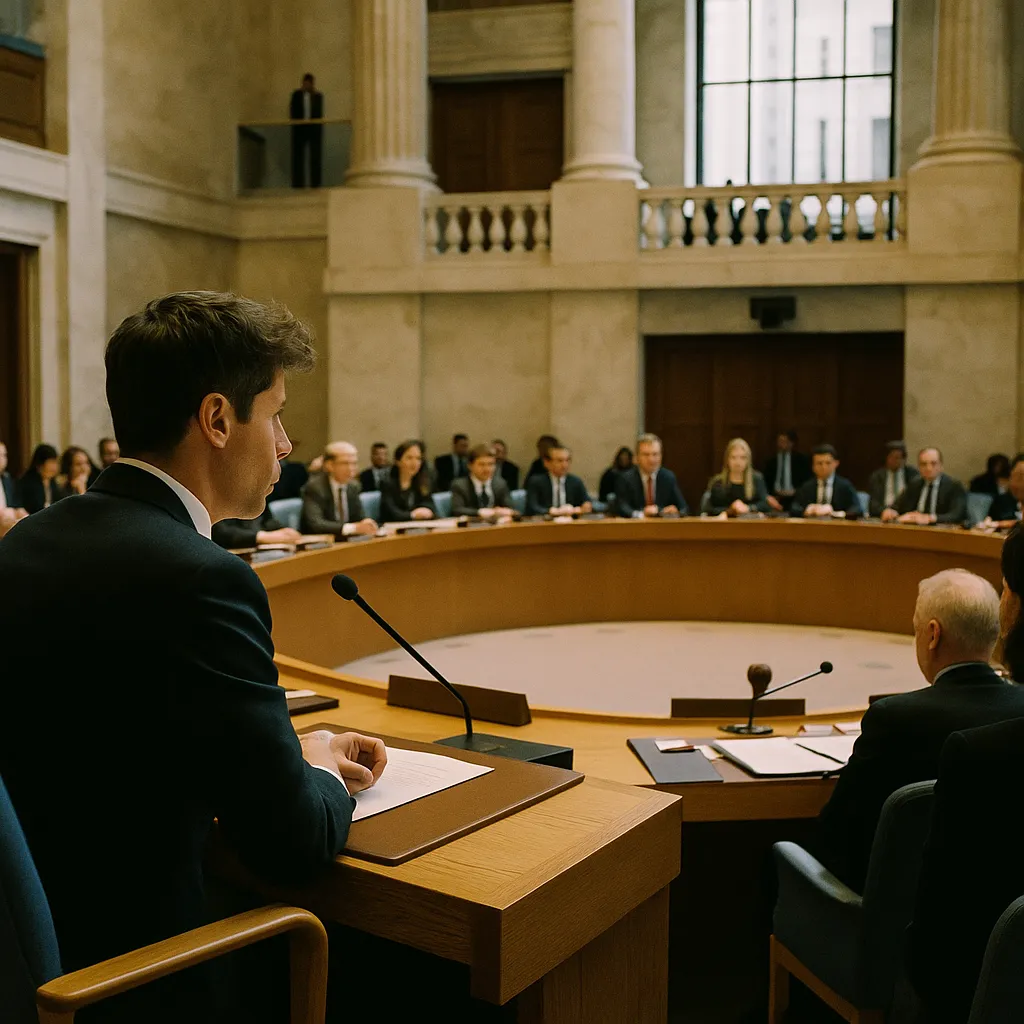
New York City parents packed a seven-hour school board session demanding a two-year pause on AI in classrooms — as the NYC DOE's AI guidance framework awaits final public comment through May 8.
NYC Parents Demand Two-Year AI Moratorium in Schools at Seven-Hour Board Meeting
By Hector Herrera | May 5, 2026 | Government
New York City parents spent seven hours at a school board meeting last week demanding a two-year pause on AI tools in classrooms, citing data privacy, academic integrity concerns, and what they described as unproven educational benefit, according to Chalkbeat. The New York City Department of Education's AI guidance framework is open for public comment until May 8 — meaning the nation's largest school district is still actively writing the rules that will govern AI in 1.1 million students' education.
The marathon public meeting is a symptom of something real: AI adoption in schools has moved faster than parent-level understanding, faster than teacher training, and in many cases faster than district-level governance frameworks. The backlash isn't irrational — it reflects legitimate uncertainty about what AI tools are doing with student data, whether they're helping kids learn or helping them avoid learning, and who decided to deploy them.
What Happened at the Meeting
The seven-hour session — part of the NYC Panel for Educational Policy's regular public comment process — drew more testimony on AI than any prior topic in recent memory. Parents' concerns clustered around three issues:
Data privacy — AI tools used in classrooms often require students to interact with third-party platforms. Parents want to know what student data these tools collect, how long it's retained, who it's shared with, and whether it's used to train AI models. Federal law (FERPA, COPPA for under-13 students) provides baseline protections, but the specific contractual obligations between the NYC DOE and AI vendors aren't consistently disclosed in parent-readable form.
Academic integrity — Multiple parents cited concern that AI tools are making it easier for students to submit AI-generated work while reducing the cognitive work — writing, reasoning, analysis — that builds the skills education is supposed to develop. This concern is distinct from cheating per se; it's about whether AI assistance in educational contexts is undermining learning outcomes even when used within the rules.
Unproven benefit — Several speakers directly challenged the pedagogical evidence base for AI classroom tools. Their argument: schools are deploying AI at scale without randomized controlled trial evidence that it improves learning outcomes. Edtech has a long history of adoption waves — interactive whiteboards, tablets, learning management systems — where enthusiasm outpaced evidence and districts spent money on tools that didn't move the needle.
Get this in your inbox.
Daily AI intelligence. Free. No spam.
The two-year moratorium demand itself is not expected to be adopted literally — the NYC DOE is not going to pull AI tools from 1,800 schools — but it signals the intensity of parent concern and the political pressure on the board.
The NYC DOE's Position
The NYC DOE released a draft AI guidance framework in April that attempts to navigate between enabling beneficial AI use and protecting students from harm. Key elements of the framework include:
- AI tools must comply with existing student data privacy law and district vendor agreements
- Teachers retain authority over AI use in their classrooms
- The district will develop AI literacy curriculum rather than leaving AI exposure entirely to individual tools
The framework is notably permissive rather than restrictive — it does not prohibit student use of general-purpose AI tools like ChatGPT or Gemini for learning purposes, a shift from the district's 2023 ChatGPT ban, which was reversed after widespread teacher pushback.
Public comment closes May 8. Whatever emerges from that process will establish the governance baseline for the country's largest school system — and given NYC's influence on national education policy, what the DOE finalizes will likely be referenced by districts across the country.
Why the Moratorium Argument Doesn't Hold
The two-year moratorium demand is understandable as an expression of frustration but unworkable as policy for several reasons.
Students are already using AI. A moratorium on school-authorized AI tools doesn't prevent students from using ChatGPT at home. It just removes the supervised, pedagogically-framed exposure that might actually help students develop critical AI literacy — an increasingly essential workplace skill.
Competitive disadvantage is real. Districts in other states and countries are investing heavily in AI literacy programs. A two-year pause in NYC — while Florida is creating dedicated AI high school programs funded by state grants, while other states mandate AI curriculum — would leave NYC students behind in exposure to tools they will encounter the moment they enter the workforce.
The evidence gap cuts both ways. If "no randomized controlled trial evidence of benefit" is the standard for excluding AI tools, the same logic would require removing most edtech deployed over the past thirty years. Schools have always operated with provisional adoption of new tools followed by assessment — which is actually what the DOE's framework attempts to institutionalize.
The legitimate parent concerns — privacy, integrity, evidence — are solvable through governance, vendor contract requirements, and teacher training. They're not solved by a blanket moratorium.
What to Watch
The May 8 comment deadline is the immediate marker. After that, the NYC DOE will finalize its AI guidance framework — expect a final version by June or July. The more significant signal: whether the final framework includes any mandatory vendor transparency provisions requiring AI tool providers to disclose data practices in parent-readable summaries, and whether the DOE establishes a mechanism for ongoing community review as new AI tools are adopted. Those governance details, not the headline moratorium demand, will determine whether NYC handles this better than most districts have.
Source: Chalkbeat — Parents demand AI moratorium in schools during marathon panel meeting
Did this help you understand AI better?
Your feedback helps us write more useful content.
Get tomorrow's AI briefing
Join readers who start their day with NexChron. Free, daily, no spam.