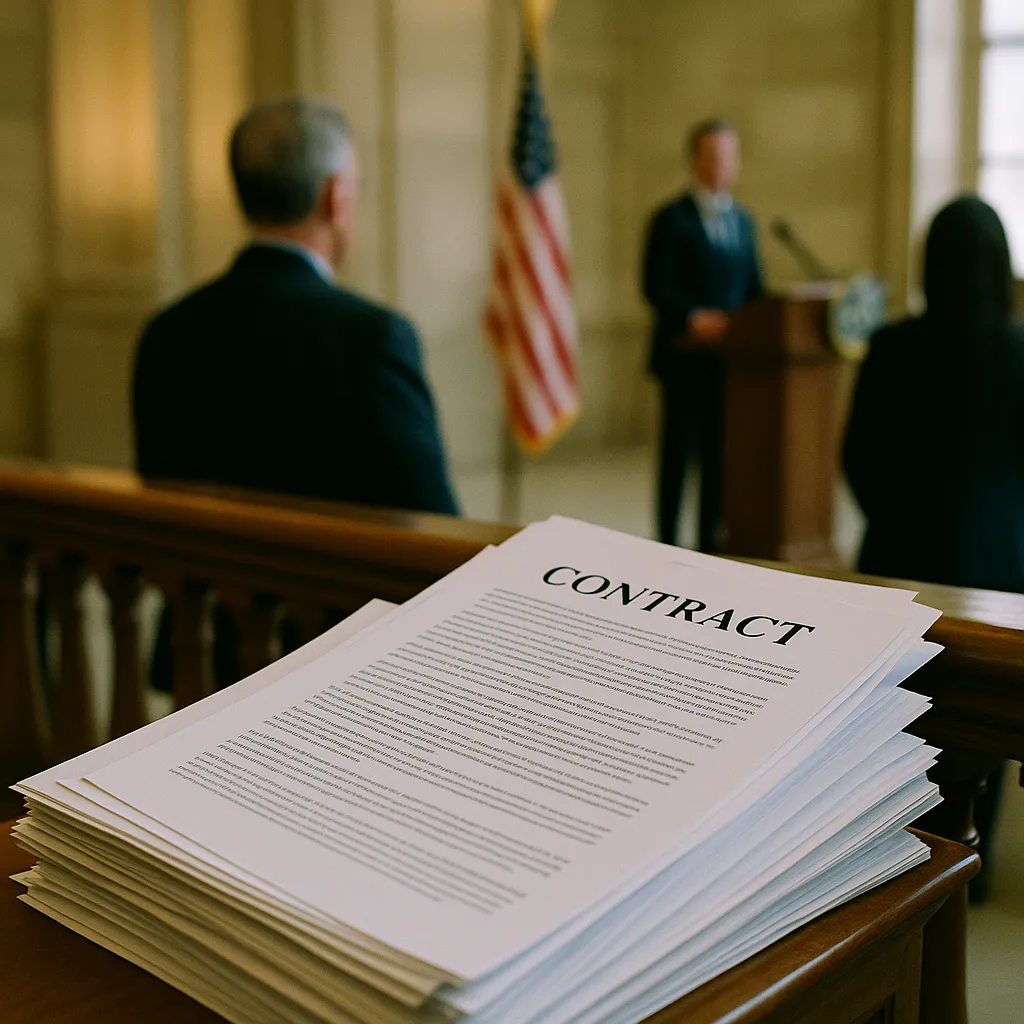
California Governor Newsom signed an executive order requiring state agencies to independently assess AI-related harms before signing tech contracts, immediately affecting billions in state procurement.
Gov. Newsom Orders California to Factor AI Harm Into State Procurement Contracts
By Hector Herrera | April 22, 2026 | Government
California Governor Gavin Newsom signed an executive order directing state agencies to independently assess AI-related harms before entering procurement contracts with technology vendors—a move that immediately affects billions of dollars in state technology spending and sets California on a direct collision course with federal AI procurement policy. The order does not block AI procurement; it adds an independent evaluation layer that vendors will need to clear.
What the Order Does
The executive order, signed in April 2026, directs California state agencies to conduct their own harm assessments before signing contracts with tech companies that use or sell AI systems. Specifically, it pushes back against the Trump administration's supply-chain risk designations—the federal framework that determines which AI vendors are considered trusted or restricted suppliers for government contracts.
Newsom's order tells state agencies: don't rely on federal risk determinations; conduct your own. That is a significant departure from the default deference states typically give to federal procurement guidance.
Background
The order arrives in a period of active tension between California and the federal government over AI policy. The Trump administration has moved to centralize AI risk assessments through federal supply-chain frameworks—which have implications for which companies can sell to government entities, particularly those with ties to countries the administration has flagged.
California is home to the majority of major US AI companies: Anthropic, Google DeepMind, Meta AI, Nvidia, and many others. A state that develops its own AI procurement standards—with its own harm assessment criteria—effectively creates a second compliance track for companies seeking state government contracts.
Get this in your inbox.
Daily AI intelligence. Free. No spam.
The Scale of the Stakes
California's annual technology procurement budget runs into the tens of billions of dollars. The state government administers contracts across education, health, transportation, corrections, and social services. Any vendor that wants to participate in that market now faces an additional compliance requirement that didn't exist before this order.
The order has immediate effect—not phased implementation. State agencies are expected to apply the new assessment framework to active procurement decisions, not just future ones.
Implications
For tech vendors: Companies selling AI-enabled products to California agencies must now prepare harm documentation that meets state standards—separate from any federal compliance. The state has not yet published specific harm assessment criteria, which creates short-term uncertainty and a window for vendors to influence what those criteria look like.
For smaller AI vendors: Large companies have compliance infrastructure to handle multiple regulatory frameworks simultaneously. Smaller AI companies may find the additional assessment burden effectively screens them out of state contracts, at least until criteria are published and they can build toward them.
For other states: California often moves first on technology regulation. If the harm assessment model proves workable, expect similar executive orders or legislation in New York, Illinois, and other large states. That would create a patchwork of state-level AI procurement requirements that vendors would need to navigate alongside federal standards—a significant compliance burden for companies selling to government at scale.
For the federal-state dynamic: The order explicitly positions California as an independent actor in AI governance, not a subordinate of federal policy. The administration's response—whether it challenges the order, ignores it, or adapts to it—will shape how far state-level AI procurement autonomy can extend.
What to Watch
Two pressure points will define the order's real impact. First, legal challenges: whether the federal government or vendors contest California's authority to deviate from federal procurement standards. Second, the publication of actual harm assessment criteria: until those criteria exist, the order creates uncertainty more than specific compliance requirements. Once published, the real ambition—or limits—of the order will become clear.
Hector Herrera covers AI and government policy for NexChron.
Did this help you understand AI better?
Your feedback helps us write more useful content.
Get tomorrow's AI briefing
Join readers who start their day with NexChron. Free, daily, no spam.