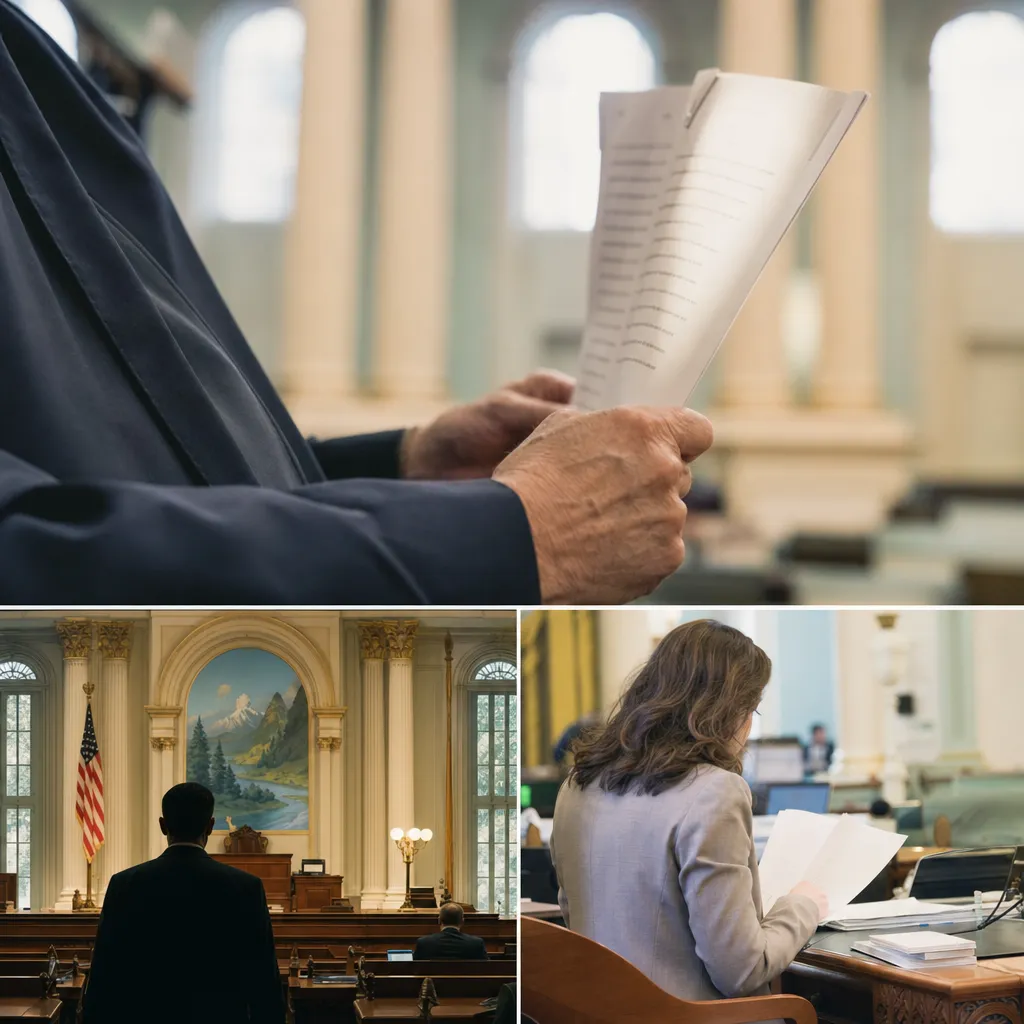
California enacted an AI accountability law requiring legal teams to disclose, verify, and document AI use in regulated proceedings — with liability for non-compliance and at least eight states tracking the statute as model legislation.
California has enacted an AI accountability law requiring legal teams that use generative AI in regulated proceedings to disclose the AI's role, verify outputs against primary sources, and accept liability if they fail to audit AI-generated work product — making it one of the first states to build attorney AI accountability directly into statute rather than relying on court rules or bar ethics guidance alone.
The law addresses a gap that has become increasingly urgent as AI tools penetrate legal practice. Courts have already sanctioned attorneys for filing AI-generated briefs containing fabricated citations. Bar associations have issued ethics guidance. But those are professional discipline mechanisms — slow, inconsistent, and complaint-driven. California's approach creates a legal standard with explicit liability attached, covering any regulated legal proceeding in the state.
What the law requires
KEYT News reports that the statute requires legal teams to:
Get this in your inbox.
Daily AI intelligence. Free. No spam.
- Disclose when generative AI tools contributed to work product submitted in regulated proceedings
- Verify AI-generated content through human review against primary sources
- Document the verification process
Law firms that fail to meet audit and verification requirements face liability exposure — not just bar complaints. The legislation extends accountability to law firms as organizations, not just individual attorneys, signaling a deliberate policy intent: the law is designed to create institutional compliance programs rather than individual attorney caution.
The parallel federal track
California's law lands the same week the U.S. Court of Appeals for the Tenth Circuit proposed its own AI certification rule requiring attorneys to attest that all AI-assisted filings have been human-verified. The two mechanisms operate on different tracks — federal courts through procedural rules, state legislatures through statute — but they are converging toward the same standard: mandatory disclosure plus verified human review.
Together, California's statute and the emerging federal judicial rulemaking represent a two-track hardening of AI accountability in legal practice that is moving faster than the American Bar Association's ethics guidance timeline.
The model legislation pattern
Legal technology observers quoted in the KEYT coverage say at least eight states are tracking California's statute as model legislation. That follows an established California pattern: the state's data privacy law became the template for state-level data protection statutes across the country, and its AI legislation has similarly attracted imitation on issues including automated decision-making and workplace AI monitoring.
What to watch
Enforcement will determine the law's real impact. Statutory liability means litigation, not just bar complaints, but plaintiffs need to establish actual harm. Watch for the first sanctions or litigation under the statute — that will set the interpretive precedent for how courts apply the disclosure and verification requirements, and will determine whether the other eight tracking states proceed to enact their own versions or wait for California's implementation record to emerge.
Did this help you understand AI better?
Your feedback helps us write more useful content.
Get tomorrow's AI briefing
Join readers who start their day with NexChron. Free, daily, no spam.