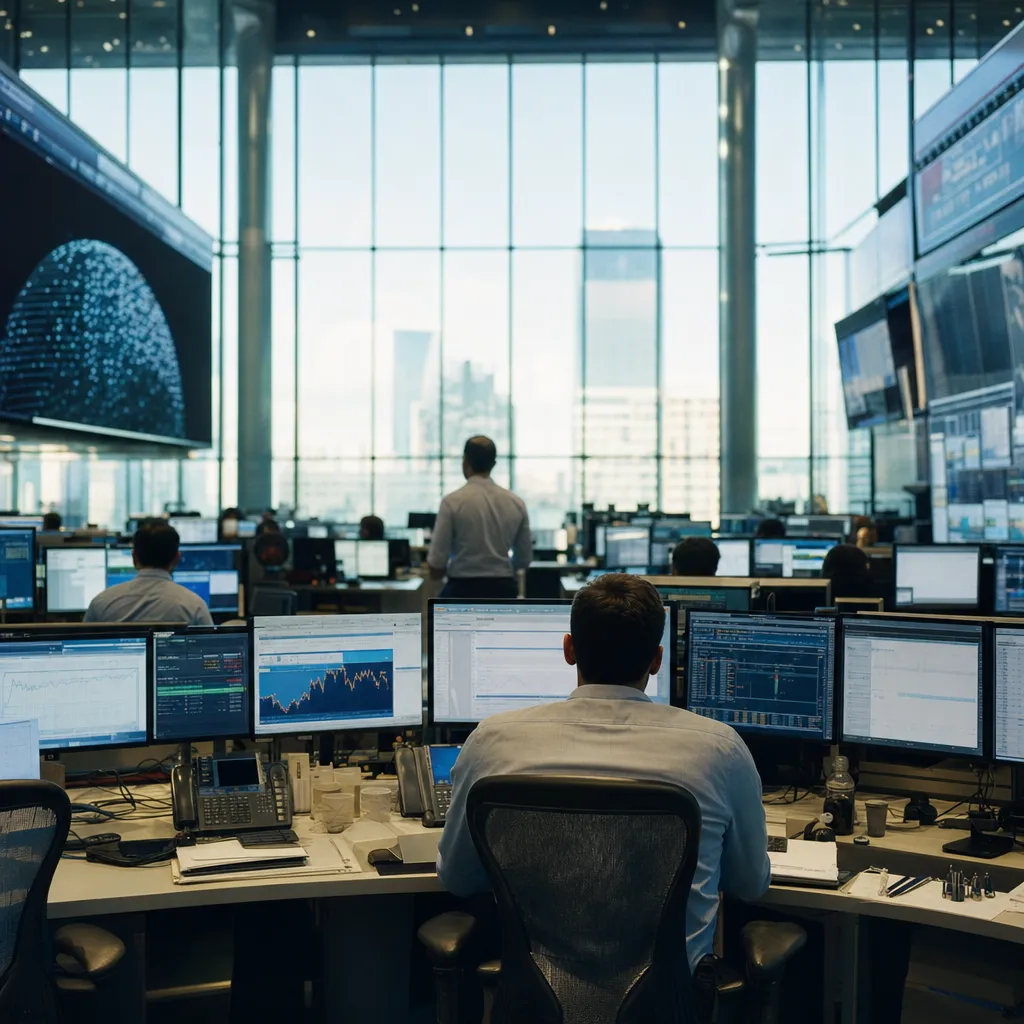
SoftBank reported a $7.1 billion net loss in Q2 FY2026 — its first quarterly loss in nearly two years — as AI spending uncertainty dragged down its Vision Fund portfolio valuations.
SoftBank Group posted a ¥1.12 trillion ($7.1 billion) net loss in its fiscal second quarter — its first quarterly loss in nearly two years — as investor anxiety over AI spending sustainability hammered its tech holdings. The result is a sharp reversal from the AI-euphoria quarters that preceded it, and a signal that the market is starting to demand proof of returns on the AI infrastructure bets that have defined 2025 and 2026.
SoftBank's Vision Fund model is uniquely exposed to sentiment swings in AI valuations. When the narrative is bullish, the portfolio marks up. When questions emerge about whether the AI spending cycle will generate near-term revenue, the reverse happens fast.
The Numbers
- Net loss: ¥1.12 trillion ($7.1 billion) in Q2 FY2026
- Cause: Decline in fair-value marks on major tech holdings driven by AI market uncertainty
- Context: This is SoftBank's first quarterly loss in roughly two years, following a string of Vision Fund gains tied to AI portfolio appreciation
Masayoshi Son, SoftBank's founder and CEO, has staked the company's identity on the AI investment thesis — most visibly through a 100 billion yen commitment to U.S. AI infrastructure alongside the Stargate project. The Q2 loss does not reverse that strategy, but it makes the execution pressure harder to ignore.
Get this in your inbox.
Daily AI intelligence. Free. No spam.
What's Driving the Anxiety
The broader AI market is grappling with a timing mismatch: the infrastructure costs are real and immediate; the revenue at scale is still proving itself. Cloud providers have reported strong AI-related revenue growth, but the enterprise adoption curve — moving from pilots to production — has been slower than the most optimistic projections. When those projections slip, portfolios like Vision Fund get repriced.
Specific pressure points include:
- Demand uncertainty: Hyperscalers are reporting high utilization but not yet the explosive enterprise uptake that would justify the current pace of data center buildout
- Interest rates: Higher-for-longer rates reduce the present value of future AI profits, hitting growth-stage holdings hardest
- Competitive compression: The rapid proliferation of capable open-weight models is compressing inference margins across the industry
Impact on SoftBank's AI Bets
SoftBank holds major stakes in companies directly exposed to AI infrastructure and services. A sustained markdown environment would constrain SoftBank's ability to do new deals and might pressure some portfolio companies to accelerate toward profitability or public markets. The Anthropic IPO launching the same day this loss was reported is an interesting juxtaposition — one part of the AI ecosystem racing to go public while another's backer posts a multi-billion dollar loss.
What to Watch
Watch SoftBank's Vision Fund II portfolio marks in Q3 — if tech valuations stabilize or recover alongside strong AI revenue reports from cloud providers, the Q2 loss may prove temporary. If the markdown trend continues, expect Masayoshi Son to face renewed pressure to slow new commitments and focus on realizing gains from existing holdings.
Did this help you understand AI better?
Your feedback helps us write more useful content.
Get tomorrow's AI briefing
Join readers who start their day with NexChron. Free, daily, no spam.