134 AI Education Bills Across 31 States as Classroom Regulation Race Intensifies
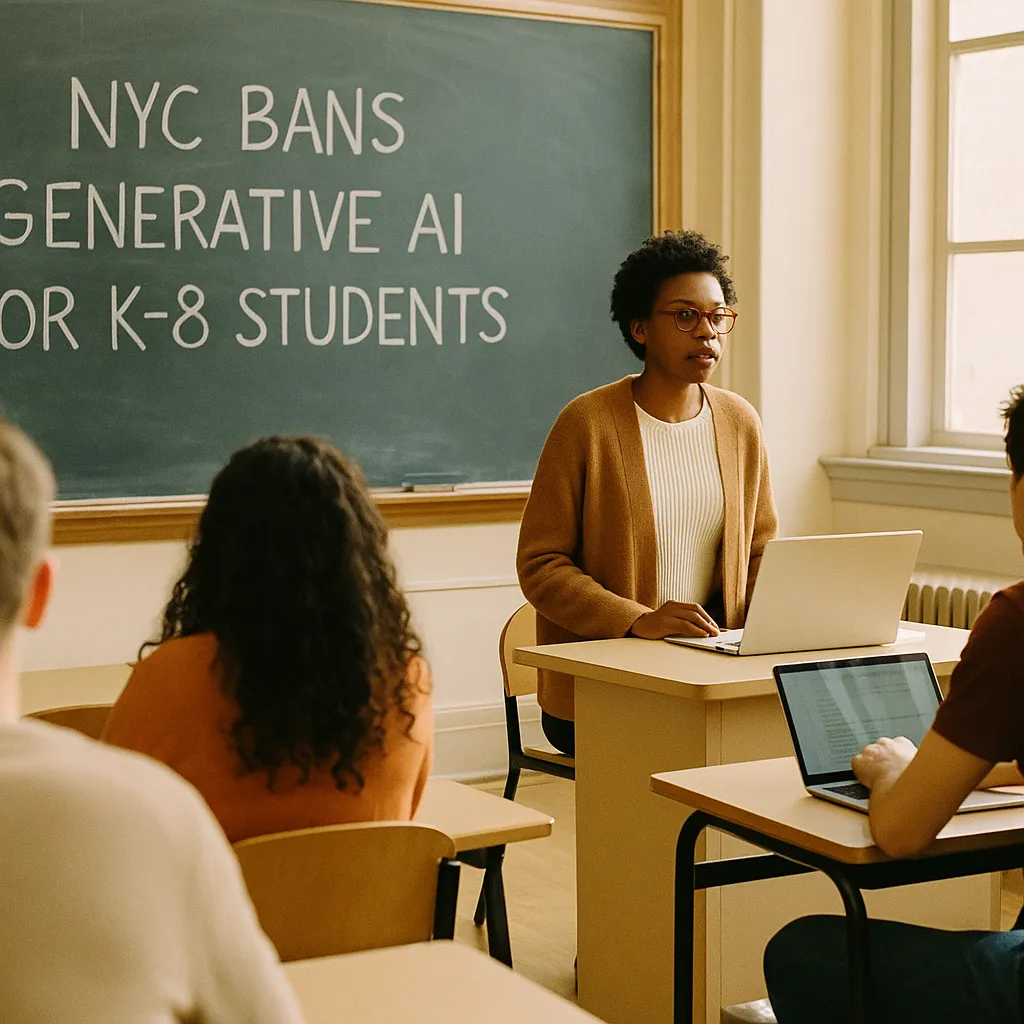
134 AI-in-education bills have been introduced across 31 states in 2026, targeting student data privacy, classroom use restrictions, and AI literacy curricula requirements.
Why this matters
134 AI-in-education bills have been introduced across 31 states in 2026, targeting student data privacy, classroom use restrictions, and AI literacy curricula requirements.
134 AI Education Bills Across 31 States: The Classroom Regulation Race Is On
By Hector Herrera | April 12, 2026 | Education
State legislatures have introduced 134 bills targeting AI in K-12 and higher education this session alone, covering 31 states. The numbers come from a new MultiState analysis and mark the most concentrated burst of education AI legislation in U.S. history. The catalyst isn't just moral panic—it's OECD data showing that AI tools boost short-term task completion while degrading the underlying skills students are supposed to be building.
What Happened
A total of 134 AI-in-education bills were introduced across 31 states in the 2026 legislative session, according to MultiState's tracking. They cluster around three areas: student data privacy, restrictions on how AI can be used in classrooms, and requirements that schools teach students how AI systems work. California's AB 1159 is the most aggressive: it would flatly prohibit using student data to train AI models.
This is not a coordinated national effort. These bills emerged independently across red and blue states alike, which tells you something about the underlying anxiety. When Idaho and Massachusetts are both passing AI education bills in the same session, you're looking at a genuine bipartisan concern, not a partisan talking point.
Context
The legislative surge follows OECD findings that deserve more attention than they've received. The OECD's research documented a pattern that teachers have been reporting anecdotally for two years: AI tools help students complete tasks faster and produce better-looking outputs, but the students are retaining less and developing weaker underlying skills. You can think of it as the calculator problem, amplified by several orders of magnitude.
The concern is not that AI tools are used in education. The concern is that when AI does the cognitive work of drafting, analyzing, and synthesizing, students don't develop the capacity to do those things themselves. Short-term performance metrics—assignment scores, completion rates—look fine. The skills deficit shows up later, when the AI isn't there.
At the same time, AI tools in education represent a genuine equity opportunity. Students in under-resourced schools can now access tutoring and feedback that previously required expensive private resources. The tension is real: the same tools that threaten skill development could also democratize educational access.
Get this in your inbox.
Daily AI intelligence. Free. No spam.
Details
The 134 bills span a wide range of approaches:
Student data privacy bills prohibit AI companies from using data collected in educational contexts to train their models. California's AB 1159 is the most direct expression of this. The fear is that K-12 student data—including academic performance, behavioral records, and learning patterns—is being ingested into commercial AI training pipelines without meaningful consent.
Classroom use restrictions range from outright bans on AI tools during assessments to requirements that AI-assisted work be disclosed, to mandates that teachers complete AI training before using AI tools with students.
AI literacy requirements mandate that schools teach students to understand how AI systems function, identify AI-generated content, and critically evaluate AI outputs. Several states are requiring this as early as middle school.
Impact
For school districts: You're going to face compliance requirements from multiple directions simultaneously. If you operate across state lines—as many charter networks and online schools do—you may face conflicting requirements. Start mapping your AI tool inventory against the legislative landscape now, before mandates land.
For EdTech vendors: Companies like Khan Academy, Duolingo, Turnitin, and the dozens of AI tutoring startups that sell to schools face the most immediate exposure. Student data practices that were acceptable 18 months ago are likely to face state-level legal challenge by 2027. Privacy-by-design is no longer optional in this sector.
For teachers: Expect professional development requirements around AI to accelerate significantly. Districts in states with AI literacy mandates will need to train teachers before they can train students. Unions are already pushing for AI training to be part of contract negotiations.
For students: The skill development concern is legitimate and should be taken seriously—but the framing matters. AI as a replacement for thinking is a problem. AI as a tool for extending and challenging your thinking is not. The distinction is the educational challenge of this generation.
What to Watch
California's AB 1159, the student data training prohibition, is the bill most likely to set a national precedent. If it passes, AI companies that sell into schools will face a compliance requirement in the largest state market—and will likely apply those standards nationally rather than build California-specific data pipelines.
Also watch for federal action. The Department of Education has not issued comprehensive AI guidance, leaving states to write their own frameworks. That creates regulatory fragmentation that will be costly for everyone. Federal standards—when they arrive—will likely borrow heavily from whatever California and New York establish first.
Hector Herrera covers education and AI policy for NexChron.
Hector Herrera is an AI systems architect and the founder of Hex AI Systems. He designs and runs AI systems in production and writes daily about how AI is reshaping business, government and everyday life. 20+ years building for the web. Houston, TX.