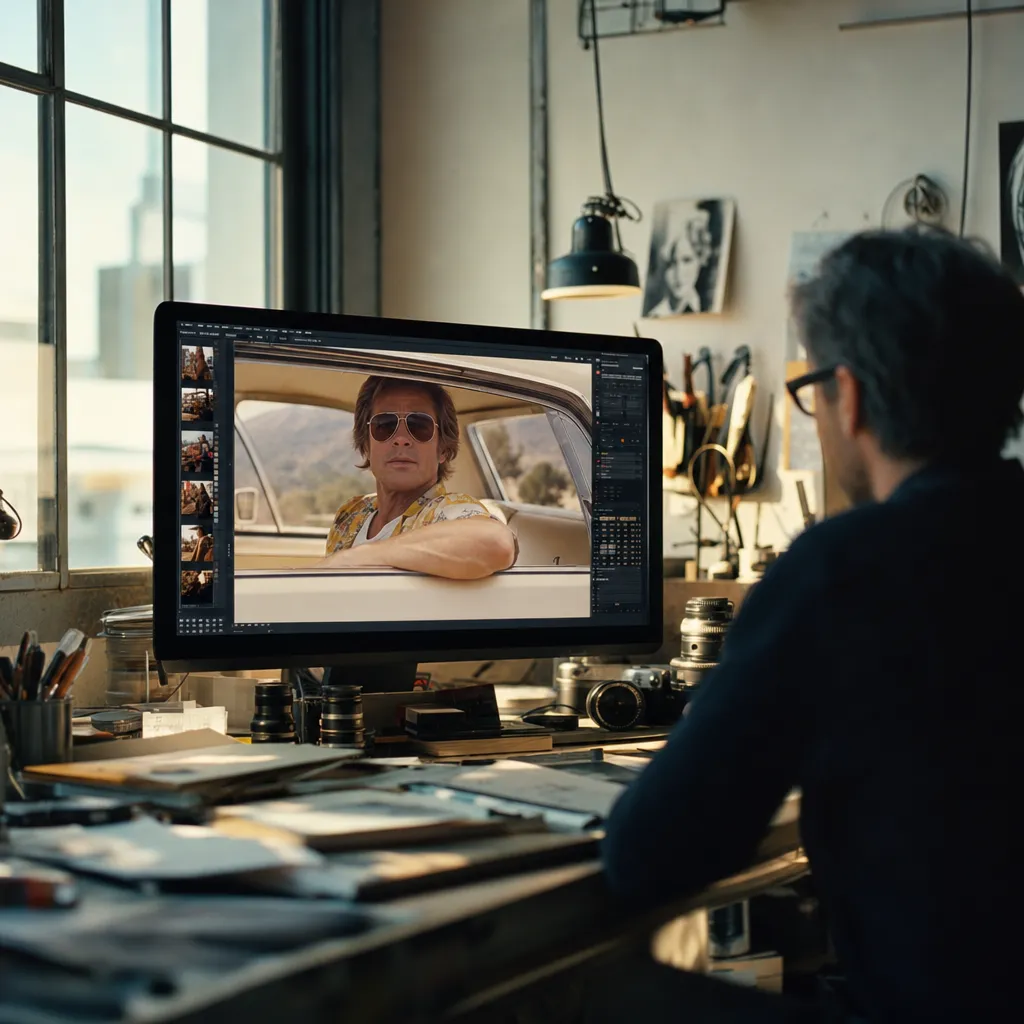
David Fincher confirmed he used AI tools in 'Cliff Booth' post-production and says he won't reverse course — lending one of Hollywood's most technically rigorous directors to the pro-AI filmmaking camp.
Director David Fincher confirmed he used AI tools in the post-production of Cliff Booth and said he has no intention of reversing course. "I'm not going backwards," Fincher told interviewers this week, lending one of Hollywood's most technically rigorous directors to the growing camp of filmmakers publicly embracing generative AI. The statement landed the same week Tidal announced it will remove approximately 29 million AI-generated music tracks from its platform by December 2026 — drawing the fault line between the film and music industries in sharp relief.
Why Fincher's Endorsement Carries Weight
David Fincher is not a director known for shortcuts. Fight Club, The Social Network, Gone Girl, and Zodiac are benchmarks of meticulous craft filmmaking — multiple takes, precise visual language, obsessive post-production control. His use of AI tools in Cliff Booth is not a director reaching for efficiency because the budget ran out. It's a technical practitioner saying the tools produced results worth using.
That carries different weight than a streaming platform quietly using AI for localization subtitles or a distributor deploying AI-generated ambient background tracks. Fincher's public endorsement gives permission to other directors — particularly those working with studios that have been cautious about guild reaction — to acknowledge AI use rather than obscure it.
What We Know About the AI Use
Fincher did not specify which tools he used or for which sequences. The most likely applications in a period-set film like Cliff Booth are:
Get this in your inbox.
Daily AI intelligence. Free. No spam.
- Visual effects compositing — blending AI-generated backgrounds or environment extensions with filmed footage
- De-aging or appearance consistency — AI-assisted continuity editing that reduces reshoots
- Rotoscoping and cleanup — removing unwanted elements from frames at scale
What those applications have in common is that they replace labor-intensive manual VFX work rather than generating on-screen creative content from scratch. That distinction matters for how guild agreements are interpreted.
What the Guilds Are Watching
Under post-strike agreements negotiated in 2023 and extended in 2025, the Screen Actors Guild-AFTRA and Writers Guild of America won disclosure requirements and consent provisions for AI use involving member performances and writing. What those agreements have not settled is AI use in visual effects, compositing, background generation, and de-aging — the categories most likely to appear in Cliff Booth's post-production workflow.
Fincher's public statement may accelerate guild demands for broader AI disclosure and compensation frameworks before the next negotiation cycle. It also raises a practical question: if Fincher is "not going backwards," and the film received theatrical and awards consideration, guilds will want to know whether AI-assisted sequences displaced VFX union labor and whether disclosure obligations were met.
The Industry Fault Line
The contrast with Tidal's decision is not accidental timing. The creative industries are splitting along a meaningful line: AI as a production tool used by human authors — Fincher's position — versus AI as a wholesale replacement for human creative output, which is what the AI-generated music flooding streaming platforms represents. These are genuinely different phenomena, but they share the same legal infrastructure around copyright, attribution, and compensation.
Resolving that distinction is the central challenge for copyright law, guild agreements, and content platform policies over the next two years. Fincher's statement advances the conversation by forcing it into the open — which is more useful than the industry's default of using AI while saying as little as possible about it.
What to watch: Watch for SAG-AFTRA's formal response to Fincher's statement and whether studios use it as cover to accelerate their own AI use disclosures. Fincher's interview cycle for Cliff Booth's full release will likely press for specifics on which systems were used and in which scenes — answers that will matter for how guilds and regulators frame the next round of AI-in-entertainment negotiations.
Did this help you understand AI better?
Your feedback helps us write more useful content.
Get tomorrow's AI briefing
Join readers who start their day with NexChron. Free, daily, no spam.