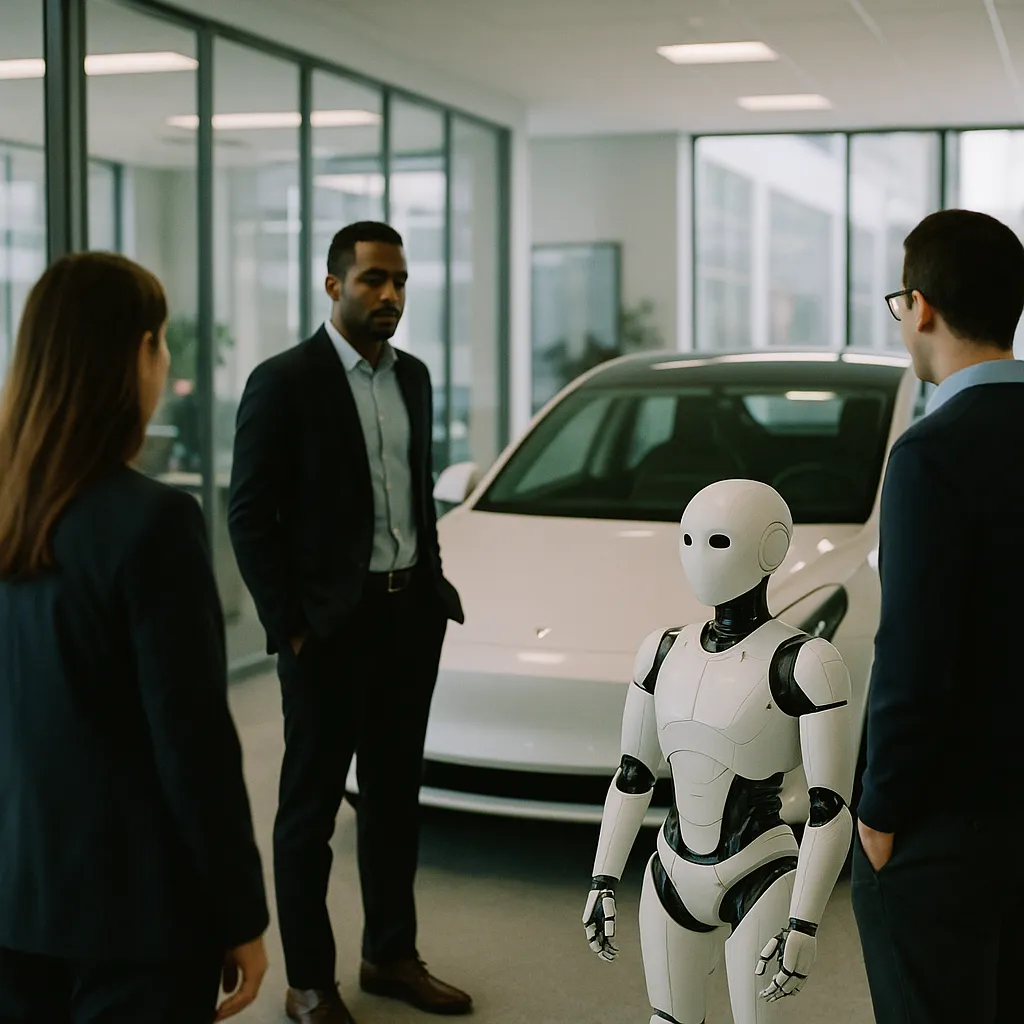
Apple has rebuilt Siri from the ground up on a custom Google Gemini model under a $1 billion-per-year deal, revealed at WWDC 2026 — Tim Cook's final keynote as CEO.
Apple Rebuilds Siri on Google Gemini in $1B/Year Deal, Unveiled at Tim Cook's Final WWDC Keynote
By Hector Herrera | June 8, 2026 | Business
Apple has rebuilt Siri from the ground up on a custom Google Gemini model, revealing a $1 billion-per-year partnership at WWDC 2026 that marks the most significant change to Siri since its launch in 2011 — and the most consequential AI deal in Apple's history. The announcement also served as Tim Cook's final WWDC keynote before he transitions to executive chairman on September 1.
Background
Siri has long been the weakest link in Apple's ecosystem. While OpenAI's ChatGPT and Google's Gemini pulled ahead in reasoning and conversational ability, Apple's assistant remained tethered to an aging natural-language architecture. Last year, Apple's partnership with OpenAI for ChatGPT integration in iOS 18 was widely read as a stopgap. Monday's announcement makes clear that Gemini is the permanent foundation, not a bridge.
What Apple Announced
The rebuilt Siri runs on a custom 1.2-trillion-parameter version of Google Gemini, optimized exclusively for Apple hardware and Apple's privacy architecture. According to TechTimes, the deal is valued at roughly $1 billion per year over multiple years — making it the largest AI infrastructure contract Apple has signed.
The new Siri uses a three-tier routing architecture:
- On-device: Simple queries — timers, alarms, app launches — are handled entirely on the iPhone or Mac without leaving the device.
- Private Cloud Compute: Moderate tasks, such as summarizing emails or drafting messages, route to Apple's own private cloud infrastructure.
- Google Cloud on Nvidia Blackwell GPUs: Complex reasoning tasks — multi-step requests, deep research queries, nuanced conversation — route to Google Cloud, where Nvidia's Blackwell architecture handles the compute.
Apple says anonymization runs at every step, with no user data stored by Google. The privacy promise is central to how Apple is differentiating this deal from a simple "hand your data to Google" arrangement.
Get this in your inbox.
Daily AI intelligence. Free. No spam.
The keynote also previewed HomeOS, a new operating system for the Apple home category, and announced that SiriKit — the developer framework that third-party apps have used to integrate with Siri since 2016 — is officially deprecated in favor of App Intents. Developers face a migration deadline before SiriKit support is fully removed in a future OS release.
Why the Google Partnership, Not OpenAI?
Apple's previous OpenAI arrangement was a feature, not infrastructure. ChatGPT appeared as an optional extension when Siri couldn't answer something. The Gemini deal is different: Gemini is Siri. The choice of Google over OpenAI likely reflects several factors — Google's existing infrastructure relationship with Apple (the default search deal has run for years), Google Cloud's data center footprint, and Gemini's demonstrated ability to run efficiently across hardware tiers.
What This Means
For Apple users: Siri should finally work as well as the AI assistants users have been comparing it unfavorably to for three years. The three-tier routing means privacy-sensitive tasks stay on-device while complex requests get Google-scale reasoning.
For developers: The SiriKit deprecation is a real deadline. Apps that built deep Siri integrations — ride-sharing, messaging, payments, fitness — need to migrate their code to App Intents. The window is not yet defined precisely, but Apple made clear it's not indefinite.
For Google: This is a significant win. Google's AI infrastructure now underpins two of the world's largest consumer platforms — its own Android/Pixel ecosystem and Apple's iOS. At $1 billion per year, this becomes one of Google Cloud's largest enterprise contracts.
For the AI industry: The deal signals that even Apple — historically the most vertically integrated company in tech — concluded it could not build frontier AI in-house fast enough to compete. That's a meaningful data point for every enterprise weighing build versus buy on AI infrastructure.
Tim Cook's Exit and What Comes Next
Monday's keynote marked the end of an era. Cook, who took over from Steve Jobs in 2011, leaves the top job on September 1. The rebuilt Siri is, in effect, his final major product decision — a bet that Apple's future in AI runs through Google's infrastructure, not its own labs.
His successor will inherit the Gemini dependency and, with it, the strategic question of whether Apple builds its own frontier model capability or deepens the partnership. Given the 1.2-trillion-parameter scale and multi-year contract terms, that answer appears to be: deepen, for now.
Watch for: Developer reaction to the SiriKit deprecation timeline at this week's WWDC sessions, and any detail on which App Intents capabilities replace the most-used SiriKit domains. Also watch how Siri's accuracy benchmarks shift in the coming months once the new backend rolls out broadly.
Did this help you understand AI better?
Your feedback helps us write more useful content.
Get tomorrow's AI briefing
Join readers who start their day with NexChron. Free, daily, no spam.