Yale SOM researchers find AI's most damaging near-term labor impact is not mass layoffs but a silent contraction in entry-level hiring — companies let AI handle junior tasks and simply don't backfill the headcount.
Yale Study: AI Is Quietly Closing the Door on Entry-Level Jobs Before Careers Can Begin
By Hector Herrera | May 11, 2026 | Work
AI's most damaging near-term labor impact is not mass layoffs — it is a silent contraction in entry-level hiring that most economic models have not adequately tracked. New research from Yale School of Management finds that companies are letting AI agents handle junior-level tasks and simply not replacing the headcount, cutting off the bottom rungs of the career ladder before young workers can reach them.
This is a different problem than job displacement of experienced workers. It is a structural hollowing of the pathways through which an entire generation was supposed to enter knowledge work.
What the Research Found
Yale SOM researchers document a pattern playing out across finance, legal, tech, and professional services: as AI agents absorb high-volume junior workflows, companies are not conducting layoffs — they are simply not backfilling open positions when employees leave, and shrinking new graduate hiring cohorts.
The numbers behind the pattern are not abstract:
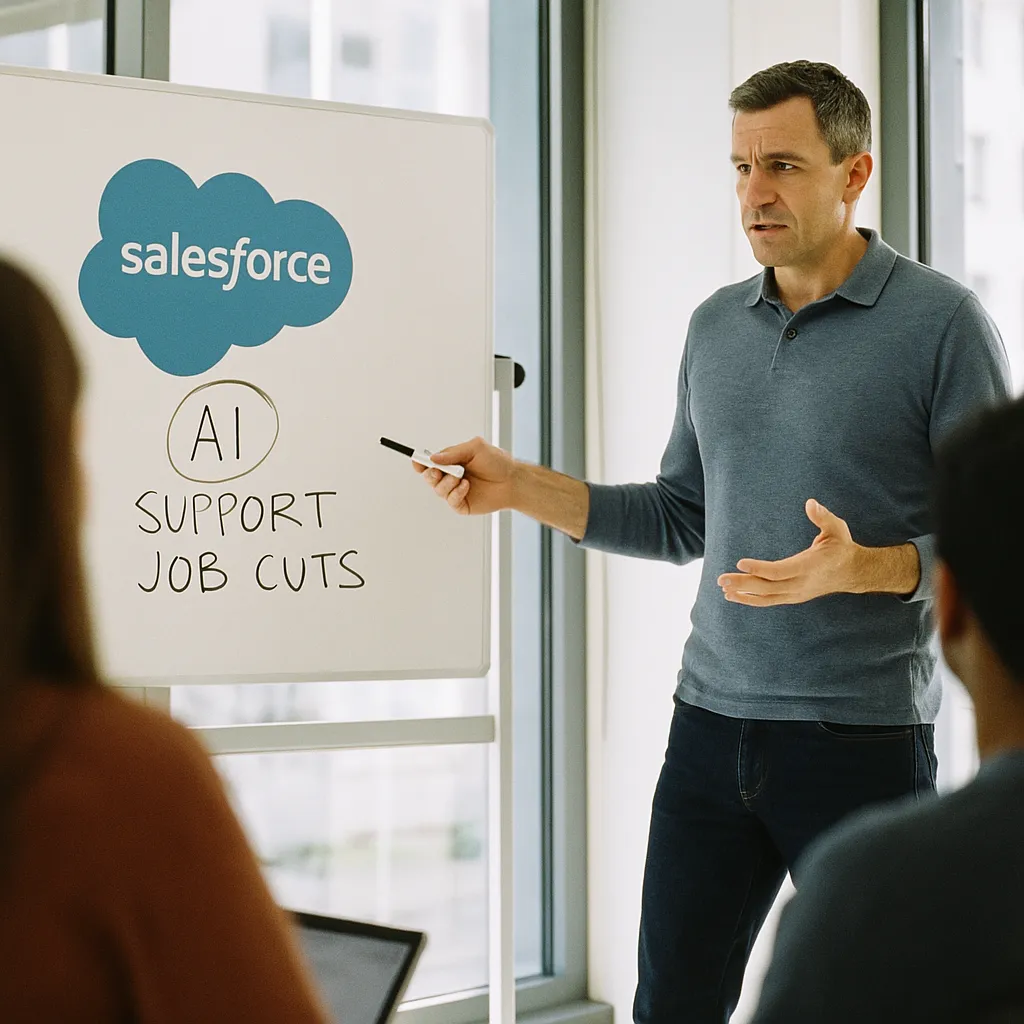
- Salesforce eliminated 4,000 customer service roles after deploying AI agents capable of handling the ticket volumes previously managed by junior staff.
- IBM removed 200 HR positions after AI automated repetitive human resources workflows including candidate screening and benefits administration.
- Similar contractions are documented across investment banking analyst programs, paralegal hiring, and entry-level software QA.
The researchers frame this as a "quiet contraction" rather than a displacement event — which is precisely what makes it harder to detect and address. Unemployment figures do not spike. No mass layoff headlines appear. The jobs simply fail to materialize for graduates expecting them.
Why Entry-Level Is Uniquely Vulnerable
Junior positions in knowledge work have always involved large amounts of repetitive, high-volume, rule-following tasks: processing documents, answering tickets, formatting reports, reviewing contracts for standard clauses, screening candidates against criteria. These tasks are exactly the ones that current AI agents handle well.
Senior roles — those requiring judgment under ambiguity, client relationships, creative problem-solving, and accountability — remain substantially harder to automate. The result is a compression at the bottom of the career stack:
- AI handles junior work. Companies need fewer entry-level hires.
- Senior roles remain human. But senior roles are filled by people who once held junior roles.
- The pipeline narrows. Fewer entry-level hires today means fewer qualified mid-level candidates in five years, and fewer senior candidates in ten.
This compression threatens not just the careers of people entering the workforce now, but the professional pipeline companies will need to draw on in the next decade.
Get this in your inbox.
Daily AI intelligence. Free. No spam.
Who Is Most Exposed
The Yale findings align with earlier labor market analyses. Roles most affected share common characteristics:
- High document volume. Legal document review, financial statement analysis, HR record processing.
- Structured decision rules. Compliance checking, benefit eligibility determination, first-tier customer support.
- Repetition at scale. Tasks where value came from doing the same thing accurately 500 times, not from doing something novel once.
Fields with documented early-stage contractions include:
- Legal (paralegal and law clerk hiring at large firms)
- Finance (investment banking and accounting analyst programs)
- Technology (QA, entry-level software testing, data annotation)
- Professional services (consulting research associate roles)
Fields with greater entry-level stability tend to require physical presence, licensed professional judgment, or novel human interaction — healthcare, skilled trades, social work, and early-stage client-facing sales.
The Career Pathway Problem
The traditional model of knowledge work careers is built on an apprenticeship logic: you spend years in junior roles learning craft, context, and judgment from more experienced colleagues, then advance into roles where that accumulated experience is the primary differentiator. AI is disrupting that model not by replacing experienced workers but by eliminating the entry pathway.
A new law graduate who cannot get a paralegal or research associate position has fewer opportunities to develop into the litigator or deal lawyer firms will need in fifteen years. A finance graduate who cannot find an analyst position has fewer pathways into the portfolio management or investment banking roles that require years of market exposure to execute well.
Universities and professional schools have not yet reconfigured curriculum or career services to address this structural shift. Most career development resources remain oriented toward traditional entry-level hiring pipelines that are contracting precisely as students arrive to use them.
What Organizations and Workers Should Do
For employers: The decision not to backfill an entry-level position saves money immediately and creates a talent pipeline problem in years three through ten. Companies that eliminate junior hiring cohorts entirely may find themselves unable to fill experienced roles from within, and dependent on increasingly competitive external hiring markets for mid-level talent.
For workers entering the labor market now: The practical adjustment is to specialize earlier and more deeply. Generalist entry-level profiles — the kind that fit a broad junior analyst job description — are most exposed. Specific technical skills (AI systems management, data analysis, prompt engineering, domain-specific AI evaluation), professional licensure, and roles requiring physical presence or human judgment are more insulated.
For universities: Graduate career services need to accelerate the shift toward counseling students on non-traditional pathways: freelance consulting, specialized technical roles, entrepreneurship, and positions in sectors where entry-level contraction has been slower.
What to Watch
The Yale research covers patterns through early 2026. The more telling data will arrive over the next 18 months as 2025 and 2026 class hiring outcomes become measurable. Watch for:
- New graduate employment rates in legal, finance, and tech — if rates drop significantly from pre-2024 baselines without an equivalent unemployment spike, it confirms the quiet contraction thesis.
- Company hiring freeze language. When organizations announce AI deployments, whether their investor communications mention headcount reduction targets alongside productivity gains is a leading indicator of entry-level impact.
- University program enrollment patterns. Declines in enrollment for programs historically feeding entry-level pipelines — paralegal programs, finance bachelor's degrees, entry-level MBAs — would signal that students are already recalibrating expectations.
The door is not closed. But it is measurably narrower than it was two years ago, and closing faster than the policy and educational response is moving.
Source: Yale School of Management — Yale Insights
Did this help you understand AI better?
Your feedback helps us write more useful content.
Get tomorrow's AI briefing
Join readers who start their day with NexChron. Free, daily, no spam.