Gallup's 2026 workplace study finds near-universal AI adoption among creative professionals but no collapse in employment — the creative economy is reorganizing, not contracting.
Gallup: AI Is Restructuring How Artists Work, But Early Data Show No Collapse in Creative Employment
By Hector Herrera | May 10, 2026 | Work
AI is changing what artists, musicians, writers, and designers do every day — but it has not caused the collapse in creative employment that many forecasts predicted, according to a Gallup workplace study released May 4, 2026. The finding complicates both the optimistic narrative ("AI just makes creatives more productive") and the pessimistic one ("AI replaces creative workers") and points toward something more complicated: the creative economy is reorganizing, not contracting.
Context
The creative sector was widely cited in 2023 and 2024 displacement forecasts as one of the most vulnerable to generative AI. Image generators like Midjourney and Stable Diffusion, music tools like Suno, and code-aware writing tools seemed to threaten the core value proposition of professional creatives. Writers' and actors' strikes in 2023 were partly driven by fears about AI-generated content displacing human work.
Two years later, Gallup's study offers the first broad employment-level data on what actually happened. The headline finding: creative job categories have not contracted at the rates the worst-case forecasts suggested. But the way creative work gets done has shifted substantially.
What the Data Show
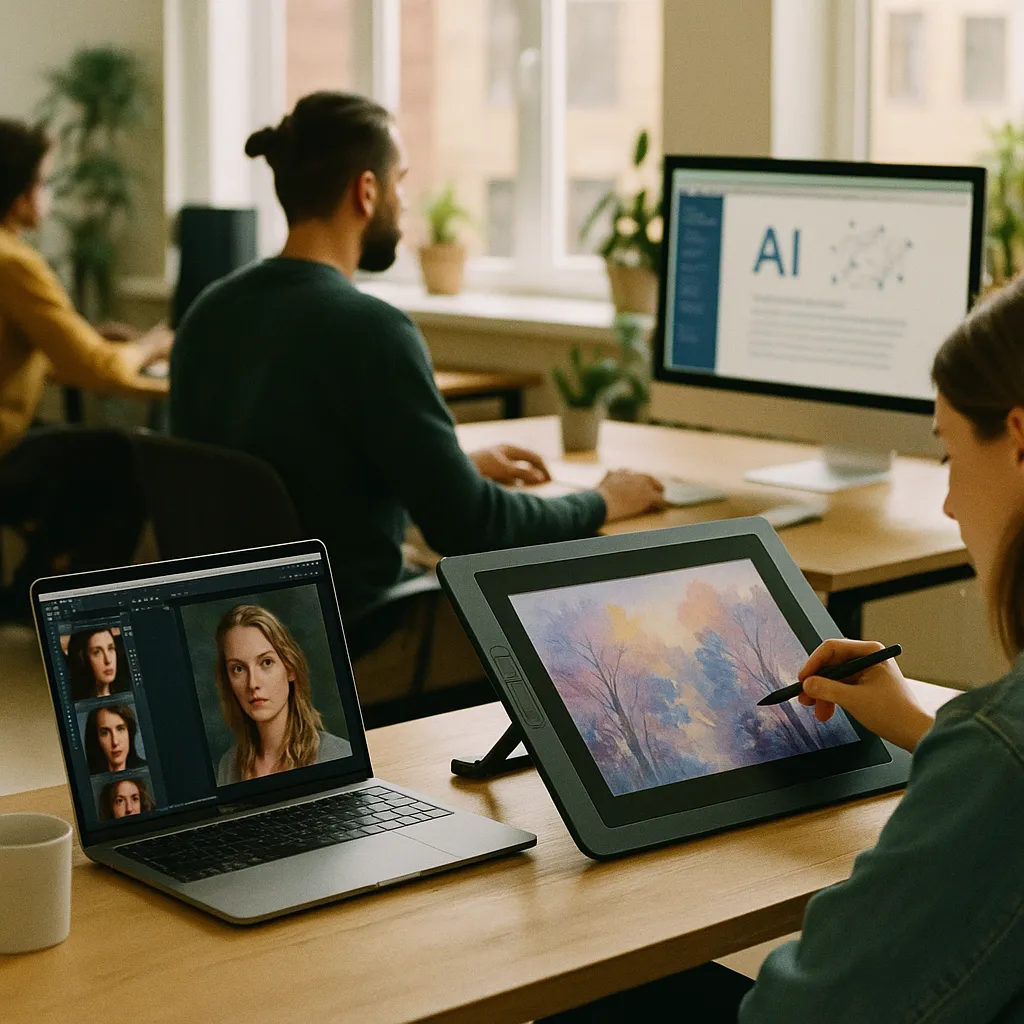
87% of working artists, musicians, writers, and designers now use AI somewhere in their workflow. That is near-universal adoption among working professionals in the field. But how they use AI matters:
- The primary use cases are production efficiency (faster iteration, faster execution of defined tasks) and exploration (generating options or variations to react to)
- AI as a primary creative engine — generating the core concept or direction — is far less common and is actively resisted by most professionals surveyed
- Creatives distinguish sharply between using AI as a tool and using AI as a replacement for creative judgment
On employment: Gallup's data show the creative economy has not shed jobs at the pace displacement models predicted. Researchers note that demand for distinctly human creative direction, curation, and cultural judgment appears to be holding — even as AI handles more of the technical execution that was previously billable work.
The Reorganization, Not Replacement, Pattern
The more precise finding is that AI has compressed certain types of work — the technical execution tasks that used to be billable hours — while potentially expanding demand for higher-level creative direction. A graphic designer who used to spend 8 hours producing variations can now produce them in 2. That's a 6-hour reduction in billable work per project. Whether that designer is better or worse off depends entirely on whether more projects fill the freed capacity.
Get this in your inbox.
Daily AI intelligence. Free. No spam.
Gallup's researchers describe this as reorganization rather than contraction: the economy is demanding the same creative output but reorganizing which steps humans perform and which AI performs.
That is not painless. Creatives who built careers around technical execution — illustration, layout, stock photography, certain categories of music production — are facing genuine displacement of that specific work. The reorganization thesis is real but it describes an average, and averages can obscure significant individual harm.
What Creatives Are Adapting To
The Gallup study identifies three adaptive strategies that appear to correlate with sustained employment among creative professionals:
-
Positioning around judgment, not execution. Creatives who frame their value as creative direction, cultural sensitivity, and audience understanding — rather than technical production — are holding their rates better than those who compete on execution speed.
-
Using AI to expand output volume. Some creatives are using AI efficiency gains not to charge the same for less work, but to take on more projects, building a portfolio of smaller engagements that collectively replace or exceed prior income.
-
Specializing in distinctly human provenance. A growing segment of clients — particularly in luxury goods, premium publishing, and arts institutions — explicitly value and pay for work with no AI involvement. Human-made certification (like the "Human Made Mark" certification system launched earlier this year) is emerging as a market segment.
Why This Matters
For creative professionals: The Gallup data are cautiously encouraging, but they are early. The transition from AI as a novelty tool to AI as a fundamental infrastructure of creative production is still in progress. Employment levels that look stable in 2026 data may shift as AI capabilities improve and client expectations reset.
For companies that hire creatives: The implicit deal is changing. If a designer can produce 4x the iterations in the same time, the expectation for what constitutes a deliverable will shift — meaning more options, faster turnaround, and lower per-iteration cost. Companies that don't update their creative workflows to reflect AI-assisted productivity are leaving efficiency on the table.
For policymakers: The creative sector is often cited as a bellwether for AI labor impacts. The Gallup finding — reorganization rather than collapse — may inform how legislators think about AI and labor displacement more broadly, including in knowledge work and professional services.
What to Watch
The Gallup study is a snapshot of 2025 into early 2026. The critical period is 2027–2029, when AI video generation, multimodal creative tools, and agentic creative systems reach capabilities that current tools only approximate. If the reorganization thesis holds through that wave, it will be much more credible. If employment data shift sharply downward when those tools mature, the current stability will look like a temporary plateau rather than a new equilibrium.
Source: Gallup — AI Is Changing Creative Work, Arts Aren't Disappearing
Did this help you understand AI better?
Your feedback helps us write more useful content.
Get tomorrow's AI briefing
Join readers who start their day with NexChron. Free, daily, no spam.