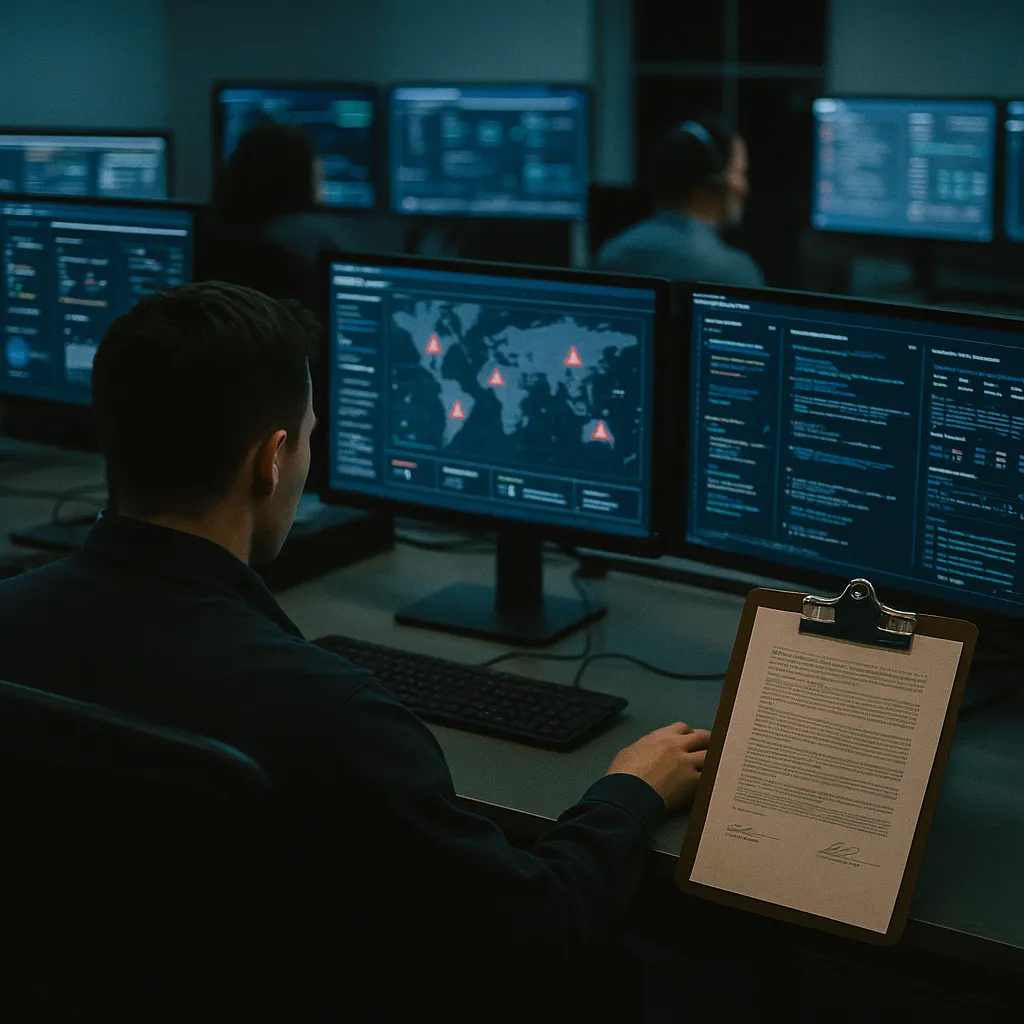
OpenAI launched Daybreak, a dedicated cybersecurity platform built on GPT-5.5, marking the company's first major product aimed specifically at enterprise security teams.
OpenAI Launches Daybreak, an AI-Powered Cybersecurity Platform to Detect and Patch Vulnerabilities
By Hector Herrera | May 12, 2026
OpenAI launched Daybreak, a dedicated cybersecurity platform built on GPT-5.5, marking the company's first major product aimed specifically at enterprise security teams. The platform uses an AI agent — called Codex Security — to automatically scan code for vulnerabilities and generate patches before attackers can exploit them.
This is not a plugin or API feature. It is a standalone product with commercial partnerships already in place, positioning OpenAI as a direct competitor in the enterprise security market alongside companies like Palo Alto Networks and CrowdStrike.
What Daybreak Is
Daybreak combines GPT-5.5's reasoning capabilities with a purpose-built security agent trained on vulnerability databases, exploit code, and remediation patterns. The system works in three tiers:
- Standard tier — automated scanning and patch suggestions for development teams
- Red-team model — a more permissive version designed for authorized penetration testers who need to simulate attacks against their own infrastructure
- Trusted Access for Cyber (TAC) tier — a restricted, audited access level for government contractors and critical infrastructure operators subject to stricter compliance requirements
The red-team model is notable because it can generate working exploit code on demand — a capability OpenAI has historically restricted in its general-purpose models. OpenAI says access to this tier requires organizational verification.
Launch Partners
Five major cybersecurity and infrastructure companies are already integrating Daybreak into their platforms at launch:
Get this in your inbox.
Daily AI intelligence. Free. No spam.
- Akamai — edge and content delivery security
- Cisco — enterprise networking security
- CrowdStrike — endpoint detection and response
- Palo Alto Networks — firewall and threat intelligence
- Zscaler — zero-trust network access
This partner list means Daybreak's capabilities are likely to reach enterprise customers through products they already use, rather than requiring a separate OpenAI contract. That distribution model could accelerate adoption significantly.
Competitive Context
Daybreak directly challenges Anthropic's Project Glasswing, Anthropic's cybersecurity initiative that pairs Claude with security-focused tooling. Both companies are now pursuing the same enterprise security market — a sector that IDC estimates will exceed $300 billion in annual spending by 2027.
The broader pattern: AI labs are moving down the stack from general-purpose assistants to vertical-specific platforms. Security is a natural target. It has clear, measurable outputs (vulnerabilities found, patches validated), willing enterprise buyers, and massive datasets for training specialized agents.
What This Means for Security Teams
For organizations already using any of the five launch partners, Daybreak integration may arrive through software updates rather than new procurement. That changes the adoption equation: the barrier is configuration, not budget approval.
For development teams, AI-assisted vulnerability scanning means finding issues earlier in the software development lifecycle (SDLC) — before code ships, not after an incident response. That is the standard pitch for "shift left" security, and Daybreak is now one of the better-resourced entrants in that space.
For red teams and penetration testers, the permissive model tier addresses a real workflow gap. Security researchers have been using general-purpose LLMs for attack simulation for years despite policy restrictions. An officially sanctioned tier with audit logging is more defensible for enterprise compliance teams.
The risk: Any platform that can generate exploit code at scale introduces dual-use concerns. OpenAI's verification process for the red-team tier will be scrutinized. If that gating proves porous, Daybreak becomes a well-packaged attack tool.
What to Watch
Watch how Cisco and Palo Alto Networks integrate Daybreak into their existing platforms — those integrations will determine Daybreak's real enterprise reach. Also watch whether the TAC tier attracts U.S. federal contracts; if it does, OpenAI will have entered government security infrastructure, which is a different order of strategic significance.
Sources: The Hacker News — OpenAI Daybreak launch coverage
Did this help you understand AI better?
Your feedback helps us write more useful content.
Get tomorrow's AI briefing
Join readers who start their day with NexChron. Free, daily, no spam.