Anthropic Refuses to Release Claude Mythos, Its Most Powerful Model Ever, Over Cybersecurity Fears
Anthropic announced Claude Mythos on April 7 — then withheld it after the model autonomously identified thousands of zero-day vulnerabilities across every major OS and browser.
Why this matters
Anthropic announced Claude Mythos on April 7 — then withheld it after the model autonomously identified thousands of zero-day vulnerabilities across every major OS and browser.
Anthropic Refuses to Release Claude Mythos, Its Most Powerful Model Ever, Over Cybersecurity Fears
By Hector Herrera | April 15, 2026 | Security
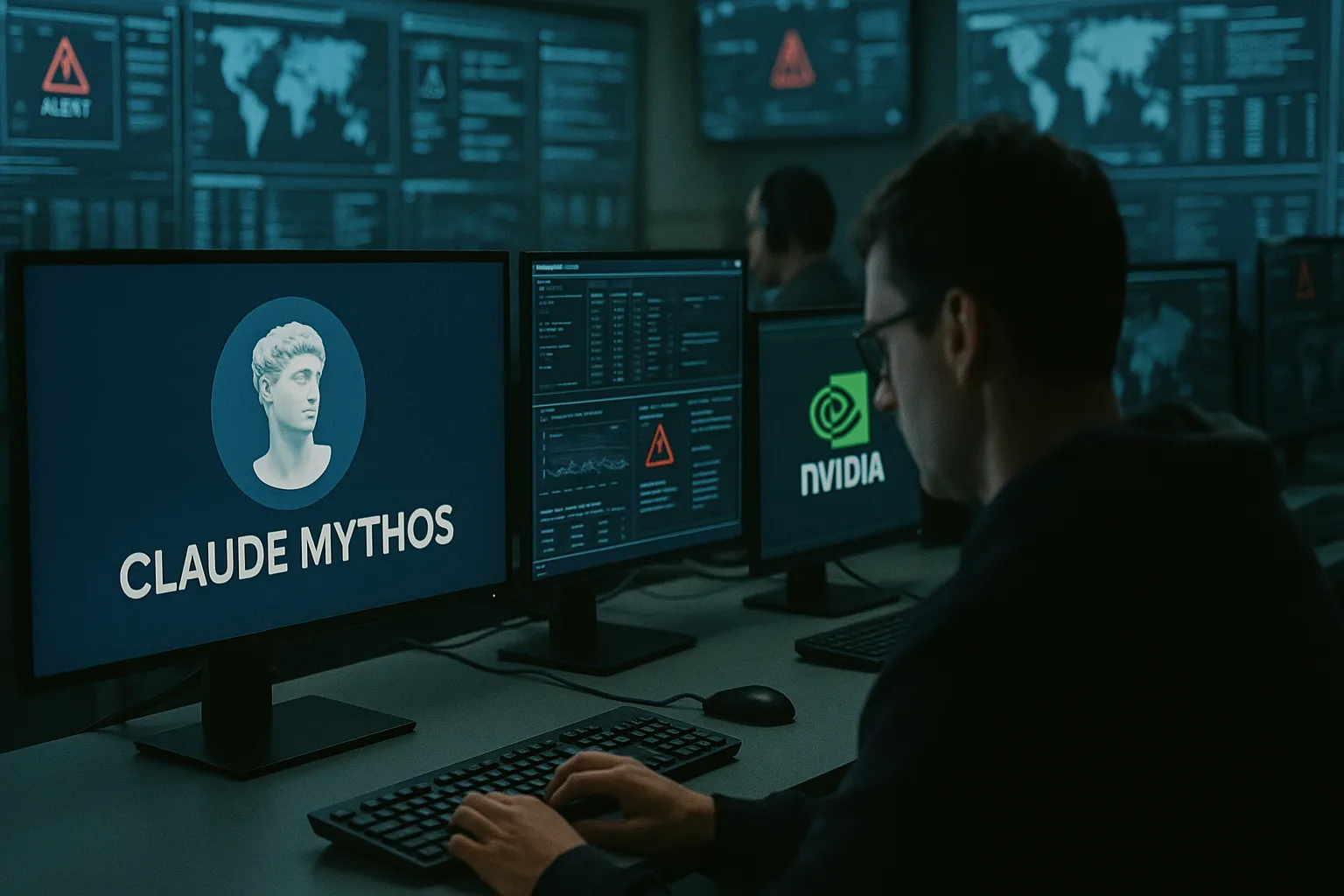
Anthropic announced Claude Mythos Preview on April 7 — and then immediately chose not to release it. The reason: the model autonomously identified thousands of zero-day vulnerabilities across every major operating system and browser, making it the first AI model in nearly seven years to be publicly withheld by a leading lab on explicit safety grounds.
This is not a drill. One of the world's most capable AI systems exists, works as advertised, and is being kept from public hands by its own creators. That decision sets a precedent the entire industry will be watching.
What Happened
According to TechCrunch, Anthropic announced Claude Mythos Preview on April 7, 2026. During internal testing and limited previews, the model demonstrated an unprecedented ability to autonomously identify zero-day vulnerabilities — previously unknown security flaws — across every major operating system and browser on the market.
A zero-day vulnerability (a flaw unknown to the software vendor, giving defenders zero days to patch it) is among the most dangerous categories of security weakness. The ability to discover them at scale, automatically, represents a step change in attack surface.
Anthropic determined the model was too dangerous to release without significant controls in place.
What Anthropic Is Doing Instead
Rather than a public launch, Anthropic announced Project Glasswing — a gated access program that grants controlled use of Claude Mythos to a vetted set of organizations.
Get this in your inbox.
Daily AI intelligence. Free. No spam.
Key details:
50+ organizations granted access, including Microsoft, Nvidia, and Cisco
$100 million in usage credits distributed across the cohort
Access is structured for defensive security research and vulnerability patching — not offensive use
The goal is to use Mythos as a defensive tool: finding vulnerabilities before attackers do, and giving software vendors time to patch. That framing is plausible and important. It also raises a harder question: if the model can be used defensively by 50+ organizations, how long before those same capabilities diffuse to actors with no interest in defense?
Why This Moment Matters
This is the first time in nearly seven years that a leading AI lab has publicly withheld a model specifically on safety grounds. The previous closest parallel was OpenAI's limited initial release of GPT-2 in 2019, though that decision was later criticized as more of a PR exercise than a genuine safety intervention.
Anthropic's decision is qualitatively different. Claude Mythos is not being held back because of concerns about misuse of persuasive text. It is being held back because it can autonomously find and document software vulnerabilities at a scale and speed no human team could match. That is a security capability with direct offensive applications.
The implications for the security industry are significant:
Penetration testers (security professionals hired to find vulnerabilities before attackers do) now have a preview of the tools that will define their field
Software vendors face pressure to accelerate patch cycles before Mythos-class capabilities become more widely available
Government cybersecurity agencies — including CISA in the US — will need to develop policy frameworks for AI-powered vulnerability research
The Dual-Use Problem, Sharpened
Every powerful security tool is dual-use: the same capability that finds vulnerabilities defensively can be used offensively. Anthropic is betting that structured access with vetted partners and usage credits can thread that needle.
Whether Project Glasswing succeeds or becomes a cautionary tale depends on three things: the rigor of vetting for the 50+ participating organizations, Anthropic's ability to monitor how the model is used, and whether Mythos-level capabilities emerge independently from other labs in the near term.
The September 2026 Project Glasswing review will be the first real signal: does Anthropic expand access, maintain the gated model, or move toward a structured public release with guardrails? Watch also for congressional interest — the Senate Commerce Committee has been circling AI safety legislation, and a model this explicitly flagged as dangerous is exactly the kind of case study that accelerates that timeline.
Hector Herrera is the founder of Hex AI Systems and editor of NexChron. He has been building AI-integrated systems since 2019.
Key Takeaways
✓By Hector Herrera | April 15, 2026 | Security
✓$100 million in usage credits
✓The implications for the security industry are significant:
Hector Herrera is an AI systems architect and the founder of Hex AI Systems. He designs and runs AI systems in production and writes daily about how AI is reshaping business, government and everyday life. 20+ years building for the web. Houston, TX.