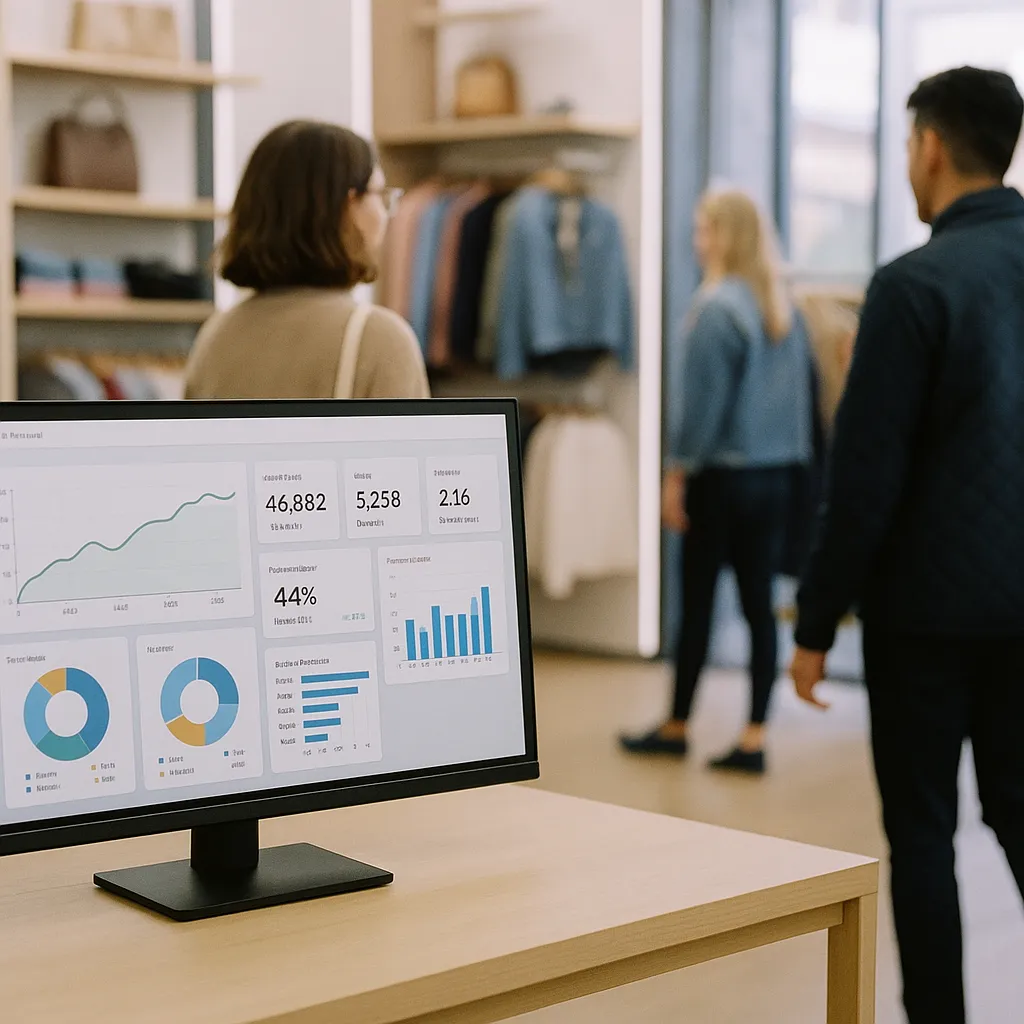
Experro launched EMA, an AI merchant assistant that connects to storefront data and autonomously identifies and corrects operational issues — shifting retail AI from reporting layer to action layer.
Experro launched EMA — the Experro Merchant Assistant — an AI tool that connects directly to a retailer's storefront data and autonomously identifies and corrects operational issues without waiting to be asked. Described in the launch announcement, EMA represents a concrete step in the shift from AI as a reporting layer to AI as an operational layer in e-commerce — the difference between a dashboard that tells you what's wrong and a system that fixes it.
The product sits in a space that's getting crowded fast: agentic retail AI, where the AI doesn't just surface insights but acts on them. EMA connects to a retailer's inventory data, traffic analytics, and conversion metrics, then autonomously identifies problems — a product page with anomalously high bounce rates, a promotional rule that's misconfigured, a category missing structured data — and takes corrective action or flags specific remediation steps.
What EMA Does Differently
Most e-commerce AI tools today are analytical. They ingest data and produce reports, dashboards, or recommendations. A merchandiser or operations manager still has to read the output and decide what to do — and then do it. The latency between insight and action is measured in hours or days, depending on team bandwidth and priority queuing.
EMA is designed to collapse that gap. Rather than generating a report that says "your product descriptions in this category are underperforming," it identifies the specific pages, diagnoses the probable cause, and either applies a fix automatically (for actions within defined guardrails) or presents the merchant with a specific, ready-to-execute action rather than a general recommendation.
Experro characterizes EMA as operating in a "explain, then act" model — it shows its reasoning before executing, so merchants aren't confronted with unexplained changes to their storefront. This matters for trust: autonomous AI that takes actions without explanation creates anxiety, particularly for store owners who are accountable for every customer-facing change.
Get this in your inbox.
Daily AI intelligence. Free. No spam.
The Broader Agentic Retail Shift
EMA is one data point in a broader transition happening across e-commerce platforms in 2026. The pattern is consistent:
- Shopify has been expanding its Sidekick AI assistant toward more autonomous actions within its merchant dashboard
- Salesforce Commerce Cloud has added agentic capabilities to its Einstein AI layer, with autonomous promotional adjustment in some configurations
- BigCommerce and several smaller platforms have announced or shipped similar "act on insights" features
The pattern reflects where the return on investment is concentrated in AI applications. Analytical AI that tells you what to do has value, but it also requires human action to realize that value. Agentic AI that takes the action eliminates that last-mile friction — which is where a significant portion of the value gets lost in practice.
For small and mid-size merchants in particular, this distinction is material. A solo merchant managing a Shopify store while also handling customer service, fulfillment, and marketing doesn't have time to act on every AI recommendation, even good ones. An AI that acts on its own — within defined boundaries the merchant sets — turns AI insight into actual revenue impact without requiring the merchant to be the bottleneck.
The Guardrails Question
Any agentic retail AI raises the same question: what happens when it gets something wrong? An AI that autonomously adjusts product descriptions, changes pricing rules, or modifies promotional configurations has real operational consequences if it misidentifies a problem or applies the wrong fix.
Experro's "explain, then act" framing suggests the product has a confirmation layer — but the degree to which actions are gated on merchant approval versus fully autonomous will determine how much risk merchants are effectively absorbing. The launch announcement doesn't specify the exact boundaries of autonomous versus human-approved actions, which is worth understanding before deploying EMA in a production store environment.
What to Watch
Experro is a mid-market e-commerce platform, not one of the major infrastructure players. EMA's market impact will depend on whether the feature drives meaningful merchant retention and acquisition, and whether the larger platforms — Shopify, Salesforce, BigCommerce — respond with more aggressive agentic capabilities of their own. If EMA performs well at the merchant level, expect the concept to migrate upmarket quickly.
Did this help you understand AI better?
Your feedback helps us write more useful content.
Get tomorrow's AI briefing
Join readers who start their day with NexChron. Free, daily, no spam.