AI News | 3 min read

Google Releases Gemma 4 12B Open Multimodal Model With Audio, Vision, and 256K Context Under Apache 2.0

Google released Gemma 4 12B under Apache 2.0 on June 3, adding audio, vision, and a 256K context window to an openly licensable model — making frontier multimodal AI accessible without API fees for the first time.

Hector Herrera
Hector Herrera
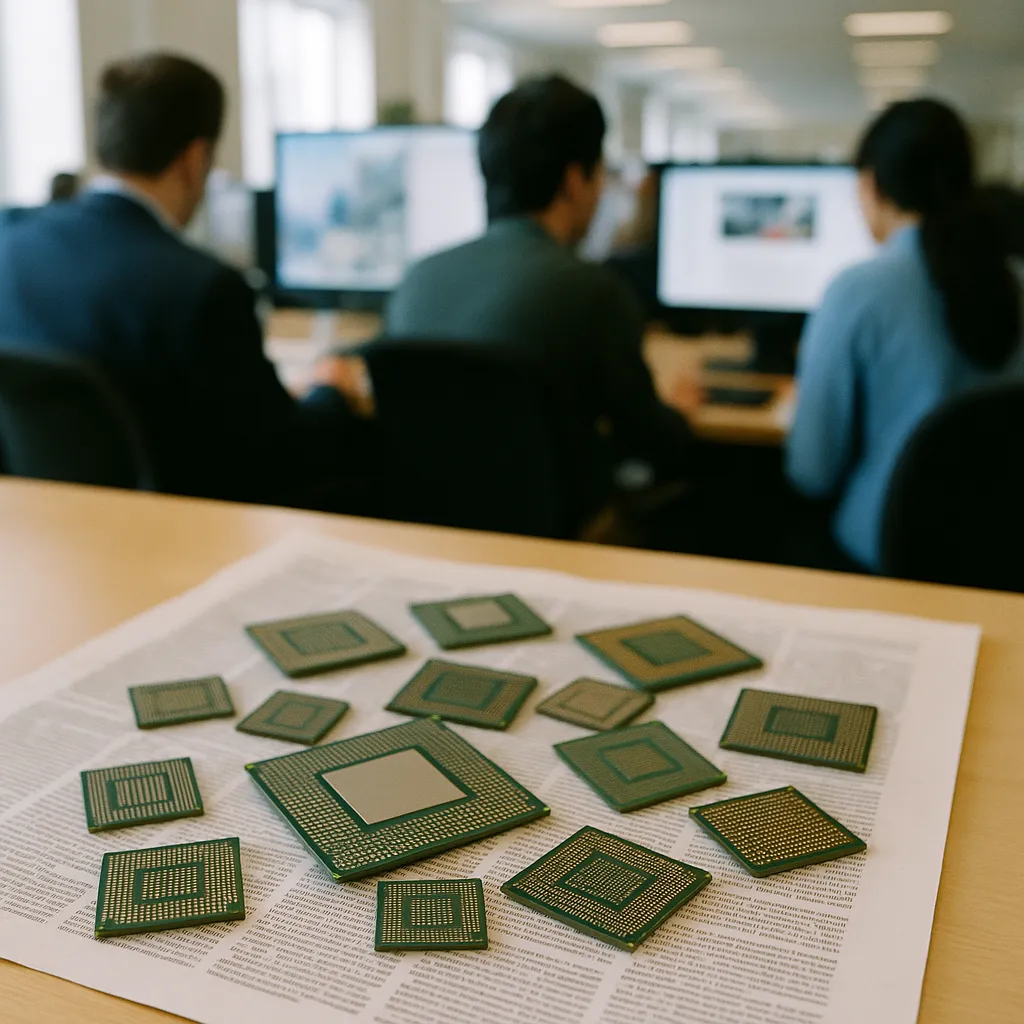
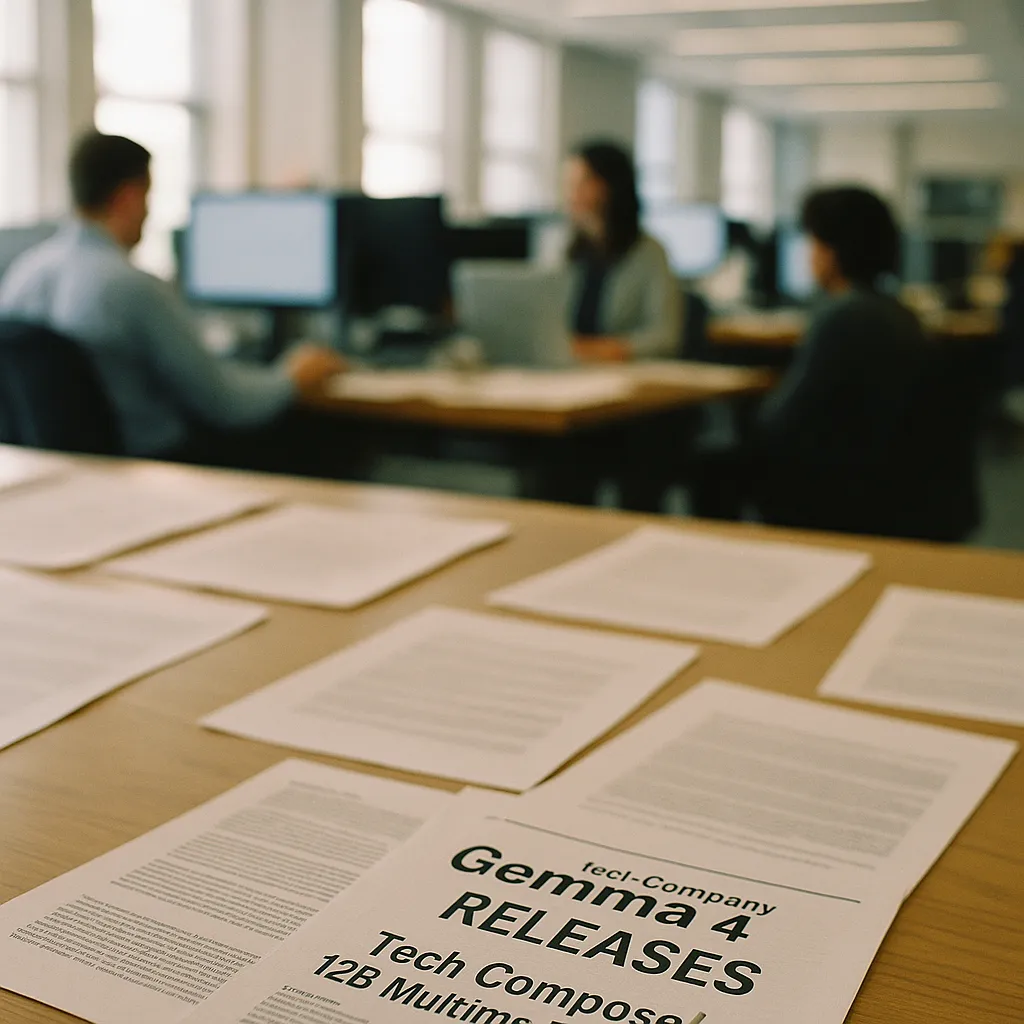
A newsroom featuring documents, contracts, related to a major tech company Releases Gemma 4 12B Open Multimodal Mo from an unusual angle or perspective
Why this matters Google released Gemma 4 12B under Apache 2.0 on June 3, adding audio, vision, and a 256K context window to an openly licensable model — making frontier multimodal AI accessible without API fees for the first time.

Google Releases Gemma 4 12B Open Multimodal Model With Audio, Vision, and 256K Context Under Apache 2.0

Google released Gemma 4 12B on June 3, 2026 under the Apache 2.0 license, giving any developer access to a model that processes text, images, and audio in a single architecture — without the encoder complexity or API fees of proprietary multimodal systems. The release marks the first Gemma model to support audio-visual reasoning natively and introduces a 256,000-token context window large enough to process book-length documents or multi-hour transcripts in a single pass.

For developers who have been paying commercial API rates for multimodal access, this is the most significant open release of 2026 so far.

What Makes Gemma 4 Different

Previous Gemma releases — the 1B, 2B, 7B, and 27B text-only models — were strong general-purpose language models but couldn't see images or hear audio. Adding those capabilities required chaining separate encoder models: a vision encoder like CLIP, an audio encoder like Whisper, and then the language model. That architecture adds latency, increases infrastructure complexity, and makes fine-tuning harder because you're maintaining three separate model weights.

Gemma 4 12B unifies all three modalities in a single model. Key specifications:

  • 256,000-token context window — processes long documents, codebases, or extended conversations in one pass
  • 140-language support — broader than most competing open models
  • Unified audio, vision, and text — no separate encoders required
  • Edge-optimized — designed to run on inference hardware that doesn't require Nvidia A100 clusters
  • Agentic workflow support — structured outputs and tool-calling built in

Why the Apache 2.0 License Matters

Apache 2.0 means Gemma 4 12B is commercially usable without restriction. Startups can build products on it. Enterprises can fine-tune it on proprietary data and deploy it internally. Researchers can modify and redistribute it. There are no royalty obligations and no usage restrictions tied to API terms.

Compare that to Gemini 1.5 Pro, which requires per-token API billing and prohibits model redistribution. A company processing millions of documents — contracts, medical records, customer support transcripts — faces dramatically lower costs with an open model it can self-host. Volume tasks that would cost tens of thousands of dollars per month at commercial API rates run on infrastructure the company already controls.

That cost structure shifts the calculus for a large class of AI applications: any task where volume is high, latency matters, or data privacy requirements preclude sending data to external APIs.

Who Benefits Immediately

Developers building multimodal agents — Agents that need to process images and audio alongside text no longer need to orchestrate separate model calls. One model, one inference pass, lower latency.

Enterprise teams with compliance constraintsFinancial services and healthcare organizations that can't send data to external APIs can now run a frontier-grade multimodal model on-premises. HIPAA and SOC 2 compliance is manageable when all inference stays inside your own infrastructure.

Researchers in lower-resource settings — The 12B parameter size is manageable on mid-range GPU hardware. Audio-visual research that previously required closed commercial API access is now open to academic teams globally.

What to Watch

Google's Gemma releases have consistently generated substantial community fine-tuning activity within weeks. Expect vertically specialized variants — legal document review, medical imaging, customer service audio — to appear on Hugging Face within a month.

The more important commercial signal is whether infrastructure providers (Together AI, Replicate, Hugging Face Inference Endpoints) offer Gemma 4 12B at commodity pricing. If they do, the adoption curve steepens quickly, since teams can access the model without managing their own GPU infrastructure.

Gemma 4's release continues a pattern established by Meta's Llama 4 and Mistral's recent releases: open-source frontier models are no longer trailing proprietary systems by six months. The capability gap is closing in near real time, and that changes the build-versus-buy calculus for every team evaluating AI infrastructure today.


By Hector Herrera

Key Takeaways

  • 256,000-token context window
  • 140-language support
  • Unified audio, vision, and text
  • Developers building multimodal agents
  • Enterprise teams with compliance constraints

Did this help you understand AI better?

Your feedback helps us write more useful content.

Hector Herrera

Written by

Hector Herrera

Hector Herrera is the founder of Hex AI Systems, where he builds AI-powered operations for mid-market businesses across 16 industries. He writes daily about how AI is reshaping business, government, and everyday life. 20+ years in technology. Houston, TX.

More from Hector →

Get tomorrow's AI briefing

Join readers who start their day with NexChron. Free, daily, no spam.

More from NexChron